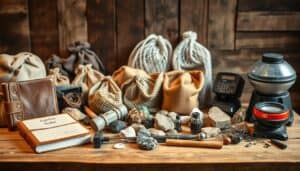
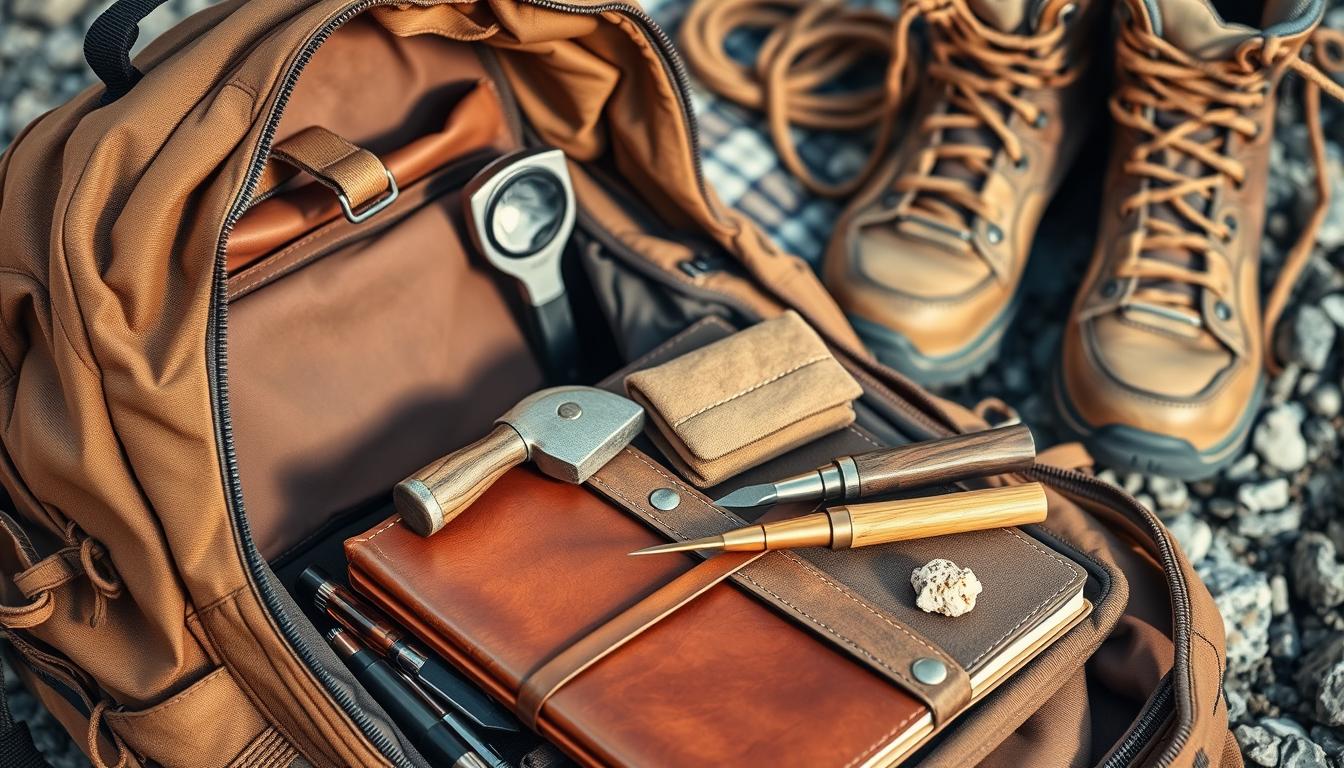
Rockhounding Field Backpack Essentials are the key tools and supplies that turn a casual rock hunt into a successful collecting adventure. Having the right gear in your pack means you can safely extract specimens, identify finds on the spot, and protect your discoveries during transport back home.
The difference between coming home empty-handed and finding quality specimens often comes down to preparation. Smart rockhounds pack systematically, bringing tools that serve multiple purposes while keeping weight manageable for long hikes to remote collecting sites.
TL;DR
- Pack a 3-pound geology pick, safety glasses, and leather gloves as your core extraction tools.
- Bring 20-30 newspaper sheets and bubble wrap to protect specimens during transport.
- Carry a 10x hand lens, streak plate, and hardness testing kit for field identification.
- Include a GPS device or smartphone app to record exact coordinates of successful finds.
Rockhounding Field Backpack Essentials
Your backpack serves as a mobile rock shop that needs to hold extraction tools, safety equipment, identification aids, and specimen storage. The goal is packing everything you need while keeping the total weight under 25 pounds for comfortable hiking.
Choose a backpack with external loops and pockets so you can secure tools on the outside. Internal compartments help organize small items like hand lenses and testing supplies that are easy to lose in the field.
Core Extraction Tools
These tools help you safely remove specimens from their host rock without damage. Quality tools last for decades and perform better than cheap alternatives that break when you need them most.
- Geology Pick – A 22-inch pick with a pointed tip and flat chisel end weighing 2-3 pounds.
- Cold Chisel Set – 1/2 inch, 3/4 inch, and 1-inch chisels for precise splitting work.
- Small Sledge Hammer – 2-3 pound hammer for driving chisels through tough rock.
- Pry Bar – 12-16 inch steel bar for leveraging loose rocks and widening cracks.
- Hand Shovel – Folding military-style shovel for digging around embedded specimens.
Safety Equipment
Flying rock chips and sharp edges make safety gear non-negotiable for serious collectors. Pack these items in an easily accessible outside pocket so you can grab them quickly.
- Safety Glasses – Wraparound style that blocks chips from all angles.
- Work Gloves – Leather gloves that protect hands while maintaining dexterity.
- Hard Hat – Essential when working near cliff faces or loose rock.
- First Aid Kit – Include bandages, antiseptic, and pain relievers for cuts and bruises.
Field Identification Supplies
Identifying specimens in the field saves time and helps you focus on the most valuable finds. These compact tools provide the basic tests needed for preliminary identification according to established mineral identification techniques.
- Hand Lens. A 10x magnification lens shows crystal structure and surface details clearly.
- Streak Plate. Unglazed ceramic tile reveals the true color of a mineral’s powder.
- Hardness Testing Kit. Includes picks and reference minerals for the Mohs hardness scale.
- Magnet. Strong neodymium magnet tests for magnetic properties in suspected iron minerals.
- Field Guide. Regional rock and mineral guide with photos and identification charts.
Pack Smart for Weight Distribution
Place heavy tools like hammers and picks close to your back in the main compartment. Keep frequently used items like your hand lens and GPS in easily accessible pockets.
Documentation Tools
Recording find locations and specimen details helps build your collection database and lets you return to productive sites. Digital tools work well but always bring backup options.
- GPS Device – Records exact coordinates for mapping successful collecting locations.
- Camera – Documents specimens in their natural setting before removal.
- Notebook – Waterproof field book for recording dates, locations, and observations.
- Sample Bags – Small zip-lock bags with labels for organizing different specimens.
Specimen Protection and Transport
Getting specimens home undamaged requires proper wrapping and cushioning during transport. Pack these materials in a separate compartment so they stay clean and ready to use.
- Newspaper – Bring 20-30 sheets for wrapping individual specimens securely.
- Bubble Wrap – Provides extra cushioning for delicate or valuable finds.
- Small Boxes – Sturdy containers prevent crushing during the hike back to your vehicle.
- Plastic Bags – Multiple sizes for separating different types of specimens.
- Permanent Markers – Label specimens immediately to avoid confusion later.
Additional Useful Items
These extras can make the difference between a good day and a great day of collecting. They address common field situations that arise when you least expect them.
- Spray Bottle – Clean dirt from specimens to see details and colors better.
- Wire Brush – Remove loose debris without scratching specimen surfaces.
- Duct Tape – Emergency repairs for broken tool handles or torn backpacks.
- Headlamp – Hands-free lighting for cave collecting or extending trips past sunset.
- Kneepads – Protect knees during long periods of ground-level collecting work.
Frequently Asked Questions
What size backpack works best for rockhounding?
A 40-50 liter backpack provides enough space for tools and specimens while remaining comfortable for day hikes. Look for external attachment points for securing larger tools.
How much weight should I expect to carry?
Plan for 15-20 pounds of gear plus 5-10 pounds of specimens depending on your finds. Keep total weight under 30 pounds for comfortable hiking over rough terrain.
Do I need all these tools for casual collecting?
Start with a geology pick, safety glasses, hand lens, and specimen bags for basic collecting. Add more specialized tools as you visit challenging locations or target specific minerals. For budget-friendly options, you can find quality rock hammers that won’t strain your wallet.
What’s the most important safety item to pack?
Safety glasses are essential since rock chips fly unpredictably when hammering or chiseling. Even small fragments can cause serious eye injuries according to OSHA safety guidelines.
Final Thoughts
Rockhounding Field Backpack Essentials transform random rock hunting into systematic specimen collecting with the right tools and preparation. A well-packed backpack gives you confidence to tackle challenging sites and extract quality specimens safely.
Start with the core tools and add specialized equipment as your skills and interests develop. Once you’ve collected quality specimens, consider investing in a rock tumbler to polish your finds. The investment in quality gear pays dividends in better finds and safer collecting experiences over many years of rockhounding adventures.