
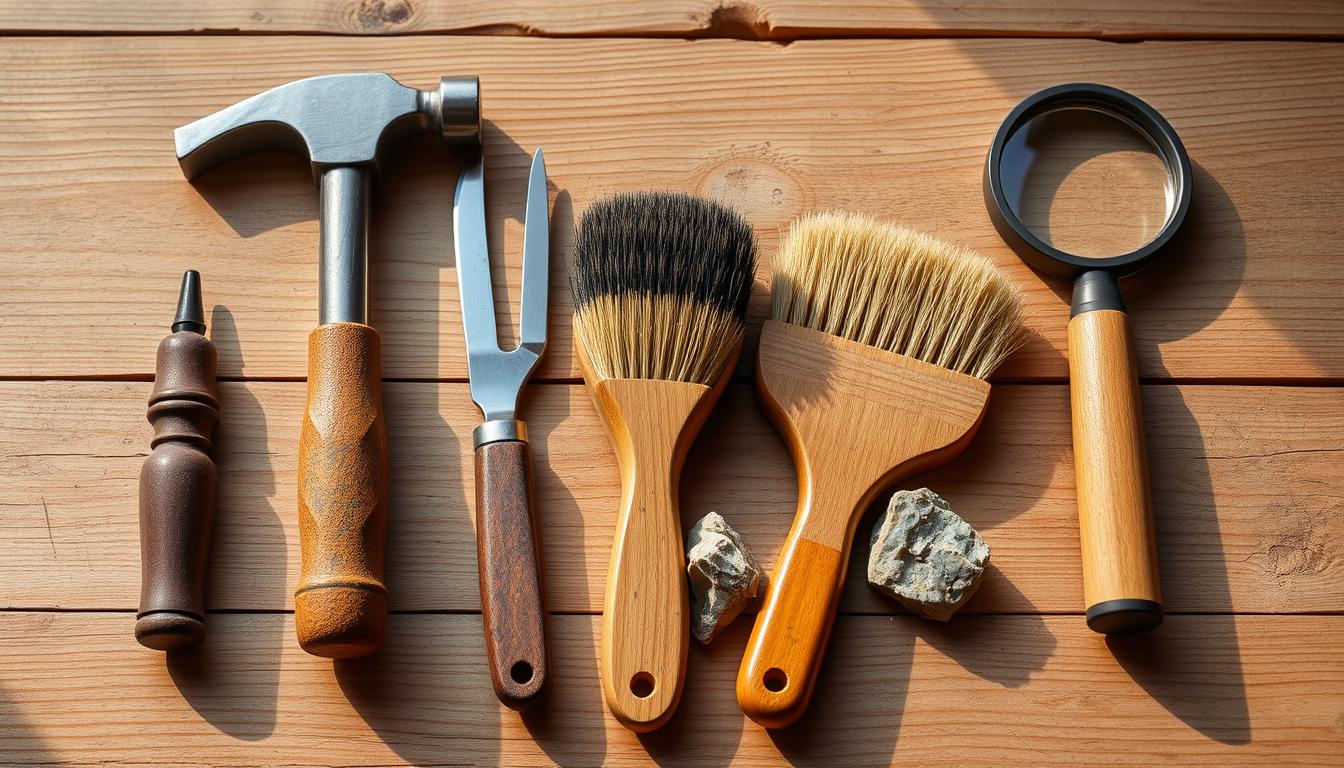
Rockhounding Tool Maintenance is essential for anyone serious about collecting rocks and minerals. Proper care keeps your equipment working effectively and extends its lifespan significantly.
The right cleaning methods protect your investment and ensure safe field experiences. Regular maintenance prevents costly replacements and keeps your tools ready for your next adventure.
TL;DR
- Clean tools immediately after each use to prevent mineral buildup and corrosion damage.
- Wire brushes remove 90% of stubborn deposits from metal tools like rock hammers.
- Store tools in humidity levels below 50% to prevent rust formation completely.
- Apply protective coatings every 3-6 months to extend tool life by up to 5 years.
Rockhounding Tool Maintenance Basics
Clean tools work better and last longer than neglected ones. The Crater of Diamonds State Park recommends using specialized cleaning methods for different tool materials.
Proper maintenance prevents accidents caused by tool failure. A loose hammer head or corroded chisel edge can cause serious injuries during fieldwork, especially when avoiding common rockhounding beginner mistakes that could put you at risk.
Essential Daily Care Steps
Follow these steps after every rockhounding trip to keep your tools in top condition:
- Remove loose debris. Brush off dirt and rock particles before they harden.
- Check for damage. Look for cracks, loose handles, or worn edges.
- Clean thoroughly. Use appropriate methods based on tool materials.
- Dry completely. Prevent rust by removing all moisture.
Cleaning Different Tool Materials
Different materials need specific cleaning approaches to avoid damage. Steel tools handle aggressive cleaning better than wooden handles or rubber grips.
Steel Tools and Metal Components
Steel tools can handle stronger cleaning solutions and mechanical methods. Use these approaches for hammers, chisels, and pry bars:
- Wire brushes – Remove mineral deposits and surface rust effectively.
- Vinegar solution – Mix equal parts water and white vinegar for stubborn buildup.
- Commercial rust removers – Use CLR or similar products for heavy corrosion.
Tools with Wooden Handles
Wood requires gentler treatment to prevent cracking and splitting. Never soak wooden components in cleaning solutions.
Wipe wood with a damp cloth and apply wood conditioner monthly. This prevents moisture damage and keeps handles comfortable to grip.
Rubber and Plastic Parts
Rubber grips and plastic components need mild soap and water only. Harsh chemicals can cause these materials to become brittle or discolored.
Quick Cleaning Tip
Keep a spray bottle with mild soap solution in your vehicle for immediate cleaning. This prevents dirt from hardening during the drive home.
Removing Stubborn Mineral Deposits
Heavy mineral buildup requires more aggressive cleaning methods. Safety gear protects you during deep cleaning sessions, similar to what you’d use when cleaning rocks without a tumbler at home.
Soaking Solutions
Create targeted soaking solutions based on the type of deposits you encounter:
- Calcium deposits – Use white vinegar or commercial lime removers.
- Iron staining – Apply oxalic acid solutions carefully with proper ventilation.
- Clay buildup – Warm soapy water dissolves most clay deposits effectively.
Mechanical Cleaning Methods
Soft-bristled brushes work best for delicate cleaning tasks. Toothbrushes reach tight spaces around tool joints and crevices.
Ultrasonic cleaners handle complex tools with multiple components. These devices use sound waves to remove deposits from areas you cannot reach manually.
Rust Prevention Strategies
Rust forms quickly on damp metal surfaces, especially after exposure to minerals and soil. Early detection prevents extensive damage to your tools.
Identifying Rust Formation
Check for these early warning signs during regular inspections:
- Discoloration – Orange or brown spots on metal surfaces.
- Rough texture – Previously smooth surfaces feel gritty.
- Flaking – Small pieces of metal come off when touched.
Protective Coatings
Apply protective coatings before rust starts forming. These products create barriers between metal and moisture.
Light machine oil works well for frequently used tools. Spray-on rust inhibitors provide longer-lasting protection for stored equipment.
Proper Storage Solutions
Storage conditions directly affect tool lifespan and performance. Climate control prevents most storage-related damage, just as important as proper rock collection storage for your specimens.
Climate Requirements
Store tools in areas with controlled humidity and temperature. Basements and garages often have too much moisture for long-term storage.
Use dehumidifiers or silica gel packets to maintain proper conditions. Target humidity levels below 50% for best results.
Organization Systems
Organize tools by type and frequency of use for easy access:
- Daily use tools – Keep in portable containers near your workspace.
- Specialty items – Store in labeled drawers or pegboards.
- Seasonal equipment – Pack carefully in climate-controlled areas.
Environmentally Friendly Cleaning
Green cleaning methods protect the environment while maintaining your tools effectively. Natural products work just as well as harsh chemicals for most cleaning tasks.
Natural Cleaning Solutions
Common household items make excellent tool cleaners:
- Baking soda paste – Removes stains and light corrosion safely.
- Lemon juice – Natural acid cuts through mineral deposits.
- Castile soap – Biodegradable option for regular cleaning.
Water Conservation
Use spray bottles instead of running water to reduce waste. Basin cleaning contains dirty water for proper disposal instead of letting it run into storm drains.
Frequently Asked Questions
How often should I clean my rockhounding tools?
Clean tools after every use to prevent buildup. Deep clean monthly or when tools show visible deposits.
Can I use household cleaners on my tools?
Mild dish soap works well for regular cleaning. Avoid bleach or harsh chemicals that can damage metal or wood.
What is the best way to dry tools after cleaning?
Towel dry immediately, then air dry completely. Use compressed air for hard-to-reach areas.
How do I remove rust that has already formed?
Use fine steel wool or rust remover products. Apply protective coating immediately after rust removal.
Should I oil my tools before storage?
Yes, apply a thin layer of light machine oil to metal surfaces. Wipe excess oil before next use.
Final Thoughts
Rockhounding Tool Maintenance protects your investment and ensures safe, productive collecting trips. Regular cleaning and proper storage prevent most common tool problems.
Start implementing these maintenance practices today to extend your equipment life. Your future self will thank you when your tools remain reliable for years to come, whether you’re collecting specimens for starting a rock collection on a budget or searching for the best rock hunting spots near you.