
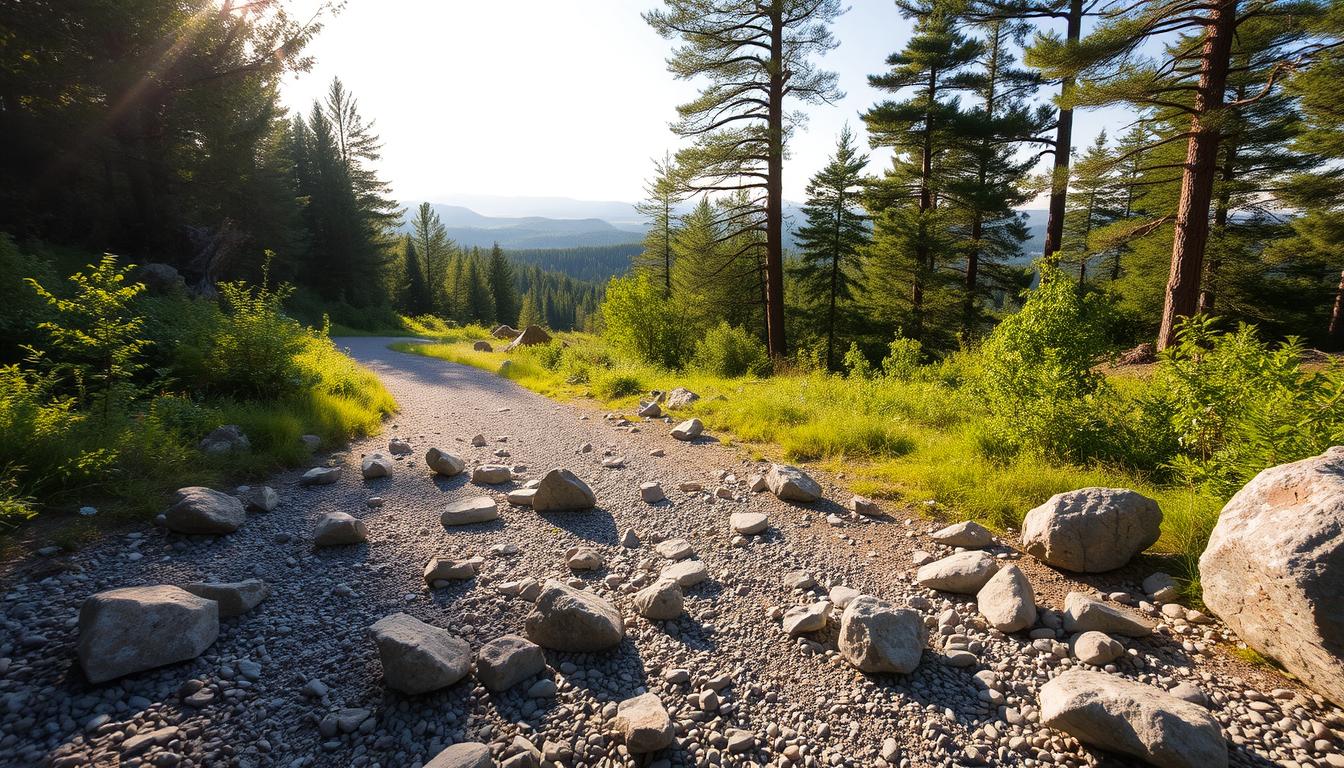
Finding great rockhounding adventures starts with knowing where to look for interesting specimens. Whether you’re just starting out or you’ve been collecting for years, discovering new places to hunt for rocks and minerals can turn into a lifelong passion.
The best locations combine easy access with good variety – places where geological forces have exposed different rock types over time. You’ll find some of your best specimens in spots where water, weather, or human activity has revealed fresh rock formations.
TL;DR
- Beaches and stream beds offer polished agates, jasper, and quartz that waves and water have naturally tumbled.
- Construction sites and road cuts expose fresh rock layers that were previously buried underground.
- Fee dig sites charge $10-30 per day but guarantee you can keep everything you find legally.
- Mobile apps like Rockd help identify specimens and connect you with 50,000+ other collectors worldwide.
Where To Find Rocks Near Me
Your local area probably has more rock hunting opportunities than you realize. Start by thinking about places where rocks get exposed naturally – anywhere water flows, roads get cut through hills, or construction projects dig into the ground.
The key is understanding how different geological processes create collecting opportunities. Rivers carry rocks downstream and concentrate them in gravel bars, while coastal areas tumble stones smooth and deposit them on beaches.
Essential Tools for Success
You don’t need expensive equipment to start collecting. A basic kit includes a small hammer, safety glasses, and sturdy gloves for protection. For more guidance on what tools you need and how to maintain them properly, check out our tool care guide.
- Rock hammer – Choose a 16-20 oz geologist’s pick for breaking specimens.
- Hand lens – A 10x magnifier helps identify minerals and crystal structures.
- Collection bags – Padded pouches protect delicate finds during transport.
- Field notebook – Record locations and details about each specimen.
Safety and Legal Guidelines
Always check permission before collecting on private property or protected lands. Many national and state parks prohibit removing rocks, while other areas require permits.
Wear protective gear including safety glasses, gloves, and sturdy boots when using hammers or exploring rocky terrain. Let someone know your collecting location and expected return time when heading to remote areas.
Natural Rock Hunting Locations
Nature provides the best collecting sites through ongoing geological processes. Water, weather, and time work together to expose and concentrate interesting specimens in predictable places.
Beaches and Shorelines
Ocean beaches offer some of the most accessible rock hunting anywhere. Waves constantly work loose materials from offshore deposits and cliff faces, then tumble them smooth on the shore. Beach collecting can yield excellent tumbling material that’s already been naturally polished by wave action.
Look for colorful agates, jaspers, and unusual stones among beach gravels. The best hunting happens after storms when high waves expose new materials and wash away sand covering rocky areas.
Streams and Rivers
Moving water concentrates heavy materials like gemstones and interesting rocks in gravel bars and behind boulders. Check areas where the current slows down – these spots trap specimens carried downstream.
Spring runoff and flood seasons often expose new collecting areas and bring fresh materials from upstream sources. Focus on inside curves of rivers where slower water drops its load.
Mountains and Outcrops
Mountain areas expose rock formations created deep underground millions of years ago. Road cuts through hills often reveal multiple rock layers and mineral deposits.
Hiking trails frequently pass exposed bedrock where you can see rock formations in place. Look for veins of quartz, unusual colors, or crystal formations in cliff faces and rocky outcrops.
Urban and Suburban Opportunities
Cities and towns create their own collecting opportunities through construction and landscaping activities. These spots often get overlooked but can produce excellent specimens.
Construction Sites and Road Cuts
New construction exposes rock layers that haven’t seen daylight for thousands of years. Road cuts through hills reveal cross-sections of local geology and mineral deposits.
Always get permission before entering active construction areas. Many contractors allow collecting during off-hours if you ask politely and follow safety rules.
Ask First, Collect Later
A simple conversation with property owners or construction supervisors often leads to collecting permission. Most people are happy to let you remove rocks they consider waste material.
Landscaping and Garden Centers
Garden centers import decorative stones from quarries around the world. You can often find specimens from distant locations in their rock piles and landscape displays.
Some centers sell “reject” materials at reduced prices – stones with interesting colors or patterns that don’t fit standard landscaping needs but make great collectibles.
Local Parks and Public Areas
City and county parks often include natural areas where collecting might be allowed. Check with park management about their policies before removing any materials.
Some parks offer guided geology walks or educational programs that teach about local rock formations. These programs help you learn what to look for in your area.
Specialized Collecting Sites
Dedicated collecting locations offer the best chance to find high-quality specimens. These sites cater specifically to rock hounds and provide access to areas with known deposits.
Fee Dig Sites
Commercial fee dig operations let you hunt for specific minerals in proven locations. You pay a daily fee but keep everything you find within reasonable limits.
- Diamond sites – Arkansas offers public diamond digging with finders-keepers policies.
- Fossil locations – Many quarries host fossil-hunting days with expert guides.
- Gem mines – Tourist mines let you screen gravel for sapphires, garnets, and other stones.
Rock and Mineral Shows
Regional gem and mineral shows connect collectors with dealers, other enthusiasts, and educational resources. Most shows include swap meets where collectors trade specimens. Our rock trading guide can help you make successful exchanges at these events.
Show vendors often share information about local collecting sites and can help identify specimens you’ve found. Many shows offer field trips to nearby collecting locations.
Digital Resources for Rock Hunters
Modern technology makes finding and identifying specimens easier than ever. Mobile apps and online communities provide instant access to geological information and collecting locations.
Mobile Apps and Online Tools
Smartphone apps help identify rocks using photos and connect you with other collectors worldwide. GPS features let you mark productive locations for future visits.
- Rockd – Social platform with over 50,000 geological locations marked by users.
- Rock Identifier – AI-powered identification using your phone’s camera.
- Stone ID – Database of common rocks with identification guides.
Online Communities
Internet forums and social media groups share local knowledge about collecting sites and identification tips. Members often organize group collecting trips and trading sessions.
Facebook groups focused on your region usually have the most current information about access to private sites and seasonal collecting opportunities.
Local Geology Clubs and Resources
Joining a geology club provides expert knowledge and access to private collecting sites. Most clubs organize regular field trips and educational meetings.
Club members often share information about new sites, property permissions, and seasonal opportunities. Many clubs maintain relationships with landowners who allow member access to private locations. These clubs are especially valuable for beginners looking to avoid common rockhounding mistakes that can waste time and effort.
- Find local clubs through community centers, libraries, or online searches for “[your city] geology club”.
- Attend meetings to meet experienced collectors and learn about upcoming field trips.
- Participate in trips to gain access to proven collecting locations with expert guidance.
Frequently Asked Questions
What are the best places to find rocks near me?
Look for natural locations like beaches, stream beds, and road cuts where geological processes expose rock formations. Construction sites and quarries also offer excellent opportunities with proper permission.
Do I need special tools for rock hunting?
Start with basic tools – a small hammer, safety glasses, gloves, and collection bags. A hand lens for examining specimens and a field notebook complete a beginner’s kit.
Is it legal to collect rocks everywhere?
No – always check local regulations and get permission on private property. National parks generally prohibit collecting, while other public lands may require permits.
What types of rocks are worth collecting?
Focus on specimens with interesting colors, patterns, crystal formations, or unusual textures. Agates, jaspers, quartz crystals, and fossils make popular collectibles.
How can I identify rocks I find?
Use mobile apps like Rock Identifier or Rockd for quick identification. Local geology clubs and online forums also help with specimen identification and provide educational resources.
Are there places where I can pay to collect rocks?
Yes – fee dig sites charge daily rates but guarantee legal collecting in proven locations. Popular sites include diamond mines in Arkansas and sapphire locations in Montana.
Final Thoughts
Where To Find Rocks Near Me opportunities exist almost everywhere once you know what to look for and where to search. Start with easily accessible locations like beaches and streams, then expand to construction sites and specialized collecting areas. Building a quality rock collection on a budget is definitely possible with the right approach – check out our budget collecting guide for money-saving tips.
Join local geology clubs and use mobile apps to connect with other collectors who can share the best spots in your area. Remember to always collect responsibly and respect private property rights.