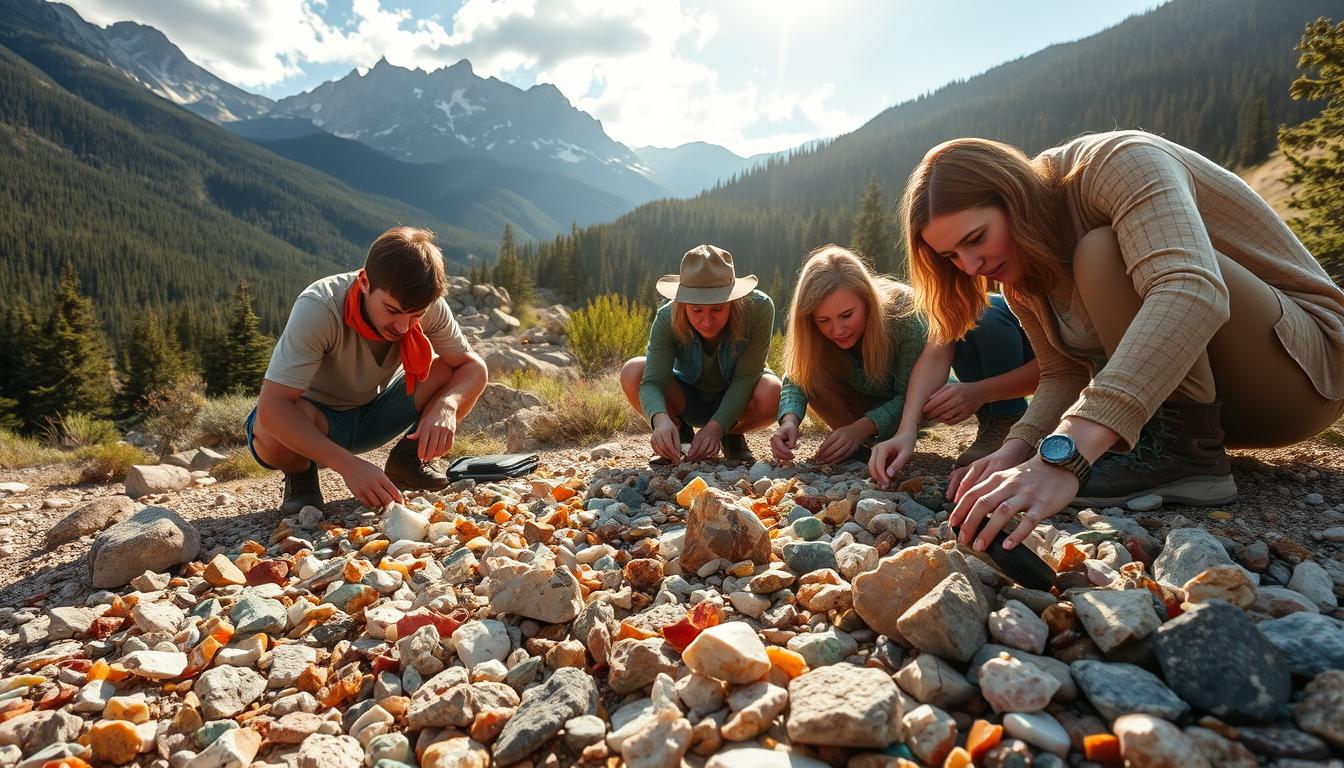
Rock Collecting Laws In Colorado cover a complex web of federal and state regulations that every rockhound needs to understand. Colorado’s diverse geological landscape offers incredible opportunities for mineral and fossil collecting, but navigating the legal requirements can be challenging for both beginners and experienced collectors.
Understanding these laws helps protect both collectors and Colorado’s natural resources. The state’s rich mining history has created a unique legal framework that balances public access with conservation efforts.
TL;DR
- BLM allows casual collection up to 25 pounds or one 5-gallon container per day on most public lands.
- National Parks prohibit all rock and fossil collecting with zero-tolerance enforcement.
- Private property requires written landowner permission before any collecting activities.
- Vertebrate fossils need special permits from the state paleontologist before collection.
Rock Collecting Laws In Colorado: Federal vs State Authority
Colorado’s rock collecting regulations operate under both federal and state jurisdiction. Federal laws primarily govern public lands managed by agencies like the Bureau of Land Management and National Forest Service.
The 1872 Mining Law still influences modern collecting rules on federal lands. State regulations fill gaps in federal coverage and specifically address Colorado trust lands and state parks.
Bureau of Land Management Regulations
The BLM manages the most rockhound-friendly public lands in Colorado. Their casual use regulations allow personal collecting without permits under specific conditions.
- Daily limits – Maximum 25 pounds or one 5-gallon container per person per day
- Annual caps – No more than 250 pounds per person per year from BLM lands
- Hand tools only – Rock hammers, chisels, and small shovels are permitted
- Surface collection – Digging deeper than 3 feet requires special authorization
National Forest Service Rules
Forest Service lands have more restrictive policies than BLM areas. Many forests require permits even for casual collecting activities.
District rangers have authority to set specific collection limits based on local conditions. Some popular areas like the Mount Antero aquamarine locality require advance permits and have seasonal restrictions.
Private Property and Mining Claim Considerations
Collecting on private property requires explicit written permission from landowners. Verbal agreements often lead to legal complications and should be avoided.
Active mining claims present additional legal challenges for rockhounds. Even abandoned claims may retain mineral rights that prohibit unauthorized collecting.
Identifying Mining Claims
- Corner markers – Look for metal posts or monuments marking claim boundaries
- Notice signs – Active claims display current owner contact information
- Online databases – Check BLM’s LR2000 system for claim status verification
- County records – Local assessor offices maintain mining claim registrations
Protected Areas and Prohibited Collections
National Parks maintain strict no-collection policies to preserve natural and cultural resources. Rocky Mountain National Park and Black Canyon of the Gunnison enforce zero-tolerance rules.
State parks have similar restrictions but may allow limited educational collecting with special permits. Always check with park headquarters before visiting collecting areas.
Fossil Collection Restrictions
Vertebrate fossils receive special protection under both federal and state law. These specimens require permits from qualified paleontologists before collection.
Plant fossils face fewer restrictions but still need landowner permission on private property. Florissant Fossil Beds National Monument prohibits all fossil collecting within park boundaries.
Essential Permission Strategy
Always carry written permission letters and land status documentation when rockhounding. Having proof of legal access prevents misunderstandings with law enforcement and other land users.
Seasonal Restrictions and Environmental Responsibility
Colorado’s high elevation areas face seasonal closures from November through May due to snow and wildlife protection needs. Spring runoff can make access roads impassable until late June.
Fire restrictions during dry periods may prohibit access to certain collecting areas. Check current fire danger levels before planning collecting trips to remote locations.
Wildlife Protection Measures
- Nesting season awareness. Avoid collecting near bird nesting areas from March through July.
- Migration corridors. Stay on designated trails during elk and deer migration periods.
- Habitat restoration. Fill excavation holes and remove all collecting debris before leaving sites.
Commercial Collection Requirements
Commercial collecting operations face significantly more regulatory requirements than casual hobbyists. Business licenses, environmental impact assessments, and bonding requirements apply to most commercial activities.
The threshold between casual and commercial collecting varies by land management agency. Selling collected specimens usually triggers commercial regulations regardless of collection volume, similar to the commercial restrictions found in Rock Collecting Laws in Utah.
Articles You May Like
Frequently Asked Questions
Can I collect rocks in Colorado National Parks?
No, all rock and mineral collecting is prohibited in Colorado’s National Parks including Rocky Mountain and Black Canyon of the Gunnison.
Do I need permission to collect on BLM land?
Casual collecting under 25 pounds per day requires no permit on most BLM lands. Commercial collecting always requires special use permits.
What tools can I use for rock collecting in Colorado?
Hand tools like rock hammers, chisels, and small shovels are permitted on most public lands. Motorized equipment requires special permits.
Are there restrictions on fossil collecting?
Vertebrate fossils require special permits from qualified paleontologists. Plant fossils have fewer restrictions but need landowner permission on private property.
How do I identify active mining claims?
Look for corner markers, notice signs with owner information, and check the BLM’s LR2000 online database for current claim status.
Final Thoughts
Rock Collecting Laws In Colorado require careful attention to multiple jurisdictions and changing regulations. Understanding these rules protects both collectors and Colorado’s geological heritage for future generations.
Start with BLM lands for the most collecting-friendly regulations, and always verify current rules before visiting any location. Responsible collecting today ensures access tomorrow. If you’re planning to rockhound in other western states, you’ll find that Rock Collecting Laws in Wyoming share many similarities with Colorado’s regulations, while Rock Collecting Laws in New Mexico offer different opportunities for collectors. For those considering desert collecting adventures, reviewing Rock Collecting Laws in Arizona can help you understand how regulations vary across the southwestern United States.