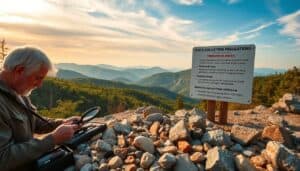
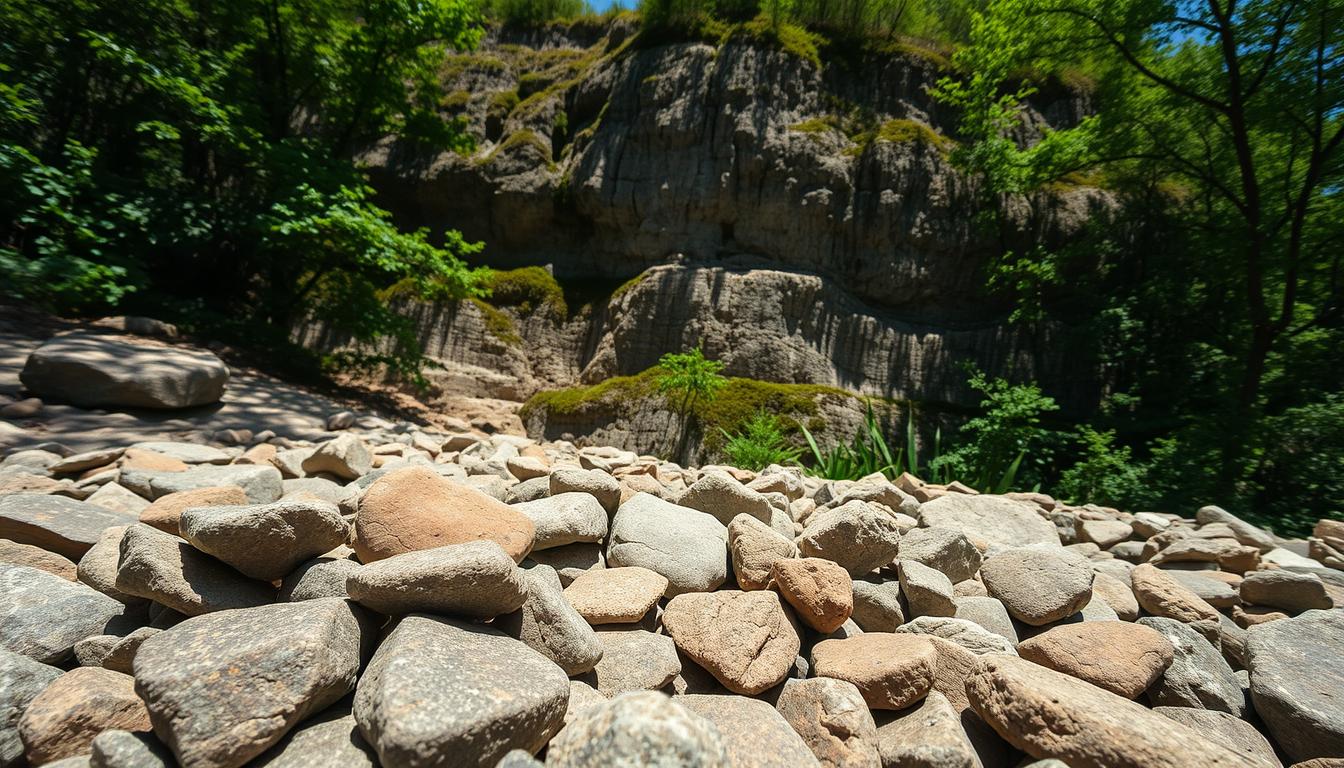
Rock Collecting Laws In Alabama set the rules for finding and keeping geological treasures across the state. Alabama’s rich geological landscape offers amazing opportunities for rockhounds, but collectors must understand the legal framework that protects these natural resources.
The state has specific regulations that vary depending on whether you’re on public or private land. Understanding these laws helps collectors stay compliant while enjoying their hobby and preserving Alabama’s geological heritage for future generations.
TL;DR
- Recreational rock collecting permits are required for most state lands in Alabama.
- Hand tools like hammers and chisels are allowed, but mechanical equipment requires special permits.
- Illegal collecting can result in fines ranging from $500 to $5,000 plus misdemeanor charges.
- National forests allow personal rock collecting but prohibit heavy machinery and require filling excavated holes.
Rock Collecting Laws In Alabama: Understanding the Basics
Alabama manages rock collecting through both state and federal regulations designed to balance recreational activities with conservation efforts. The Alabama Department of Conservation and Natural Resources oversees most state-level rules, while federal agencies manage their respective lands.
These laws exist to protect sensitive geological formations, archaeological sites, and natural habitats from over-collection. They also ensure that Alabama’s geological treasures remain available for scientific study and future generations to enjoy. Similar regulations exist across the southeastern United States, including Rock Collecting Laws in Georgia and Rock Collecting Laws in Tennessee.
State-Level Regulations
Alabama’s state government requires permits for most rock collecting activities on public lands. The permit system helps track collecting activities and ensures responsible practices.
- Recreational permits – designed for hobbyists collecting for personal enjoyment
- Scientific permits – required for research and educational purposes
- Commercial permits – needed for any collecting intended for sale or profit
Federal Regulations
Federal lands in Alabama follow guidelines set by agencies like the U.S. Forest Service and Bureau of Land Management. These rules often differ from state regulations and can be more restrictive.
The Archaeological Resources Protection Act (ARPA) applies to all federal lands and carries severe penalties for unauthorized collection of archaeological materials. Violations can result in federal felony charges and fines up to $100,000.
Where You Can Legally Collect Rocks
The legality of rock collecting depends heavily on land ownership and designation. Each type of land has different rules and restrictions that collectors must follow.
Public Lands
Most public lands in Alabama allow some form of rock collecting, but with specific limitations and requirements.
- National Forests. The Talladega National Forest permits personal rock collecting with hand tools only.
- State Parks. Many parks allow limited collecting, but some prohibit it entirely – always check specific park rules.
- Wildlife Management Areas. These areas have seasonal restrictions and may require special permits.
Private Property
Private land offers the most freedom for rock collecting, but only with proper permission. Always obtain written permission from landowners before collecting on private property.
Many landowners are willing to grant access if approached respectfully and given assurance that you’ll follow their specific rules. Some may require liability waivers or insurance coverage.
Always Check Local Rules First
County and municipal governments may have additional restrictions beyond state and federal laws. Contact local authorities before collecting in any new area.
Permit Requirements and Application Process
Alabama’s permit system is straightforward but varies depending on your collecting purpose and location. Most recreational collectors need only a basic permit.
Types of Available Permits
- Basic recreational permit – covers personal collecting on most state lands
- Educational permit – allows collecting for teaching purposes
- Scientific research permit – enables collection for academic studies
Application Process
Apply through the Alabama Department of Conservation and Natural Resources website or local offices. You’ll need to specify your collecting locations, intended specimens, and collection methods.
Processing typically takes 2-3 weeks, and fees range from $25 for basic permits to $100 for scientific permits. Permits are usually valid for one year and must be renewed annually.
Protected Areas and Restrictions
Alabama has numerous protected areas where rock collecting is either prohibited or heavily restricted. These restrictions help preserve important geological, archaeological, and ecological sites.
Completely Prohibited Areas
- Archaeological sites – any location containing Native American artifacts or historical remains
- State nature preserves – designated areas protecting rare ecosystems
- Some state parks – particularly those with significant geological features
Restricted Areas
Wildlife Management Areas often allow collecting during specific seasons or with special permits. These restrictions protect breeding seasons and sensitive habitats.
Some areas may allow collecting but prohibit certain tools or methods. Always verify current restrictions before visiting any protected area, and consider researching regulations in nearby states like Rock Collecting Laws in Florida if planning multi-state collecting trips.
Legal and Prohibited Specimens
Not all rocks and minerals in Alabama can be legally collected. The state protects certain specimens due to their rarity, scientific value, or cultural significance.
Commonly Collectible Materials
- Quartz varieties – including amethyst, citrine, and smoky quartz
- Common agates – found in stream beds and gravel deposits
- Garnet – abundant in certain areas of northern Alabama
- Staurolite – the “fairy stone” cross-shaped crystals
Protected Specimens
Fossils from state or federal lands require special permits and are often completely off-limits to recreational collectors. This includes vertebrate fossils, rare invertebrate specimens, and petrified wood from designated areas.
Certain rare minerals and crystals may also be protected, especially those from type localities or areas of special scientific interest.
Tools and Equipment Regulations
Alabama regulates the types of tools and equipment that collectors can use to minimize environmental impact and protect geological formations.
Permitted Tools
- Hand tools – rock hammers, chisels, brushes, and screens
- Small digging tools – trowels, picks, and shovels for minor excavation
- Collection containers – bags, boxes, and wrapping materials
Prohibited Equipment
Heavy machinery, explosives, and power tools are generally prohibited on public lands. Metal detectors may be allowed in some areas but often require separate permits.
Any equipment that causes significant ground disturbance or environmental damage is typically banned from sensitive areas.
Popular Legal Collecting Locations
Alabama offers numerous excellent locations for legal rock collecting, each with its own geological specialties and access requirements.
Northern Alabama
- Cullman County – known for excellent quartz crystals and agate nodules
- Jackson County – offers diverse mineral specimens and fossils
- Cherokee County – features good collecting along stream beds
Central Alabama
The Tuscaloosa area provides access to Cretaceous fossils and unique mineral deposits. Many locations are accessible through state forests and public access areas.
Southern Alabama
The Coastal Plain region offers opportunities to find petrified wood, shark teeth, and marine fossils. Beach collecting is generally permitted but check local regulations.
Legal Consequences of Illegal Collecting
Violating Alabama’s rock collecting laws can result in serious penalties that go far beyond simple fines. The state takes protection of its natural resources seriously, with consequences similar to those outlined in Rock Collecting Laws in North Carolina and other southeastern states.
State Penalties
- Fines – typically range from $500 to $5,000 depending on violation severity
- Misdemeanor charges – can result in criminal records and court appearances
- Collection confiscation – authorities can seize illegally obtained specimens
- Permit revocation – future collecting privileges may be suspended
Federal Penalties
Violations on federal lands carry much stiffer penalties, including potential felony charges and fines up to $100,000. The Archaeological Resources Protection Act imposes particularly harsh penalties for collecting artifacts.
Federal violations can also result in permanent bans from all federal lands, effectively ending a collector’s access to national forests and other federal sites.
Articles You May Like
Frequently Asked Questions
Do I need a permit to collect rocks on private property in Alabama?
No permit is required for private property, but you must have written permission from the landowner before collecting any specimens.
Can I use a metal detector while rock collecting in Alabama?
Metal detectors may be permitted in some areas but often require separate permits and are prohibited in archaeological or historical sites.
What happens if I accidentally collect from a protected area?
Ignorance of the law is not a defense, but cooperation with authorities and returning specimens may reduce penalties in accidental violations.
Are there age restrictions for rock collecting permits in Alabama?
Minors can collect under adult supervision, but the supervising adult must hold the appropriate permits and take responsibility for compliance.
Can I sell rocks I’ve legally collected in Alabama?
Recreational permits typically allow personal collecting only – selling collected specimens may require a commercial permit and business license.
Final Thoughts
Rock Collecting Laws In Alabama provide a clear framework for enjoying the state’s geological treasures while protecting them for future generations. Following these regulations ensures that your collecting activities remain legal and sustainable.
Start by obtaining the proper permits and researching your intended collecting areas thoroughly. With proper preparation and respect for the law, Alabama offers incredible opportunities for rockhounds of all experience levels.