
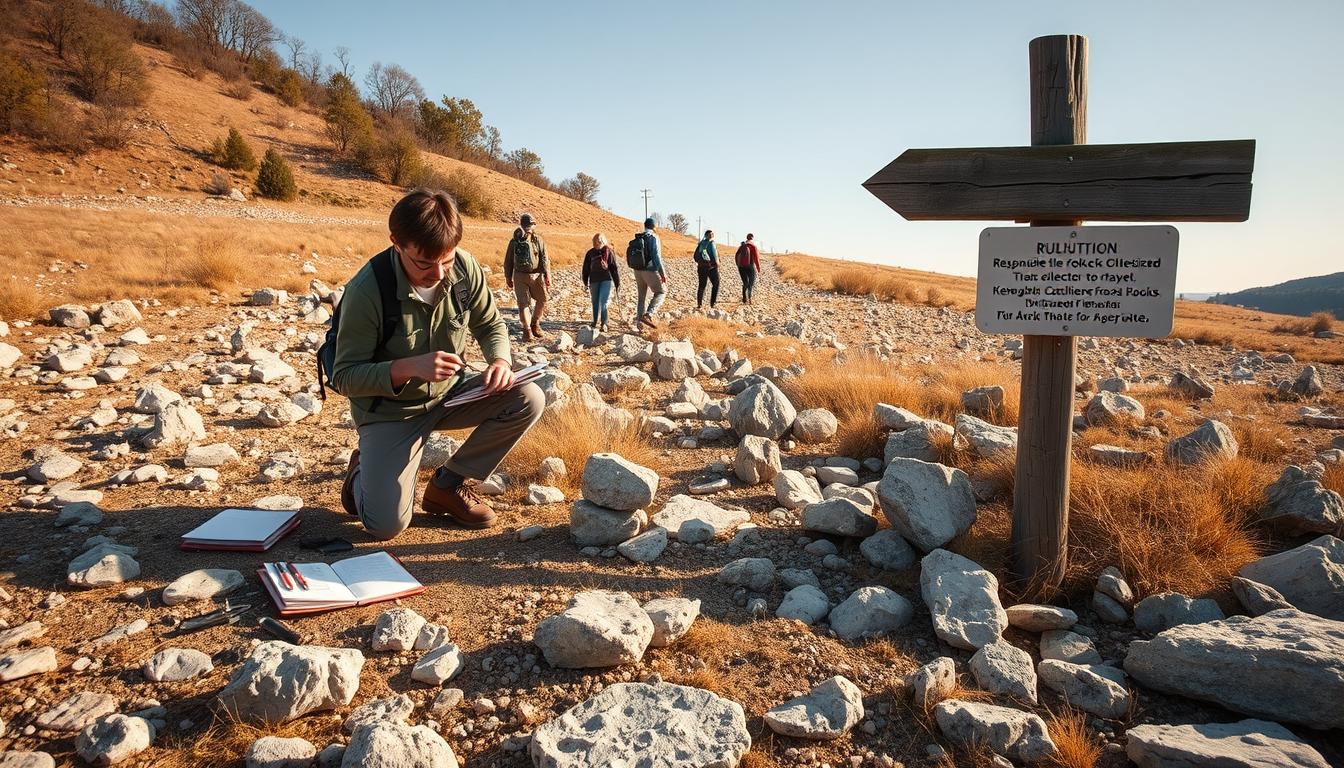
Rock Collecting Laws In Kentucky can seem confusing at first, but understanding the basic rules helps you enjoy this hobby legally and responsibly. The state has specific regulations about where you can collect rocks and minerals, with different rules applying to public lands, private property, and state parks.
Kentucky offers incredible opportunities for rock hounds, from finding geodes in limestone quarries to discovering fossils in ancient creek beds. Knowing the legal guidelines protects both you and Kentucky’s natural resources while ensuring you can pursue this rewarding hobby for years to come.
TL;DR
- Kentucky state parks prohibit all rock and mineral collecting without written permits from park management.
- Private property requires explicit landowner permission, with trespassing fines starting at $500 in Kentucky.
- Federal lands like Daniel Boone National Forest allow personal collecting up to 25 pounds per day for rocks and minerals.
- Commercial collecting requires separate permits and licensing through the Kentucky Department of Natural Resources.
Rock Collecting Laws In Kentucky
Kentucky divides rock collecting regulations into four main categories based on land ownership. Each type of property has distinct rules that rock collectors must follow to stay within legal boundaries. These regulations are similar to those found in neighboring states like Tennessee’s rock collecting laws, which also emphasize property ownership and permit requirements.
The most restrictive areas are state parks and nature preserves, where collecting is generally prohibited to protect geological formations and educational resources. Public lands managed by federal agencies have more permissive policies, while private property collecting depends entirely on landowner consent.
State Park and Nature Preserve Rules
Kentucky State Parks maintain strict no-collecting policies across all 49 state park locations. These regulations protect geological features, educational displays, and ensure future visitors can enjoy natural formations in their original state.
Violations can result in fines ranging from $25 to $500, depending on the quantity and type of materials collected. Park rangers regularly patrol popular areas and have authority to issue citations on the spot.
Permitted Exceptions
Some state parks offer educational programs where supervised collecting is allowed under specific circumstances. These programs typically focus on common materials like creek pebbles or weathered limestone fragments that don’t impact significant geological features.
- Educational Programs – Supervised collecting during ranger-led activities with pre-approved materials only.
- Research Permits – Academic institutions can apply for collecting permits for legitimate scientific research projects.
- Photography and Documentation – Taking photos and recording GPS coordinates is always permitted and encouraged.
Federal Land Regulations
Daniel Boone National Forest covers over 700,000 acres across eastern Kentucky and allows personal rock and mineral collecting under federal guidelines. The Forest Service permits individuals to collect up to 25 pounds of rocks and minerals per day for personal use, which follows the same federal standards applied in states like Virginia’s rock collecting regulations.
Collecting tools are limited to hand tools only – no power equipment, explosives, or mechanical devices are permitted. Popular collecting areas include creek beds, exposed road cuts, and designated dispersed camping areas.
Restricted Federal Areas
Certain zones within federal lands have additional restrictions that collectors must observe:
- Wilderness Areas – Minimal impact collecting only, with pack-in, pack-out policies strictly enforced.
- Archaeological Sites – Zero tolerance for any collecting activities near documented historical or prehistoric sites.
- Sensitive Habitats – Seasonal restrictions during wildlife breeding periods or in areas with endangered species.
Private Property Guidelines
Private property collecting requires written permission from landowners before entering any land for rock collecting purposes. Kentucky’s trespassing laws are strictly enforced, with minimum fines of $500 for first-time violations. Similar requirements exist across the Southeast, as seen in North Carolina’s rock collecting laws and West Virginia’s regulations.
Many landowners are receptive to responsible collectors who ask permission properly and offer to share interesting finds or pay reasonable access fees. Building positive relationships with property owners often leads to long-term collecting opportunities.
Always Get Permission in Writing
Verbal permission can lead to misunderstandings if different family members or property managers aren’t aware of collecting agreements. A simple written note prevents legal complications and shows respect for the landowner’s property rights.
Liability and Insurance
Collectors on private property should verify their personal liability insurance covers rockhounding activities. Some property owners require proof of insurance before granting access, especially around active quarries or unstable rock faces.
- Contact the landowner. Introduce yourself, explain your interest, and ask about their policy on rock collecting.
- Discuss terms clearly. Establish boundaries, time limits, and any restrictions on tools or collecting areas.
- Document the agreement. Get written permission that includes dates, specific areas, and contact information.
- Follow through professionally. Stick to agreed terms, leave areas cleaner than you found them, and maintain good communication.
Commercial Collecting Requirements
Commercial rock and mineral collecting in Kentucky requires permits through the Department of Natural Resources and compliance with mining regulations. Even small-scale commercial operations need proper documentation and may require environmental impact assessments.
The state defines commercial collecting as any activity where collected materials are sold, traded for profit, or used in business operations. This includes online sales, rock shop inventory, and materials used in construction or manufacturing.
Permit Application Process
Commercial permits typically take 30-60 days to process and require detailed site plans, environmental assessments, and bonding requirements. Fees vary based on operation size and location, starting around $250 for small-scale permits.
- Site Survey – Professional geological assessment of proposed collecting areas and environmental impact evaluation.
- Bonding Requirements – Financial guarantees for site restoration and environmental protection, typically $1,000-$5,000.
- Annual Reporting – Documentation of quantities collected, sales records, and site restoration activities.
- Insurance Coverage – Commercial liability insurance meeting state minimum requirements for mining operations.
Articles You May Like
Frequently Asked Questions
Can I collect rocks from Kentucky state parks?
No, Kentucky state parks prohibit all rock and mineral collecting without special permits. This includes picking up small pebbles or common stones from trails and beaches.
How much can I collect from federal forests in Kentucky?
Federal lands allow personal collecting up to 25 pounds per day using hand tools only. Power equipment and commercial collecting require separate permits.
What happens if I get caught collecting illegally?
Penalties range from $25-$500 for state violations and up to $1,000 plus confiscation for federal violations. Repeat offenses can result in permanent bans from public lands.
Do I need permission to collect on abandoned property?
Yes, abandoned property still has legal owners, and collecting without permission constitutes trespassing. Contact local authorities to identify current property ownership before collecting.
Are there any rocks I can never collect in Kentucky?
Fossils from certain geological formations are protected under state paleontological laws. Archaeological artifacts are federally protected regardless of where they’re found.
Final Thoughts
Rock Collecting Laws In Kentucky are straightforward once you understand the basic categories and requirements for different types of property. Following these regulations protects Kentucky’s geological heritage while ensuring you can enjoy this fascinating hobby legally and responsibly.
Start by exploring federal forest areas where personal collecting is permitted, then build relationships with private landowners for access to unique collecting sites.