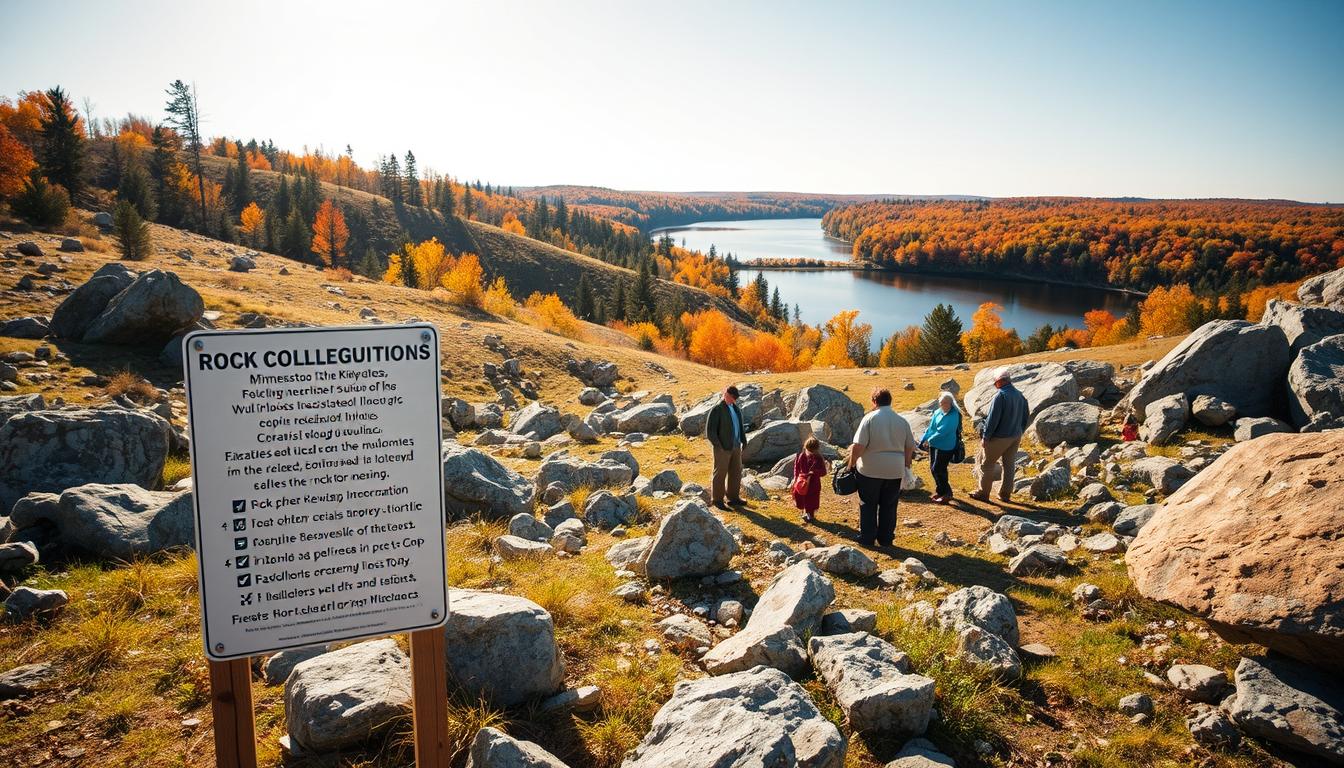
Rock collecting laws in Minnesota protect the state’s natural resources while allowing enthusiasts to pursue their hobby responsibly. Understanding these regulations helps collectors avoid fines and ensures Minnesota’s geological treasures remain preserved for future generations.
The state’s diverse geology offers incredible opportunities for rock hounds, from Lake Superior agates to unique mineral formations. However, specific rules govern where and how you can collect, making it essential to know the legal boundaries before heading out with your tools.
TL;DR
- Rock collecting is completely prohibited in all Minnesota state parks and scientific natural areas without written permission.
- Private land collecting requires landowner permission – collecting without consent can result in trespassing charges.
- Recreational collectors can use non-motorized tools for gold prospecting on most public lands without permits.
- Violation fines range from $100 for minor infractions up to $5,000 or more for severe violations.
Rock Collecting Laws Minnesota Overview
Minnesota’s rock collecting regulations balance public access with conservation needs. The state manages these laws through multiple agencies, each with specific jurisdictions and requirements.
Most recreational collecting on public beaches and riverbanks is allowed without permits. However, the rules become stricter on protected lands and for commercial operations.
State-Level Regulations
The Minnesota Department of Natural Resources oversees most collecting regulations on state-managed lands. Their rules focus on protecting sensitive ecosystems while allowing reasonable access for hobbyists.
Key state regulations include permission requirements for private land and restrictions on motorized equipment. Commercial collectors face additional licensing requirements and environmental compliance standards.
- Private Land Access – Written landowner permission required before collecting
- Tool Restrictions – Only hand tools and non-motorized equipment allowed for recreational use
- Quantity Limits – Reasonable amounts for personal use only
- Protected Species – Certain fossils and minerals require special permits
Federal Land Regulations
Federal agencies manage additional rules on national forests, wildlife refuges, and other federal properties within Minnesota. These regulations often provide more restrictive guidelines than state laws.
The U.S. Forest Service allows recreational collecting in most areas of the Superior National Forest with basic restrictions. However, wilderness areas and sensitive habitats remain off-limits to all collecting activities.
Where You Can Legally Collect Rocks
Understanding the distinction between different land types helps collectors identify legal collecting opportunities. Each category has specific rules and access requirements.
Public beaches along Lake Superior offer some of the best legal collecting spots in Minnesota. These areas allow reasonable personal collecting without permits or special permissions, similar to opportunities found in nearby Michigan’s rock collecting areas.
Public Beaches and Waterways
Lake Superior’s shoreline provides excellent agate hunting opportunities on public beaches. The Minnesota Department of Natural Resources allows personal collecting along most public shorelines below the ordinary high water mark.
Rivers and streams on public land also offer collecting opportunities. Focus on gravel bars and exposed bedrock areas where erosion naturally concentrates interesting specimens.
Private Property Guidelines
Private land collecting requires advance permission from property owners. This includes farms, residential properties, and privately owned quarries or mining sites.
Approach landowners respectfully and explain your collecting interests clearly. Many owners appreciate collectors who ask permission and offer to share interesting finds or provide site cleanup services.
- Contact Property Owners. Reach out before visiting to request permission and discuss any specific restrictions.
- Respect Property Boundaries. Stay within agreed areas and avoid damaging fences, crops, or structures.
- Follow Safety Protocols. Bring proper equipment and inform someone of your collecting plans.
- Leave Areas Clean. Fill holes and remove any trash to maintain positive landowner relationships.
Prohibited Collecting Areas
Several types of protected areas completely prohibit rock collecting to preserve their natural and scientific value. These restrictions apply regardless of collecting purpose or permit status.
State parks represent Minnesota’s most scenic and geologically significant areas. The strict no-collecting policy protects these resources for education, research, and public enjoyment.
Minnesota State Parks
All 75 Minnesota state parks prohibit rock, mineral, and fossil collecting without special research permits. This includes popular destinations like Gooseberry Falls and Split Rock Lighthouse state parks.
The prohibition extends to all natural materials including driftwood, shells, and plant specimens. Violators face fines and confiscation of collected materials plus any equipment used.
Scientific and Natural Areas
Minnesota’s 164 Scientific and Natural Areas (SNAs) protect rare and unique ecosystems. These areas maintain even stricter collecting prohibitions than state parks.
SNAs preserve outstanding examples of Minnesota’s native plant communities, rare geological formations, and significant fossil deposits. Any collection activity requires special research permits approved through rigorous scientific review processes.
Check Before You Collect
Always verify current regulations before visiting any collecting site. Land management policies can change, and seasonal restrictions may apply to protect wildlife during sensitive periods.
Required Permits and Licensing
Most recreational rock collecting in Minnesota requires no permits or licenses for personal use. However, certain activities and locations do require advance approval from appropriate agencies.
Commercial collecting operations face significantly more regulatory requirements. These businesses must obtain multiple permits and maintain compliance with environmental protection standards.
When Permits Are Required
Scientific research projects collecting specimens for museums or universities need research permits. Educational groups planning collecting trips to certain public lands may also require group permits.
Any collecting activity involving mechanical equipment or significant ground disturbance requires permits regardless of the intended use. This includes metal detecting in many areas and any excavation beyond simple hand digging.
- Research Permits – Required for scientific specimen collection
- Commercial Licenses – Needed for any collecting intended for sale
- Group Permits – Required for organized educational collecting trips
- Equipment Permits – Needed for mechanical tools or excavation equipment
Application Process
Permit applications typically require detailed collecting plans, site maps, and proof of relevant expertise or insurance coverage. Processing times vary from several weeks to several months depending on the permit type.
Contact the appropriate agency well in advance of planned collecting activities. The Minnesota Department of Natural Resources handles most state permits, while federal agencies manage permits for federal lands.
Legal Consequences and Enforcement
Violation of rock collecting laws in Minnesota carries significant penalties including fines, equipment confiscation, and possible criminal charges. Enforcement occurs through conservation officers, park rangers, and other authorized personnel.
The severity of penalties depends on factors like the location of violations, quantity of materials collected, and whether commercial activity was involved. Repeat offenders face enhanced penalties and possible license suspensions, similar to enforcement patterns seen in Wisconsin’s rock collecting laws.
Fine Structure
Minor violations like collecting small amounts on restricted public land typically result in fines between $100-$500. More serious violations involving protected areas or commercial quantities can result in fines exceeding $5,000.
Additional penalties may include restitution costs for environmental damage, confiscation of vehicles or equipment, and mandatory restoration work at affected sites.
| Violation Type | Typical Fine Range | Additional Penalties |
|---|---|---|
| Minor public land violation | $100-$500 | Specimen confiscation |
| State park collecting | $300-$1,000 | Equipment confiscation |
| Commercial without permit | $1,000-$5,000 | License suspension |
| Protected species violation | $2,000-$10,000 | Criminal charges possible |
Reporting Violations
Citizens can report suspected violations through the Minnesota Department of Natural Resources Turn in Poachers (TIP) hotline at 1-800-652-9093. Reports can also be made online through the agency’s website.
Provide detailed information including location, date and time, description of activities observed, and any vehicle or equipment information. Photos or videos can help support violation reports if obtained safely.
Best Practices for Legal Collecting
Responsible collecting practices protect Minnesota’s geological resources while maintaining positive relationships with landowners and land managers. Following established ethics ensures continued access for future collectors.
Start each collecting trip by researching current regulations and obtaining necessary permissions. Carry contact information for relevant agencies and landowners in case questions arise during your visit.
Safety and Ethics Guidelines
Always inform someone of your collecting plans and expected return time. Carry appropriate safety equipment including first aid supplies, emergency communication devices, and proper protective gear.
Respect private property boundaries and avoid collecting near structures, utilities, or sensitive environmental areas. Leave collecting sites cleaner than you found them by removing any trash or debris.
- Research First – Verify regulations and obtain permissions before visiting sites
- Use Proper Tools – Bring appropriate hand tools and safety equipment only
- Minimize Impact – Collect only what you need and avoid unnecessary digging
- Document Finds – Record location and geological context for your specimens
- Share Knowledge – Report significant finds to appropriate geological organizations
Environmental Stewardship
Collectors play an important role in protecting Minnesota’s geological heritage through responsible practices. This includes avoiding over-collecting at popular sites and educating others about proper techniques.
Consider joining local rock and mineral clubs to learn about legal collecting opportunities and conservation efforts. These organizations often organize group trips to productive sites while maintaining positive relationships with land managers, especially for exploring opportunities in neighboring states like North Dakota and Iowa.
Frequently Asked Questions
Can I collect rocks on Minnesota’s public beaches?
Yes, personal rock collecting is allowed on most public beaches along Lake Superior and other public waterways. Stay below the ordinary high water mark and collect only reasonable amounts for personal use.
Do I need permits for recreational gold panning in Minnesota?
No permits are required for recreational gold panning using non-motorized hand tools on most public lands. However, check with local land managers as some areas may have specific restrictions or seasonal closures.
What happens if I accidentally collect rocks in a prohibited area?
Contact the managing agency immediately to report the violation and return any collected materials. Voluntary disclosure and cooperation typically result in reduced penalties compared to being caught by enforcement officers.
Are there any completely unrestricted collecting areas in Minnesota?
Very few areas have no restrictions, as most land has some form of management oversight. Your best options are public beaches, some county parks, and private land with owner permission.
Can I sell rocks I legally collect in Minnesota?
Selling specimens collected for personal use is generally allowed, but large-scale commercial collecting requires proper business licenses and may need additional permits depending on the collection sites used.
Final Thoughts
Rock Collecting Laws Minnesota provide a framework that balances public access with resource protection, allowing enthusiasts to pursue their hobby while preserving the state’s geological heritage. Success comes from understanding the rules before you head out and always obtaining proper permissions.
Start your Minnesota collecting adventures on public beaches and with landowner permission on private property. These legal options provide excellent opportunities to build your collection while staying within the bounds of state regulations.