Rock Collecting Laws In Rhode Island can seem confusing for hobbyists who want to explore the Ocean State’s geological treasures. Rhode Island offers unique collecting opportunities along its coastline and inland areas, but collectors need to understand the specific regulations that govern where and what they can collect.
The state’s compact size doesn’t mean fewer rules – Rhode Island has clear guidelines about collecting on public beaches, state parks, and private property. Understanding these laws helps collectors avoid fines while enjoying this rewarding hobby safely and legally.
TL;DR
- Collecting rocks on Rhode Island’s public beaches is generally allowed for personal use in small quantities under 5 pounds per day.
- State parks require permits for any rock or mineral collecting, with fines up to $500 for unauthorized collection.
- Private property collecting requires written landowner permission, and trespassing fines start at $100 in Rhode Island.
- Federal lands like national wildlife refuges prohibit all rock collecting with penalties up to $5,000 for violations.
Rock Collecting Laws In Rhode Island: Public Beach Regulations
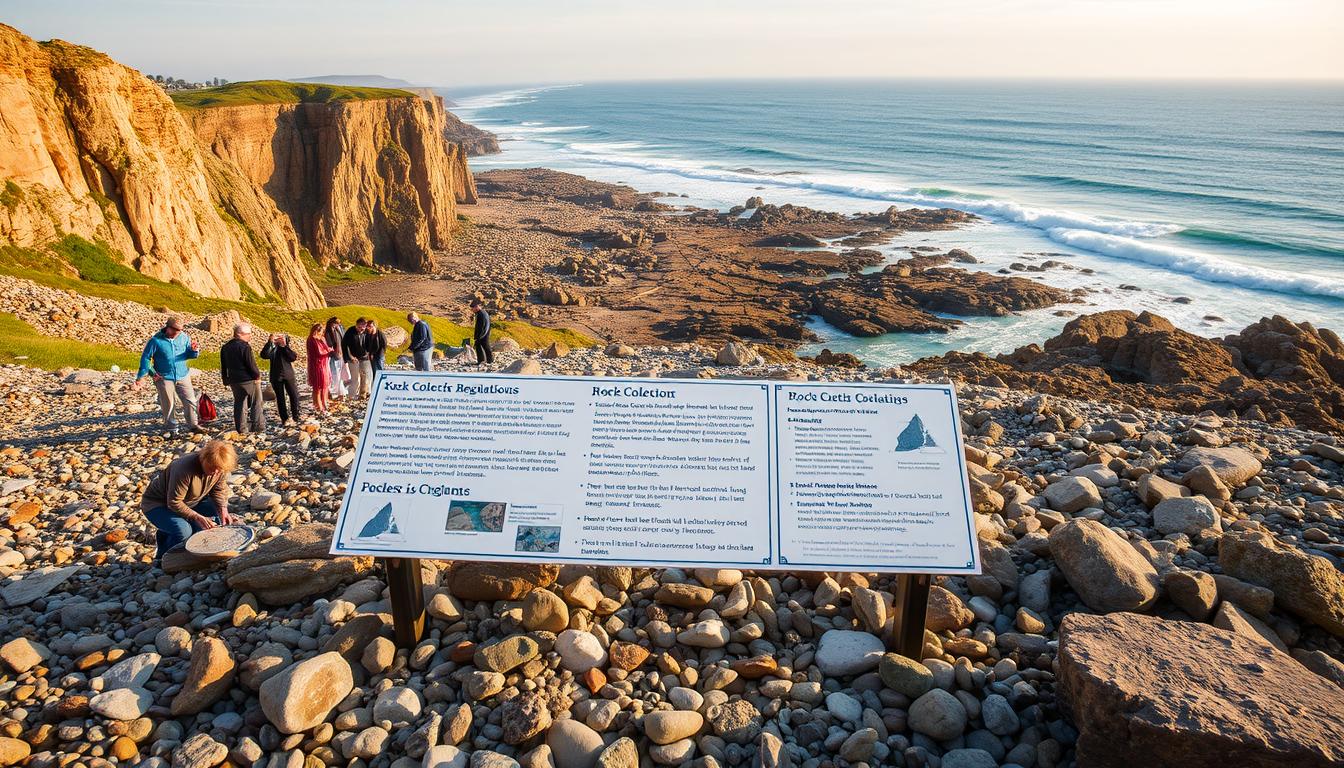
Rhode Island’s 400 miles of coastline offer excellent collecting opportunities for beach stones, sea glass, and weathered rocks. State law allows personal collecting of common rocks and minerals from public beaches in reasonable quantities for non-commercial use.
The general guideline limits collection to what you can carry by hand – typically interpreted as 5 pounds or less per person per day. Large-scale collecting, commercial harvesting, or using mechanical equipment requires special permits from the Department of Environmental Management.
Popular Beach Collecting Areas
- Narragansett Beach – Known for colorful beach stones and occasional sea glass finds.
- Second Beach (Sachuest) – Features granite fragments and quartz pebbles.
- Scarborough Beach – Offers diverse rock types from glacial deposits.
- Watch Hill Beach – Contains interesting metamorphic rock fragments.
State Park and Protected Area Rules
Rhode Island’s 21 state parks have stricter regulations than public beaches. Most state parks prohibit rock collecting entirely to preserve natural resources and geological formations for all visitors.
Lincoln Woods State Park and Arcadia Management Area specifically prohibit removing any natural materials including rocks, minerals, or fossils. Violations carry fines between $100-500 depending on the quantity removed and damage to the environment, similar to regulations found in Connecticut and Massachusetts.
Parks with Limited Collecting Allowances
- Goddard Memorial State Park – Small beach stones only from designated shoreline areas.
- Colt State Park – Beach collecting permitted in small quantities along Narragansett Bay.
- Fort Adams State Park – Limited to weathered stones from beach areas only.
Always Check Current Regulations
State park rules can change seasonally or due to conservation concerns. Call ahead or check the Rhode Island State Parks website before visiting to confirm current collecting policies.
Private Property and Landowner Permission
Collecting rocks on private property requires explicit written permission from the landowner. Rhode Island takes trespassing seriously, with first-time violations carrying minimum fines of $100 and potential criminal charges for repeat offenses.
Many private quarries and construction sites contain interesting geological specimens, but accessing these areas without permission is illegal. Some landowners may grant permission for educational collecting, especially if you’re working with a local geology club or educational institution.
Getting Landowner Permission
- Research property ownership. Use town tax records or online property databases to identify the current owner.
- Contact owners directly. Call or write explaining your collecting interests and proposed timeline.
- Offer liability protection. Many landowners require proof of insurance or signed liability waivers.
- Get written permission. Verbal agreements can lead to misunderstandings – always get permits in writing.
Federal Land Restrictions
Federal properties in Rhode Island strictly prohibit rock collecting. The Ninigret National Wildlife Refuge, Trustom Pond National Wildlife Refuge, and John H. Chafee National Wildlife Refuge all forbid removing any natural materials.
Violations on federal land carry much steeper penalties than state violations. Fines range from $1,000-5,000 for first offenses, with possible criminal charges for repeat violations or commercial collecting operations, making federal land restrictions even more stringent than those in Maine or New Hampshire.
Commercial Collecting and Permits
Anyone planning to sell collected rocks or minerals must obtain appropriate business licenses and collecting permits. Rhode Island requires commercial collectors to register with the Department of Business Regulation and pay annual fees.
Commercial beach collecting requires environmental impact assessments for operations removing more than 50 pounds of material annually. The permit process typically takes 60-90 days and costs $250-500 depending on the scope of operations.
Permit Requirements
- Business registration – Required for all commercial collecting operations.
- Environmental assessment – Needed for large-scale or frequent collecting.
- Bonding requirements – May be required to ensure site restoration.
- Insurance coverage – Minimum $100,000 liability coverage typically required.
Collecting Ethics and Best Practices
Responsible collecting helps preserve Rhode Island’s geological resources for future generations. Follow the “leave no trace” principle by taking only what you need and avoiding damage to the surrounding environment.
Join local geology clubs like the Rhode Island Mineral Hunters to learn about collecting regulations and connect with experienced collectors who know the best legal collecting spots. These groups often organize permitted collecting trips and educational workshops, and many members are also familiar with Vermont’s collecting laws for cross-state collecting trips.
Articles You May Like
Frequently Asked Questions
Can I collect rocks from any Rhode Island beach?
You can collect small quantities of common rocks from most public beaches for personal use. Avoid protected areas and always respect private property boundaries.
Do I need a permit to collect rocks in Rhode Island state parks?
Yes, most state parks require permits for any rock collecting. Many parks prohibit collecting entirely to preserve natural resources.
What’s the penalty for illegal rock collecting in Rhode Island?
Fines range from $100-500 for state property violations and $1,000-5,000 for federal land violations. Repeat offenses can result in criminal charges.
Can I collect rocks from construction sites or quarries?
Only with explicit written permission from the property owner. Trespassing on construction sites or quarries without permission is illegal and dangerous.
Final Thoughts
Rock Collecting Laws In Rhode Island are designed to balance hobbyist interests with environmental protection and property rights. Understanding these regulations helps you enjoy collecting while avoiding legal problems.
Start with public beaches where small-scale personal collecting is generally allowed, and always research specific rules before visiting new areas. When in doubt, contact local authorities or join a geology club for guidance on legal collecting opportunities.