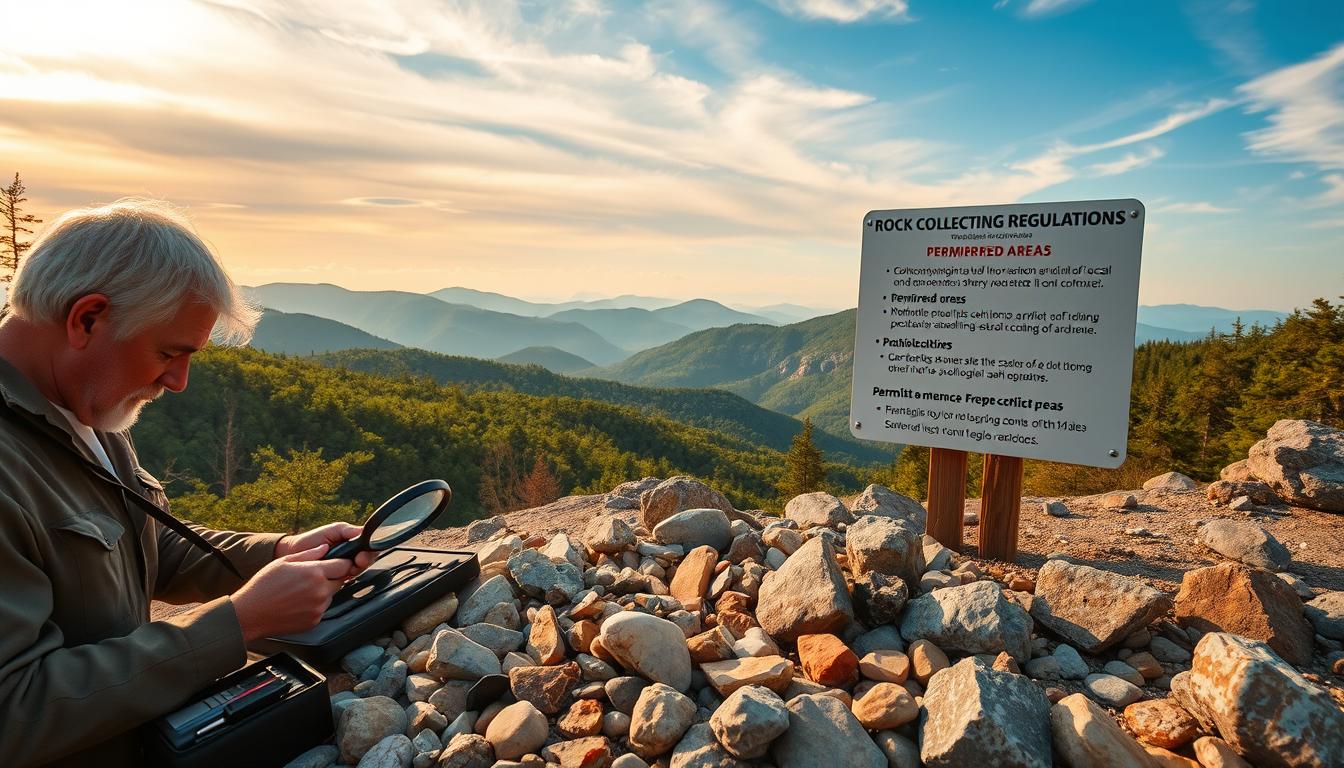
Rock Collecting Laws In West Virginia govern where and how you can legally gather geological specimens throughout the Mountain State. Understanding these regulations helps you avoid fines while building your collection from some of America’s most diverse rock formations.
West Virginia offers incredible opportunities for rockhounds, from finding fossils in limestone quarries to collecting coal specimens from old mining areas. However, each location has specific rules about what you can take and where you can search.
TL;DR
- Most state parks allow small-scale collecting for personal use, limited to 25 pounds per person per day.
- National forests require permits for collecting over 1 gallon or 5 pounds of specimens per day.
- Private property requires written permission from landowners, with many quarries charging $20-50 per day for access.
- Commercial collecting operations need special permits and must follow environmental restoration requirements.
Rock Collecting Laws In West Virginia: State Property Rules
West Virginia state parks generally allow casual rock collecting for personal enjoyment. You can gather small specimens like quartz crystals, fossils, and interesting stones as long as you follow quantity limits and avoid damaging the environment.
The standard rule across most state properties limits collectors to 25 pounds of specimens per person per day. This applies to places like Blackwater Falls State Park, where you might find garnets, or Hawks Nest State Park, known for its sandstone formations.
Prohibited Areas and Protected Sites
Several locations are completely off-limits to collectors due to their scientific or historical importance. These include designated geological sites, archaeological areas, and locations with rare or endangered species habitats.
- Seneca Rocks – Protected as a National Recreation Area with strict collection bans
- Organ Cave – Private cave system where collecting requires special tours
- Geological survey sites – Marked areas used for ongoing scientific research
- Historic mining areas – Many old coal and salt mines are unsafe and legally protected
Federal Land Regulations
National forests in West Virginia follow federal guidelines that are more restrictive than state rules. The Monongahela National Forest requires permits for collecting more than 1 gallon or 5 pounds of rocks per day.
These permits are free for personal use but must be obtained from the local ranger station before you start collecting. Commercial operations face much stricter requirements and substantial fees, similar to the regulations found in Virginia’s rock collecting laws.
George Washington National Forest Rules
The George Washington National Forest, which extends into eastern West Virginia, has specific zones where collecting is allowed or prohibited. Rangers actively patrol popular areas like Spruce Knob, so having proper documentation is important.
- Check permit requirements. Visit the ranger station or call ahead to confirm current rules for your target area.
- Respect wilderness boundaries. Designated wilderness areas typically prohibit all collecting activities.
- Follow Leave No Trace principles. Fill holes, avoid damaging vegetation, and pack out all trash.
Private Property and Commercial Sites
Many of West Virginia’s best collecting spots are on private land, including active and abandoned quarries. These locations often produce the highest quality specimens but require permission and sometimes fees.
Quarries like those near Martinsburg offer excellent fossil collecting opportunities for a daily access fee, usually ranging from $20 to $50 per person. Some sites provide tools and guidance, making them perfect for beginners exploring rockhounding laws similar to those in neighboring Pennsylvania and Maryland.
Always Get Permission in Writing
Even if a landowner gives verbal permission to collect on their property, ask for a simple written note with their signature and date. This protects you from trespassing charges if questioned by law enforcement.
Popular Private Collecting Sites
Several well-known private locations welcome rockhounds with proper arrangements. These sites often have the best specimens because they’re actively worked and supervised.
- Berkeley Springs area quarries – Known for calcite crystals and limestone fossils
- Jefferson County limestone quarries – Excellent for Ordovician period fossils
- Coal mining areas – Some permit collecting of coal specimens and associated minerals
- Private farms – Many allow collecting in exchange for closing gates and respecting crops
Special Permits and Commercial Operations
Commercial rock collecting operations need multiple permits and must follow environmental regulations. The West Virginia Department of Environmental Protection oversees these activities to prevent habitat damage.
If you plan to sell specimens regularly or operate collecting tours, you’ll need business licenses plus specific permits for each location. Educational institutions often get special consideration for research purposes, and understanding these requirements is crucial whether you’re collecting in West Virginia or studying Kentucky’s rock collecting regulations across the border.
Environmental Restoration Requirements
Commercial collectors must post bonds to cover potential environmental damage and agree to restore sites after major collecting activities. These requirements don’t apply to casual collectors but become important if your hobby grows into a business.
Frequently Asked Questions
Can I collect rocks in West Virginia state parks?
Yes, most state parks allow personal collecting up to 25 pounds per person per day. Always check with park staff about specific restrictions for your target location.
Do I need a permit to collect rocks on federal land?
You need a permit if collecting more than 1 gallon or 5 pounds per day in national forests. Personal use permits are free but must be obtained from the local ranger station.
What’s the penalty for illegal rock collecting in West Virginia?
Fines typically range from $100 to $500 for first-time violations, with higher penalties for collecting in protected areas or commercial quantities without permits.
Can I collect fossils from private quarries?
Yes, with written permission from the landowner and payment of any required fees. Many quarries charge $20-50 per day for collecting access.
Final Thoughts
Rock Collecting Laws In West Virginia are designed to balance public access with environmental protection and private property rights. Following these rules ensures you can enjoy this hobby while preserving opportunities for future collectors.
Start with state parks and public areas to learn the basics, then explore private sites once you understand proper collecting etiquette and legal requirements. Before traveling to other states for collecting trips, familiarize yourself with local regulations such as Ohio’s rock collecting laws to ensure compliance wherever your rockhounding adventures take you.