Rockhounding Near Me opens up a world of adventure right in your backyard, where you can discover beautiful minerals, fossils, and gemstones while enjoying the great outdoors. This hobby combines the thrill of treasure hunting with the satisfaction of learning about geology and building a unique collection of natural specimens.
Whether you’re a complete beginner or looking to expand your hunting grounds, finding the right locations and knowing what to look for can make all the difference in your success. The best part is that many prime rockhounding spots are probably closer to your home than you think.
TL;DR
- Check state geological surveys and university websites to find 15-20 documented rockhounding sites within 50 miles of your location.
- Visit local rock shops and mineral clubs to get insider tips on the 3-5 best spots that produce quality specimens in your area.
- Start with public lands like national forests and BLM areas where collecting is allowed without special permits.
- Bring basic tools including a rock hammer, chisel set, safety glasses, and collection bags to maximize your finds.
Finding Rockhounding Near Me Locations
The key to successful local rockhounding starts with research before you ever pick up a hammer. Your state’s geological survey website contains detailed maps showing mineral deposits, fossil beds, and rock formations that indicate promising hunting areas.
University geology departments often maintain databases of collecting sites used for field trips and research. Many publish guides specifically for amateur collectors that highlight accessible locations with good specimens.
Online Resources for Local Sites
- State geological surveys – Official maps and reports on mineral occurrences in your state.
- Rockhounding forums – Active communities sharing recent finds and location tips.
- Mineral club websites – Local groups that organize field trips to productive areas.
- Public land databases – Forest Service and BLM sites where collecting is permitted.
Understanding Legal Access and Permissions
Not all interesting geological areas allow public collecting, so understanding land ownership and regulations prevents legal trouble. Public lands generally allow casual collecting of common minerals and rocks, but each agency has specific rules about quantities and methods.
Private property requires explicit permission from landowners, even if the area looks abandoned or unused. Many successful rockhounds build relationships with farmers, quarry operators, and construction companies who grant access to productive sites.
Permission Guidelines
- Research ownership. Use county assessor websites to identify property owners before visiting any site.
- Contact landowners directly. Explain your hobby and offer to share interesting finds or provide site cleanup.
- Follow all rules. Respect quantity limits, designated areas, and seasonal restrictions on public lands.
- Leave no trace. Fill holes, pack out trash, and avoid damaging vegetation or structures.
Start with Your Local Rock Shop
The owners and staff at local rock shops know the best nearby collecting areas and current conditions. They often organize group trips and can introduce you to experienced local collectors.
Essential Tools for Local Rockhounding
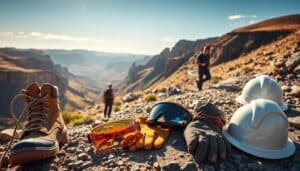
Successful rockhounding requires the right tools to safely extract specimens and protect yourself from injury. A basic kit costs under $100 and handles most collecting situations you’ll encounter in local areas.
Quality tools last for years and make the difference between damaged specimens and clean extractions. Start with essential items and add specialized tools as you discover what types of materials your local area produces.
Basic Tool Kit
- Rock hammer – 16-20 oz weight with flat striking surface and pick end.
- Cold chisels – Set of 3-4 different widths for precise splitting.
- Safety glasses – Essential protection from flying rock chips.
- Collection bags – Heavy canvas or mesh bags for carrying specimens.
- Newspaper or bubble wrap – Protect delicate finds during transport.
- Spray bottle – Clean dirt off specimens to see true colors and features.
Identifying Common Local Specimens
Every region has characteristic minerals and rocks based on local geology, so learning what to expect helps you recognize valuable finds. Common specimens like quartz, calcite, and pyrite appear in many areas but with regional variations in color, crystal form, and associated minerals.
Field guides specific to your state or region provide photos and descriptions of locally occurring specimens. Many include maps showing where different types of materials are most commonly found.
Research Your Regional Geology
Understanding the basic geological history of your area explains why certain minerals occur together and where to look for the best specimens. For example, rockhounds in Arizona find different materials than those exploring Oregon’s agate-rich beaches.
Online geological maps show rock types and ages across your state, helping you predict what types of specimens different areas might yield. This knowledge helps you choose the most promising locations for your available time.
Seasonal Considerations for Local Collecting
Weather and seasonal changes affect both access to sites and the quality of specimens you can find. Spring often provides the best conditions as winter frost breaks apart rock formations and exposes fresh surfaces.
Heavy rains wash away loose soil and debris, revealing specimens that were previously buried. However, wet conditions can make some sites inaccessible and dangerous due to slippery surfaces and unstable rock faces, making safety precautions especially important during these times.
Frequently Asked Questions
How do I find rockhounding clubs near me?
Search online for “[your city] mineral club” or “[your state] geological society” to find local groups. Many rock shops also have bulletin boards with club meeting information and contact details.
Can I rockhound in national parks?
Most national parks prohibit collecting minerals, rocks, or fossils to preserve natural resources for future visitors. However, some national forests and BLM lands allow casual collecting with specific guidelines.
What’s the best time of day for rockhounding?
Early morning provides the best light for spotting specimens, cooler temperatures, and fewer crowds at popular sites. Avoid midday heat and late afternoon glare that makes it harder to see color variations in rocks.
How much can I collect from public lands?
Most public lands allow collection of up to 25 pounds per day for personal use, with annual limits around 250 pounds. Check specific agency rules as limits vary between Forest Service, BLM, and state lands.
Do I need special equipment to start rockhounding?
A basic rock hammer, safety glasses, and collection bag are sufficient for beginners. Add chisels, a spray bottle, and protective wrapping as you gain experience and discover what your local areas produce.
Final Thoughts
Rockhounding Near Me offers endless opportunities to explore your local geology while building a collection of unique natural specimens. Start with research to identify legal collecting areas, then visit local rock shops and clubs to learn about the most productive sites in your region.
Begin with basic tools and public lands where collecting is permitted, then expand your knowledge and equipment as you discover what types of materials your area produces best.