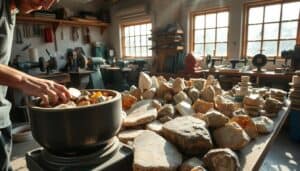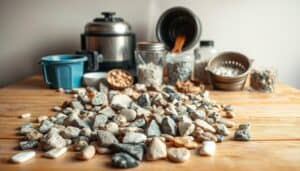
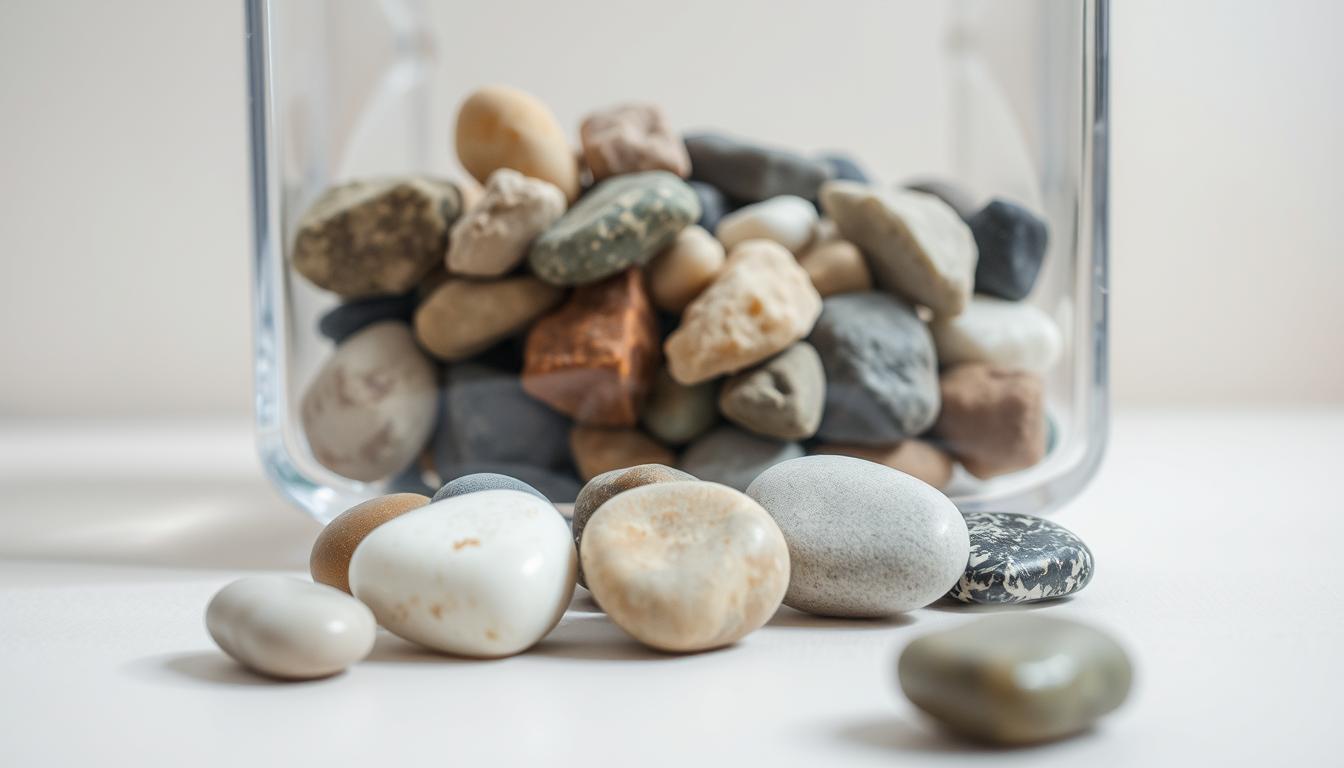
Rock tumbling is a rewarding hobby that transforms rough stones into beautiful polished gems. For beginners, selecting the right rocks makes the difference between stunning results and disappointing outcomes.
The rocks you choose directly affect your tumbling success. Some stones polish beautifully, while others crack or fail to develop the shine you want.
TL;DR
- Quartz varieties like amethyst and rose quartz rank 7 on the Mohs hardness scale – perfect for beginners.
- Agate produces stunning banded patterns and costs around $2-5 per pound at rock shops.
- Complete tumbling takes 4-6 weeks using coarse, medium, fine grit, then polish in sequence.
- Avoid soft rocks under 6 on the Mohs scale like limestone, shale, and most sandstones.
Best Rocks for Tumbling
Starting your rock tumbling journey requires selecting stones that can withstand the tumbling process and produce attractive results. Hard, durable rocks between 6-8 on the Mohs hardness scale work best for beginners.
The key is choosing rocks with interesting colors or patterns that will enhance during polishing. Focus on proven favorites that consistently deliver great results.
Quartz Varieties
Quartz stands as the most reliable choice for new tumblers because of its consistent hardness and beautiful results. Common quartz varieties include amethyst with its rich purple color, citrine’s sunny yellow tones, and rose quartz’s soft pink hues.
Clear quartz also tumbles well and develops an impressive glass-like finish. These stones rank 7 on the Mohs scale, making them durable enough to handle extended tumbling cycles.
Agate and Jasper
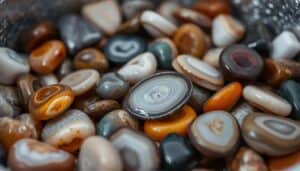
Agate creates some of the most stunning tumbled stones with its natural banded patterns. Each piece reveals unique designs as the surface polishes, making every stone a surprise.
Jasper offers incredible variety in colors and patterns, from red jasper’s bold appearance to picture jasper’s landscape-like designs. Both agate and jasper tumble reliably and develop excellent polish.
Petrified Wood
Petrified wood brings a unique element to your collection with its preserved wood grain patterns. This fossilized material tumbles beautifully and often retains intricate details of the original wood structure.
The colors range from browns and reds to more unusual blues and greens. Each piece tells a story millions of years in the making.
Rocks to Avoid
Certain rocks will frustrate beginners and should be avoided until you gain more experience. Soft stones like limestone, marble, and most sandstones rank below 6 on the Mohs scale and often crumble during tumbling.
Layered rocks like shale split apart easily, while mica-rich stones shed flakes that contaminate your grit. Stick to proven hard rocks for your first projects.
Understanding Rock Tumbler Basics
Rock tumblers work by rotating stones with abrasive grit to gradually wear away rough surfaces. The process takes 4-6 weeks and uses four different grit stages from coarse to polish.
Rotary tumblers work best for beginners because they’re affordable and produce consistent results. The rotating barrel ensures even wear on all stone surfaces.
Mohs Hardness Scale
The Mohs hardness scale ranks minerals from 1 (softest) to 10 (hardest) based on scratch resistance. For tumbling success, choose rocks between 6-8 on this scale.
Softer rocks wear away too quickly, while harder stones take forever to shape. Understanding this scale helps you select compatible rocks for each batch.
Where to Find Quality Rocks
Rock shops offer the most reliable source for tumbling material, with stones already sorted by type and quality. Online suppliers provide bulk options, but buy from dealers who specialize in tumbling rough.
Local collecting sites can yield great material if you know what to look for. Beach stones, creek beds, and desert areas often contain suitable specimens.
Size Your Rocks Properly
Use rocks between 1-3 inches for best results. Smaller pieces get lost in the grit, while larger ones don’t tumble effectively in most hobby tumblers.
Essential Supplies
Beyond your tumbler and rocks, you’ll need silicon carbide grit in four grades: coarse (60/90 mesh), medium (120/220 mesh), fine (500 mesh), and polish (usually cerium oxide or aluminum oxide). Each stage requires different grit to achieve the final polish.
Quality grit makes a significant difference in your results. Cheap grit often contains impurities that scratch your stones or wears out too quickly.
Tumbling Process Overview
The four-stage process begins with coarse grit to shape and remove rough edges. Medium grit smooths the surface, while fine grit prepares stones for polishing.
The final polish stage uses polishing compound instead of grit to create the mirror-like finish. Each stage typically runs for one week, though timing varies based on rock hardness and desired results.
- Stage 1: Coarse Grind – Shapes stones and removes major imperfections using 60/90 grit.
- Stage 2: Medium Grind – Smooths surfaces using 120/220 grit for even texture.
- Stage 3: Fine Grind – Prepares for polish using 500 grit to remove scratches.
- Stage 4: Polish – Creates final shine using cerium oxide or similar compound.
Getting Started Tips
Start with a single rock type in your first batch to learn how it behaves. Mixing different hardness levels can lead to uneven results or damage to softer stones.
Clean your tumbler thoroughly between stages to prevent contamination. Even small amounts of coarse grit in later stages will scratch your nearly finished stones.
Articles You May Like
Frequently Asked Questions
How long does rock tumbling take?
Complete rock tumbling takes 4-6 weeks using four stages of progressively finer grit. Each stage typically runs for one week, though timing varies based on rock type and desired results.
What rocks should beginners avoid?
Avoid soft rocks below 6 on the Mohs scale like limestone, shale, and most sandstones. These materials crumble or create excessive dust during tumbling.
Can I tumble different rock types together?
Only tumble rocks of similar hardness together. Mixing soft and hard stones results in uneven polishing and potential damage to your tumbler.
How much do tumbling rocks cost?
Tumbling rough costs $2-15 per pound depending on the material. Common stones like agate cost around $2-5 per pound, while premium materials cost more.
What size rocks work best for tumbling?
Use rocks between 1-3 inches for optimal results. Smaller pieces get lost in the grit, while larger stones don’t tumble effectively in most hobby tumblers.
Final Thoughts
Best Rocks For Tumbling provide an excellent entry point into this satisfying hobby when you choose the right materials and follow proper techniques. Start with proven stones like quartz varieties, agate, or jasper for reliable results.
Begin your first project this week with a small batch of similar hardness rocks and enjoy watching rough stones transform into polished gems. Monitor your progress throughout each stage to ensure the best possible results.