
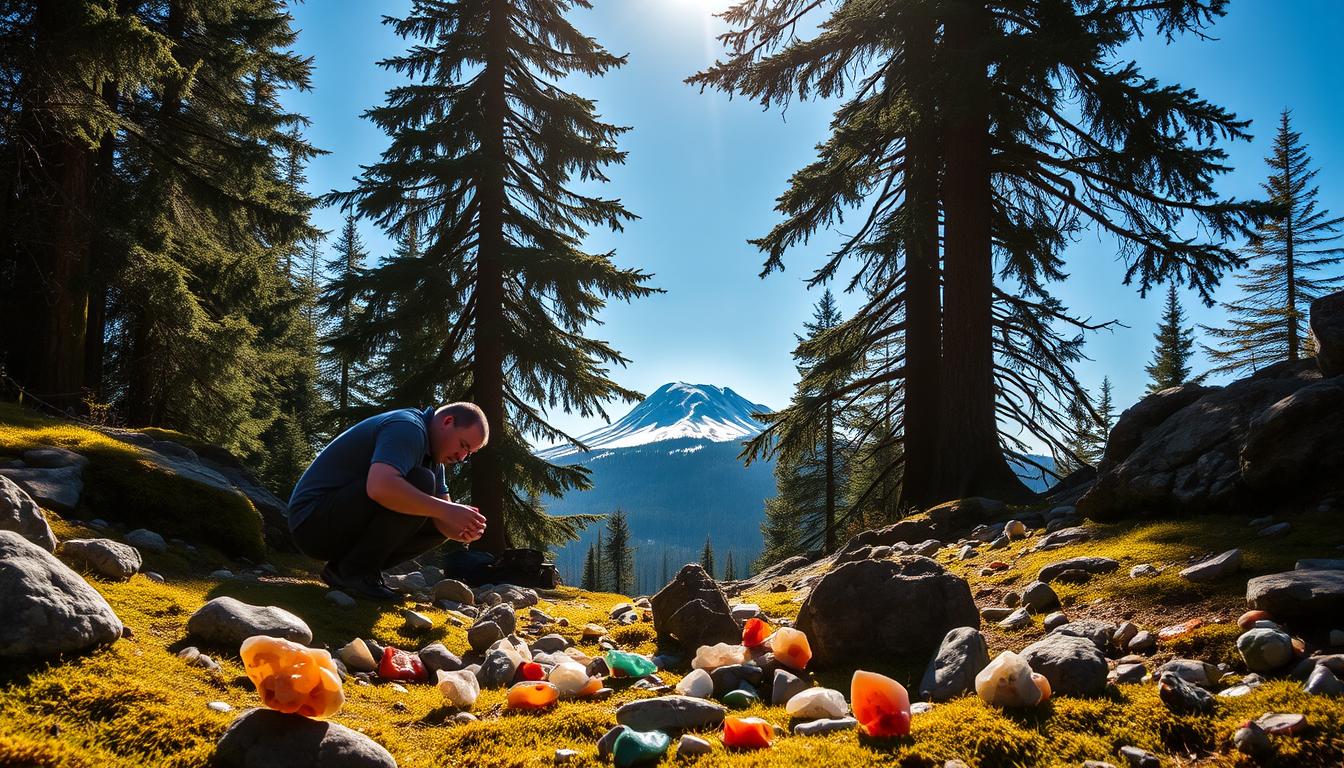
Rockhounding Washington offers incredible opportunities to discover beautiful minerals, fossils, and gemstones across the Pacific Northwest’s diverse geological landscape. From beach agates along the coast to thunder eggs in the eastern regions, Washington provides year-round collecting experiences for both beginners and experienced rockhounds.
The state’s volcanic history and varied terrain create perfect conditions for finding unique specimens that can be worth significant money to collectors and mineral dealers. Many rockhounds turn their hobby into profitable side income by selling their finds online or at gem and mineral shows.
TL;DR
- Washington has over 50 documented rockhounding locations including Liberty Bay for agates and Ellensburg for blue agates worth $10-50 per specimen.
- Peak collecting season runs May through October when weather conditions allow access to remote locations and creek beds.
- Thunder eggs from eastern Washington can sell for $5-200 depending on size and internal patterns when cut and polished.
- Beach collecting requires no permits, while some inland locations need permission from private landowners or forest service permits.
Rockhounding Washington: Prime Locations and What You’ll Find
Washington’s geology creates distinct collecting regions, each offering different types of specimens. The western coastal areas provide excellent agate hunting opportunities, while the eastern volcanic regions yield thunder eggs, petrified wood, and various crystals.
The Columbia River Gorge stands out as one of the most productive areas for rockhounds. Here you can find beautiful agates, jasper, and petrified wood scattered along gravel bars and riverbanks after winter floods expose new material.
Coastal Collecting Areas
Washington’s beaches offer some of the best agate collecting on the West Coast. The constant wave action tumbles and polishes stones, creating gem-quality specimens that wash up regularly.
- Westport Beach – Known for colorful agates, jasper, and occasional fossils after winter storms.
- Liberty Bay – Produces high-quality agates and interesting beach glass for collectors.
- Grayland Beach State Park – Offers agate collecting with easy beach access and camping facilities.
- Ocean Shores – Features diverse specimens including agates, petrified wood, and unique beach stones.
Eastern Washington Thunder Egg Country
The eastern part of the state offers exceptional thunder egg collecting opportunities. These unique nodules contain beautiful agate centers that reveal stunning patterns when cut and polished.
- Ellensburg area – Famous for blue agates and high-quality thunder eggs in various sizes.
- Yakima River Valley – Produces petrified wood, agates, and interesting volcanic specimens.
- Okanogan Highlands – Known for garnets, mica, and various metamorphic minerals.
- Republic area – Offers fossil collecting opportunities including plant fossils and insects in shale.
Best Times and Techniques for Collecting
Timing your rockhounding trips can make a huge difference in what you find. Weather patterns, seasonal access, and natural processes all affect specimen availability throughout the year.
Spring offers excellent opportunities as winter storms and snowmelt expose new material in creek beds and along riverbanks. Many collectors plan their most productive trips for April through June when access improves but specimens remain fresh.
Seasonal Collecting Strategies
- Spring (March-May). Target creek beds and riverbanks where winter runoff has exposed new specimens.
- Summer (June-August). Focus on high-elevation areas that become accessible as snow melts.
- Fall (September-November). Excellent for beach collecting as storm patterns increase wave action.
- Winter (December-February). Limited to low-elevation coastal areas and easily accessible locations.
Pro Collector Tip
Check creek beds 2-3 days after heavy rains when water levels drop but fresh material remains exposed. This timing often produces the best finds with minimal competition from other collectors.
Essential Tools and Equipment
Having the right tools makes rockhounding more productive and enjoyable. Basic equipment doesn’t require a large investment but can significantly improve your collecting success.
- Rock hammer – Choose a 16-20 oz hammer with a pick end for extracting specimens.
- Collection bags – Sturdy canvas or mesh bags that won’t tear on sharp rocks.
- Safety glasses – Essential when breaking rocks or working in areas with flying debris.
- Gloves – Protect hands from sharp edges and improve grip on wet rocks.
- Spray bottle – Helps identify specimens by wetting surfaces to reveal colors and patterns.
- Small shovel – Useful for digging in creek gravels and sandy beach areas.
Legal Considerations and Land Access
Understanding collecting regulations helps avoid legal issues and ensures continued access to productive locations. Washington has specific rules for different types of land ownership and protected areas.
Public beaches below the high tide line generally allow collecting for personal use, but quantities may be limited. National forests often permit small amounts of common minerals for personal collecting with proper permits.
Permission and Permit Requirements
- State parks – Most prohibit collecting, but some designated areas allow limited personal use.
- National forests – Require permits for most collecting activities beyond casual specimens.
- Private land – Always obtain written permission from landowners before collecting.
- Beach areas – Generally open for personal collecting below high tide marks.
Turning Finds Into Profit
Many Washington rockhounds discover their hobby can generate meaningful income through various sales channels. Quality specimens, especially unique agates and well-formed thunder eggs, attract serious collectors willing to pay premium prices.
Online platforms provide excellent opportunities to reach collectors worldwide who specifically seek Washington specimens. Local gem and mineral shows also offer direct sales opportunities with immediate payment and valuable networking connections.
Profitable Specimen Types
| Specimen Type | Average Price Range | Best Sales Venues |
|---|---|---|
| Quality agates | $5-75 | Online auctions, local shows |
| Thunder eggs (cut) | $10-200 | Specialty collectors, rock shops |
| Petrified wood | $2-50 | Tourist shops, online sales |
| Beach glass | $1-25 | Craft stores, online markets |
Frequently Asked Questions
Do I need permits to collect rocks on Washington beaches?
Most Washington beaches allow personal collecting below the high tide line without permits, but check local regulations as some areas restrict quantities or specific materials.
What’s the best time of year for rockhounding in Washington?
May through October offers the best conditions with accessible roads, exposed creek beds, and favorable weather for extended collecting trips.
Where can I sell rocks and minerals found in Washington?
Online platforms, local gem shows, rock shops, and specialty collector forums provide various options for selling quality specimens to interested buyers.
Are thunder eggs valuable enough to make collecting profitable?
High-quality thunder eggs with interesting internal patterns can sell for $20-200 when professionally cut and polished, making them worthwhile for serious collectors.
Final Thoughts
Rockhounding Washington provides endless opportunities to discover valuable specimens while exploring the state’s incredible geological diversity. Whether you’re hunting agates on coastal beaches or searching for thunder eggs in eastern volcanic fields, the potential for both personal enjoyment and profit makes this hobby particularly rewarding.
Start with easily accessible beach locations to learn rock and mineral identification skills, then gradually explore more remote areas as your experience and equipment collection grows. Before venturing into unfamiliar territory, learn how to properly research rockhounding locations to ensure both legal compliance and productive collecting trips.