
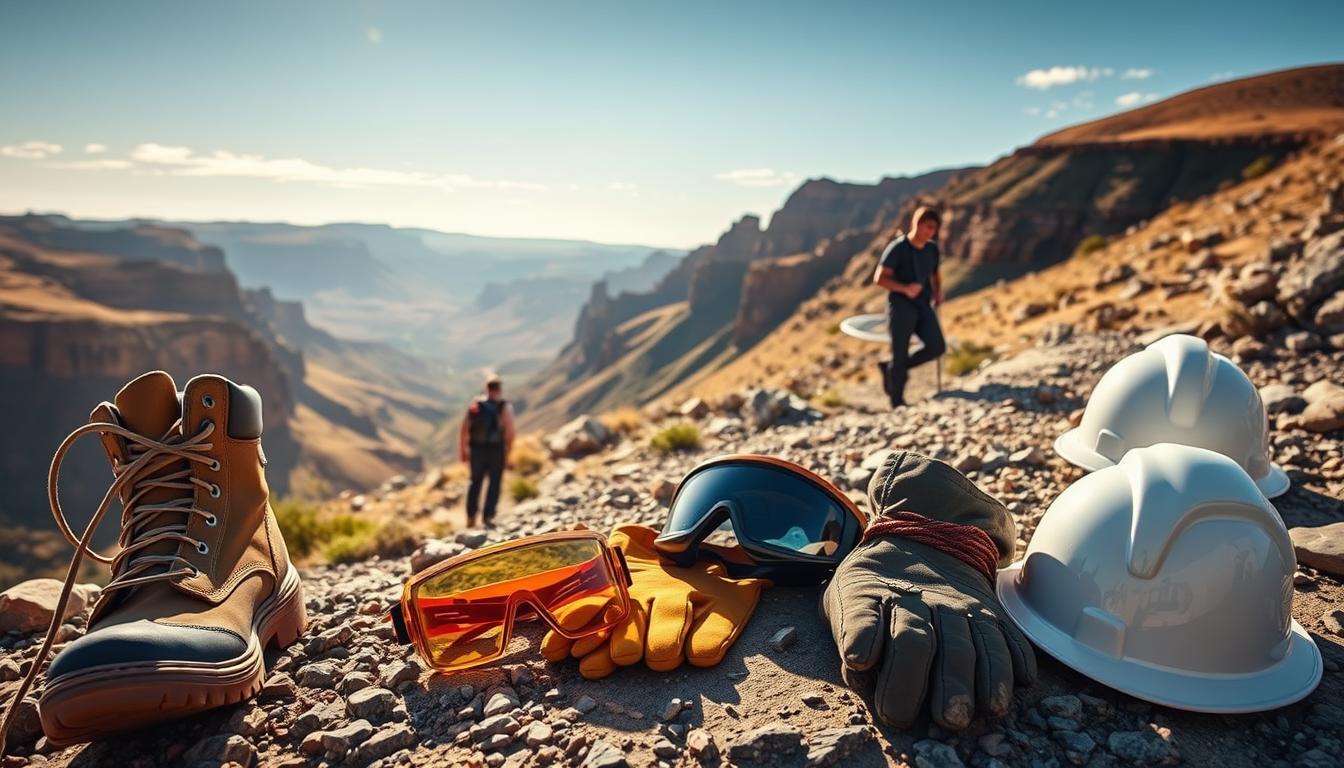
Rockhounding Safety Tips are essential knowledge for anyone who loves hunting for minerals, fossils, and interesting rocks in the wild. Whether you’re a beginner or experienced collector, staying safe while exploring remote locations and handling geological specimens should always be your top priority.
From proper protective gear to understanding terrain hazards, these safety guidelines will help you enjoy your rockhounding adventures while avoiding common injuries and dangerous situations.
TL;DR
- Wear safety glasses and steel-toed boots to protect against flying rock chips and falling debris.
- Carry at least 1 gallon of water per person for day trips in desert or remote locations.
- Tell someone your exact location and expected return time before heading out alone.
- Check weather forecasts and avoid rockhounding during thunderstorms or flash flood warnings.
Essential Rockhounding Safety Tips
Smart rockhounds always prioritize safety over finding that perfect specimen. The excitement of discovering a beautiful mineral can make you forget basic precautions, but a moment of carelessness can lead to serious injury or worse.
Start every rockhounding trip with a safety checklist and the right protective equipment. These basics will keep you safe while you focus on the hunt for interesting rocks and minerals. For comprehensive guidance on what to bring, check out our complete rockhounding checklist to ensure you have all essential tools and supplies.
Personal Protective Equipment
Your safety gear forms the first line of defense against common rockhounding injuries. Never compromise on quality when it comes to protective equipment – a few extra dollars spent on good gear can prevent costly medical bills later.
- Safety glasses or goggles – protect your eyes from flying rock chips when using hammers and chisels.
- Steel-toed boots – prevent crushed toes from dropped rocks and provide ankle support on uneven terrain.
- Work gloves – shield your hands from sharp edges and rough surfaces while handling specimens.
- Long pants and sleeves – guard against cuts, scratches, and sun exposure during extended outdoor time.
- Hard hat – essential when working near cliffs or areas with loose rocks overhead.
Location and Weather Safety
Understanding your environment before you start collecting can prevent dangerous situations. Weather conditions, terrain hazards, and location-specific risks all require careful consideration before you head out.
Always research your chosen location thoroughly and check current conditions. What looks safe on a sunny day can become deadly during bad weather or seasonal changes. Learn how to research rockhounding sites effectively to identify potential hazards and optimal collecting conditions.
Pre-Trip Planning
- Share your itinerary. Tell a trusted person exactly where you’re going and when you plan to return.
- Check weather forecasts. Avoid trips during storms, high winds, or extreme temperature warnings.
- Research access conditions. Verify that roads are open and that you have permission to collect in the area.
- Plan for emergencies. Know the location of the nearest hospital and carry emergency contact information.
Terrain Awareness
Different rockhounding locations present unique safety challenges. Desert areas pose risks of extreme heat and flash floods, while mountain locations may have unstable rock faces and sudden weather changes. Whether you’re exploring rockhounding locations in Arizona or Colorado’s mineral-rich sites, understanding local terrain hazards is crucial for safe collecting.
- Cliff and slope stability – test footing carefully and avoid areas with loose rocks above you.
- Mine safety – never enter abandoned mines or underground workings without proper equipment and training.
- Water hazards – be aware of tide schedules at beach locations and flash flood potential in desert washes.
- Wildlife considerations – understand what dangerous animals live in your collecting area.
Emergency Communication
Carry a fully charged cell phone and consider a satellite communicator for remote areas without cell coverage. A simple SOS device could save your life if you’re injured far from help.
Tool Safety and Proper Techniques
Rockhounding tools can cause serious injuries when used incorrectly or carelessly. Learning proper techniques for using hammers, chisels, and other equipment will protect both you and other collectors nearby.
Quality tools designed for rockhounding work better and more safely than improvised alternatives. Invest in proper equipment and learn how to use each tool correctly before heading into the field.
Safe Tool Usage
- Rock hammers – use controlled strikes and always wear eye protection when breaking rocks.
- Chisels and picks – direct tools away from your body and keep a firm grip on both the tool and the rock.
- Pry bars – understand leverage principles and avoid overextending yourself when moving heavy rocks.
- Screens and sifters – work in stable positions and take breaks to prevent repetitive strain injuries.
Health and Hydration
Physical preparation and health awareness become critical during long collecting trips. Dehydration, heat exhaustion, and overexertion cause more rockhounding emergencies than rock falls or tool injuries.
Listen to your body and take regular breaks, especially in hot weather or at high altitudes. Pushing through fatigue increases your risk of accidents and poor decision-making.
Hydration and Nutrition
- Water planning. Carry more water than you think you need – at least one gallon per person for day trips.
- Electrolyte replacement. Bring sports drinks or electrolyte tablets for hot weather collecting.
- Energy snacks. Pack high-energy foods to maintain blood sugar and energy levels throughout the day.
- Medical supplies. Carry a first aid kit appropriate for your group size and trip duration.
Group Safety and Communication
Collecting with others provides safety through the buddy system, but groups also need clear communication and safety protocols. Establish ground rules before you start collecting to prevent confusion during emergencies.
Designate a group leader familiar with the location and emergency procedures. Make sure everyone understands the safety expectations and knows how to signal for help if needed. If you’re new to the hobby, start by finding rockhounding opportunities near you to build experience in familiar areas before venturing to remote locations.
Frequently Asked Questions
What should I do if I get injured while rockhounding alone?
Stay calm and assess the injury severity. Use your emergency communication device to call for help and follow your pre-planned emergency procedures. Don’t attempt to continue collecting if you’re injured.
How do I know if an area is safe for rockhounding?
Research the location online, check with local rock clubs, and look for posted warnings or restrictions. Avoid areas with obvious hazards like unstable cliffs, abandoned mines, or recent rockfall activity.
What’s the most important safety gear for new rockhounds?
Safety glasses and sturdy boots are the absolute essentials. These protect against the most common rockhounding injuries – eye damage from flying rock chips and foot injuries from dropped rocks.
Should I rockhound alone or with others?
Collecting with others is always safer, especially in remote locations. If you must go alone, tell someone your exact plans and carry emergency communication equipment.
How much water should I bring on a rockhounding trip?
Plan for at least one gallon per person for day trips, more in hot weather or desert conditions. It’s better to carry too much water than run out during your collecting adventure.
Final Thoughts
Rockhounding Safety Tips become second nature with practice, but they require conscious effort to implement consistently. The most experienced collectors still follow basic safety protocols because they understand that one careless moment can ruin years of safe collecting.
Start building good safety habits on your next trip and make them part of your standard rockhounding routine.