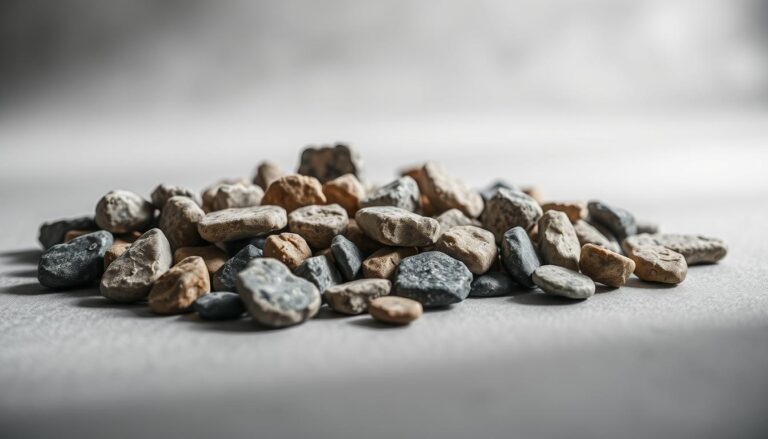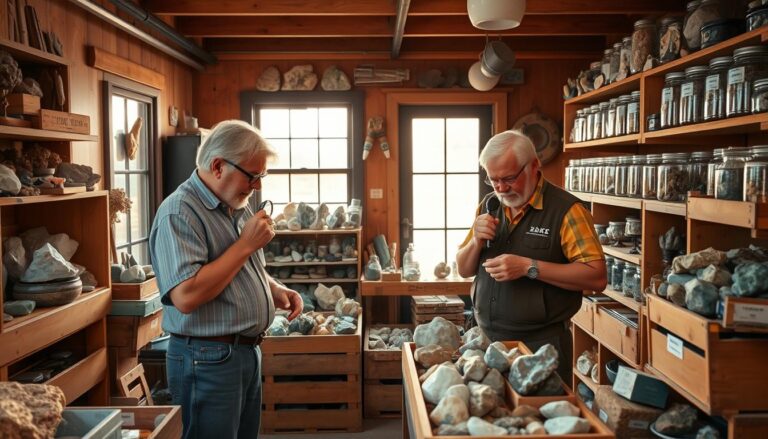
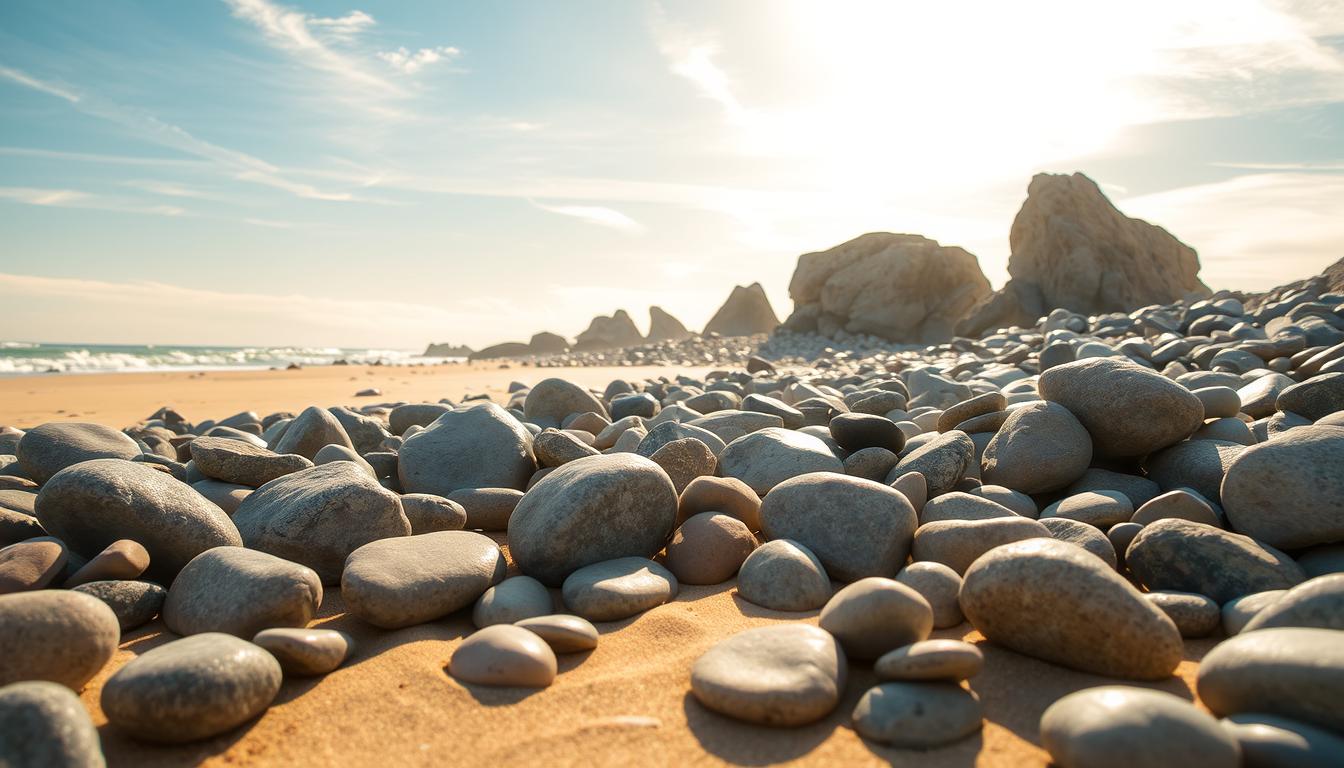
Finding Rocks For Tumbling on the beach opens up a world of polished stone possibilities. The ocean’s constant motion creates perfect conditions for discovering smooth, colorful specimens ready for your rock tumbler.
Beach environments offer unique advantages for rock collectors since waves naturally sort stones by size and density. You’ll find everything from quartz varieties to volcanic rocks that have been pre-weathered by saltwater and sand.
TL;DR
- Look for rocks with Mohs hardness ratings between 6-8 for best tumbling results.
- Low tide conditions expose 30-40% more collecting area than high tide periods.
- Quartz varieties like agate and jasper make up 60% of successful tumbling projects.
- Collect rocks 1-3 inches in diameter – smaller pieces over-tumble and larger ones under-polish.
Finding Rocks For Tumbling: What Makes Beach Specimens Perfect
Beach rocks undergo natural weathering that makes them ideal tumbling candidates. Salt water and constant wave action remove weak materials, leaving behind durable stones with good structural integrity.
The sorting action of waves naturally groups rocks by density and hardness. Heavier, harder rocks tend to settle in specific zones along the shoreline, making your search more targeted and productive.
Hardness Requirements for Successful Tumbling
Rocks with Mohs hardness ratings between 6 and 8 produce the best tumbling results. Softer stones break down during the process, while extremely hard materials require excessive tumbling time.
Test hardness in the field by scratching the rock with a steel knife blade. Rocks that resist scratching typically fall within the ideal hardness range for tumbling projects.
Size and Shape Considerations
Choose rocks between 1-3 inches in their largest dimension for optimal tumbling. Smaller pieces get worn down too quickly, while oversized rocks don’t receive adequate polishing action in standard tumblers.
Angular or irregularly shaped rocks often produce more interesting results than perfectly round specimens. The varied surfaces create unique polish patterns and highlight natural features.
Best Rock Types Found on Beaches
Certain rock types consistently deliver excellent tumbling results when found in beach environments. These materials combine the right hardness with attractive visual characteristics.
Quartz and Its Varieties
Quartz represents the most reliable choice for beach rock tumbling projects. Common varieties include clear quartz, smoky quartz, rose quartz, and amethyst when you’re lucky enough to find it.
Agate and jasper, both quartz family members, create stunning tumbled stones with their banded patterns and rich colors. These materials polish to a high gloss and resist chipping during the tumbling process.
Volcanic Rocks
Basalt and other volcanic rocks tumble well due to their fine-grained structure and moderate hardness. These dark-colored stones often develop attractive matte finishes rather than high-gloss surfaces.
Obsidian occasionally appears on beaches near volcanic regions, but handle it carefully due to its extremely sharp edges when fractured. The finished results justify the extra caution required during collection.
Granite and Gneiss
These coarse-grained rocks showcase beautiful mineral patterns when properly tumbled. The mix of quartz, feldspar, and mica creates multi-colored stones with excellent durability.
Look for granite pieces with minimal fractures or weak spots. Sound specimens produce attractive tumbled stones that highlight the rock’s crystalline structure.
Beach Timing Strategy
Visit beaches 2-3 hours before low tide for maximum collecting success. Storm aftermath often reveals fresh specimens washed up from deeper waters.
Prime Beach Locations and Timing
Pacific Coast beaches consistently yield high-quality tumbling rocks due to their diverse geology and strong wave action. Oregon’s coastline produces exceptional agates, while California beaches offer various quartz specimens.
Great Lakes shorelines provide another excellent option, particularly for finding smooth basalt and granite pieces. The constant wave action in these large bodies of water creates naturally pre-tumbled specimens.
Optimal Collecting Conditions
Low tide periods expose the most productive collecting zones where waves deposit sorted rock materials. Check tide charts and plan your visits during the lowest tides of each cycle.
Post-storm conditions often reveal new materials brought up from offshore deposits. Winter storms typically produce the best results for serious rock collectors.
Reading Beach Geology
Rocky headlands and cliff areas typically yield harder, more suitable tumbling materials than sandy beach sections. Look for areas where different rock types naturally outcrop near the shoreline.
Gravel bars and storm berms concentrate good specimens in specific locations. These features change with seasonal weather patterns, creating new opportunities throughout the year.
Collection Tools and Techniques
A sturdy bucket or collection bag handles most beach collecting needs without excessive equipment. Plastic containers resist saltwater corrosion better than metal alternatives.
Bring a small hammer or geology pick for extracting specimens from rock crevices or breaking larger pieces to appropriate sizes. Safety glasses protect your eyes during any breaking activities.
Field Testing Methods
Perform scratch tests using a steel knife blade to estimate hardness levels. Rocks that barely scratch under firm pressure typically fall within ideal tumbling ranges.
Check for internal fractures by tapping rocks together and listening for solid versus hollow sounds. Cracked specimens often fail during the tumbling process regardless of their surface appearance.
Documentation and Organization
Photograph promising specimens with size references like coins or your hand for scale. Record the specific location and conditions when you find particularly good materials.
Sort collections by estimated hardness and rock type immediately after returning home. This preliminary organization saves time during the actual tumbling preparation process.
Preparing Beach Rocks for Tumbling
Thorough cleaning removes salt residue and organic matter that can interfere with tumbling compounds. Soak specimens in fresh water for several hours, then scrub with a stiff brush.
Group rocks by similar hardness levels to ensure even processing during each tumbling stage. Mixing significantly different hardness levels leads to uneven results and potential damage to softer specimens.
Pre-Tumbling Treatments
Allow specimens to dry completely before beginning the tumbling process. Trapped moisture can cause cracking during the initial coarse grinding stage.
Remove any loose material or obvious weak spots with careful chipping or grinding. These problem areas typically worsen during tumbling and can contaminate entire batches.
Final Size and Shape Adjustments
Break oversized specimens to appropriate dimensions using controlled hammer strikes. Aim for relatively uniform sizes within each batch for consistent processing results.
File or grind sharp edges that might damage other rocks during tumbling. Extremely pointed projections often break off anyway, potentially creating unwanted debris in your tumbler.
Articles You May Like
Frequently Asked Questions
What hardness level works best for beach rock tumbling?
Rocks with Mohs hardness ratings between 6-8 produce optimal results, providing durability without excessive processing time.
How do I test rock hardness on the beach?
Use a steel knife blade to scratch the rock surface – materials that resist scratching typically fall within good tumbling ranges.
What size rocks should I collect for tumbling?
Choose specimens 1-3 inches in diameter for standard rock tumblers, as smaller pieces over-process and larger ones under-polish.
When is the best time to collect beach rocks?
Visit during low tide periods, especially 2-3 hours before the lowest tide, when maximum beach area is exposed for collecting.
Which beaches produce the best tumbling rocks?
Pacific Coast locations, particularly Oregon and California beaches, consistently yield high-quality quartz varieties and volcanic specimens.
Should I clean beach rocks before tumbling?
Always clean specimens thoroughly to remove salt residue and organic matter that can interfere with tumbling compounds and processes.
Final Thoughts
Finding Rocks For Tumbling on beaches combines outdoor adventure with the satisfaction of creating polished treasures from raw materials. Success depends on understanding what makes certain rocks suitable and knowing where to find quality specimens.
Start with easily recognized quartz varieties and expand your knowledge as you gain experience with different rock types and beach conditions.