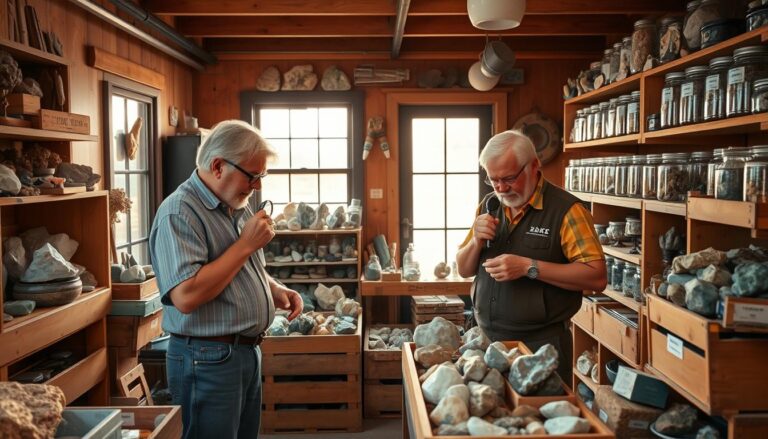
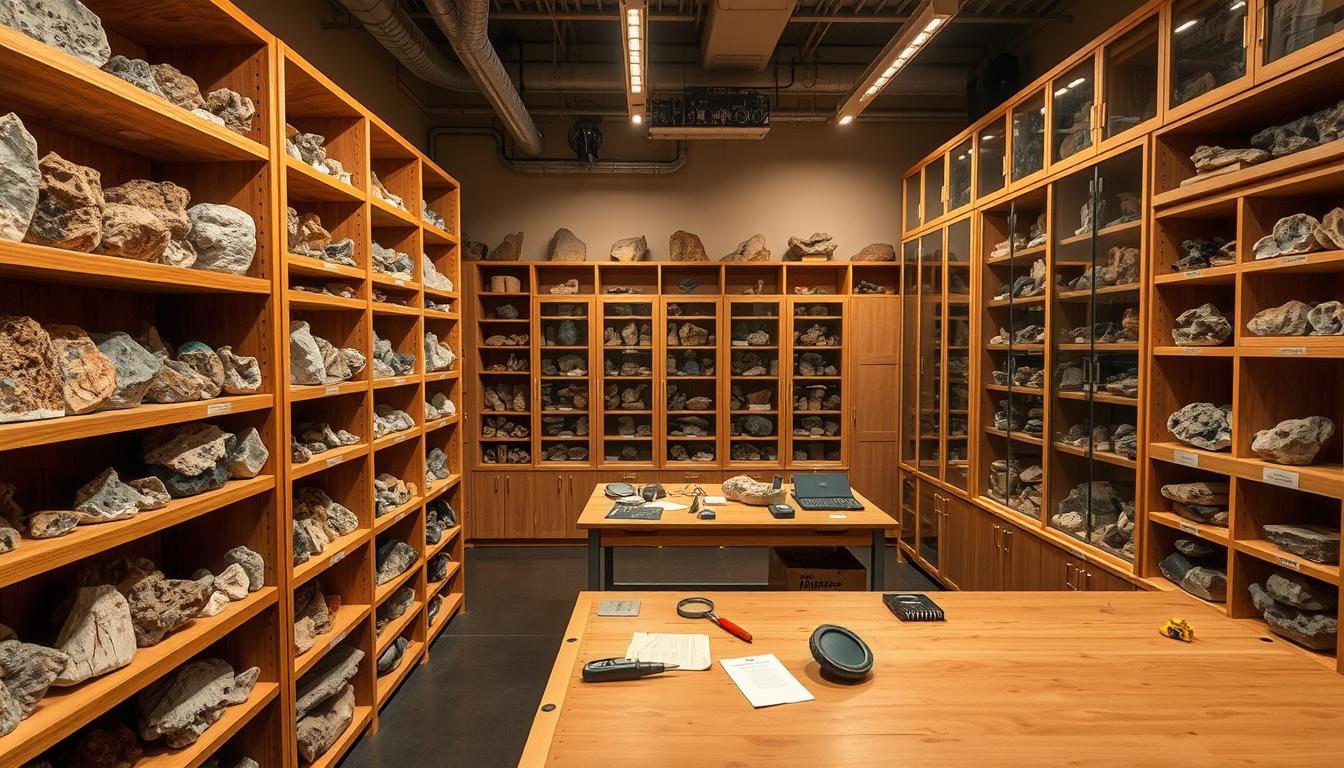
A Well Organized Rock Collection starts with understanding that proper storage and display methods protect your specimens while making them accessible for study and enjoyment. Smart organization systems help you locate specific rocks quickly and maintain their condition over time.
Building an effective rock collection storage system requires planning based on your collection’s size, types of specimens, and display goals. The right approach combines protective storage with easy access for both casual viewing and serious geological study.
TL;DR
- Use acid-free materials and individual compartments to prevent specimen damage and preserve value long-term.
- Organize by geological classification (igneous, sedimentary, metamorphic) with color-coded labels for quick identification.
- LED lighting protects specimens from heat damage while showcasing their natural beauty in display cases.
- Digital inventory systems with photos and location details help manage collections of 50+ specimens efficiently.
Well Organized Rock Collection Storage Basics
Every rock type demands specific storage considerations based on hardness, fragility, and chemical composition. Soft minerals like talc need individual protective compartments, while harder specimens like quartz can share space in divided containers.
Your storage system should account for specimen size, weight, and special handling requirements. Large geodes need sturdy shelving, while tiny crystal samples work best in compartmentalized boxes with secure closures.
Essential Storage Materials
- Acid-free boxes – prevent chemical reactions that cause discoloration or deterioration over decades.
- Foam inserts – cushion specimens during transport and provide custom-fit storage compartments.
- Cotton batting – offers gentle padding for delicate crystals and prevents specimen-to-specimen contact.
- Archival tissue paper – wraps individual specimens without leaving residue or causing chemical damage.
Container Options for Different Collection Sizes
Small collections under 100 specimens work well in stackable plastic containers with adjustable dividers. These systems let you expand storage as your collection grows while keeping similar specimens grouped together.
Medium collections benefit from dedicated drawer systems or wooden cabinets with shallow drawers. Each drawer accommodates one specimen type or geological formation, making identification and study more efficient.
Specialized Storage Solutions
- Shadow boxes – display prize specimens while protecting them behind glass from dust and handling damage.
- Specimen trays – cardboard or plastic trays with individual wells keep small samples organized and visible.
- Museum boxes – archival-quality containers designed for long-term specimen preservation in controlled environments.
Classification and Labeling Systems
Geological classification provides the foundation for logical organization that makes scientific sense. Group rocks into igneous, sedimentary, and metamorphic categories, then subdivide by specific rock types like granite, limestone, or slate.
Color-coding speeds identification – use red labels for igneous rocks, blue for sedimentary, and green for metamorphic specimens. Include specimen location, date collected, and identifying characteristics on each label.
Digital Inventory Management
Digital catalogs transform large collections from overwhelming piles into searchable databases. Record specimen name, location found, dimensions, and storage location for each piece.
Photography adds visual identification that helps when specimens look similar. Take photos showing characteristic features, crystal faces, or unique coloring patterns that distinguish each sample.
Quick Organization Tip
Number each storage container and create a simple spreadsheet linking specimen names to container numbers. This system helps you find specific rocks without opening multiple boxes.
Display Strategies That Protect and Showcase
Effective displays balance visibility with protection from environmental damage. Glass-front cabinets shield specimens from dust while allowing easy viewing for study or enjoyment.
LED lighting provides bright illumination without heat buildup that can damage temperature-sensitive minerals. Position lights to highlight crystal faces and color variations without creating harsh shadows.
Rotating Display Concepts
- Seasonal rotations. Feature different specimens every few months to prevent light damage and maintain visual interest.
- Themed displays. Group specimens by formation process, geographic origin, or mineral family for educational value.
- Research displays. Highlight specimens you’re currently studying with reference materials and identification guides nearby.
Field Collection and Portable Storage
Field collecting requires portable storage that protects specimens during transport while keeping them organized by location or rock type. Canvas collecting bags with internal pockets separate different finds without adding excessive weight.
Individual specimen wrapping prevents damage from rocks bumping together during transport. Use newspaper, bubble wrap, or cloth depending on specimen fragility and available space in your collecting kit.
Transport Organization Methods
- Location-based sorting – separate specimens by collecting site to maintain geological context and formation information.
- Size-based packing – place larger specimens at the bottom with smaller, more fragile pieces cushioned on top.
- Immediate labeling – mark specimen location and date before leaving the collection site to prevent later confusion.
Climate Control and Environmental Protection
Temperature and humidity fluctuations cause expansion and contraction that can crack specimens or fade colors over time. Store collections in areas with stable conditions away from heating vents, windows, and damp basements.
Some minerals react with air moisture or light exposure, requiring special storage conditions. Pyrite samples need dry storage to prevent oxidation, while fluorite specimens fade under direct sunlight exposure.
Long-Term Preservation Strategies
- Desiccant packets – control moisture in storage containers for specimens sensitive to humidity changes.
- UV-filtering materials – protect light-sensitive specimens from fluorescent lighting and sunlight exposure.
- Stable temperatures – maintain consistent storage temperatures to prevent thermal stress fracturing in brittle specimens.
Frequently Asked Questions
What storage materials should I avoid for rock collections?
Avoid cardboard boxes, newspaper, and plastic bags for long-term storage as these materials contain acids that can damage specimens over time. Use acid-free materials designed for archival storage instead.
How do I organize a large rock collection with thousands of specimens?
Use a numbered storage system with digital inventory tracking that includes photos and location details. Group specimens by geological classification first, then by specific rock types within each category.
Can I store different rock types together in the same container?
Store rocks of similar hardness together to prevent softer specimens from getting scratched by harder ones. Use individual compartments or padding to separate specimens that might react chemically with each other.
What’s the best way to display valuable or rare specimens?
Use locked display cases with UV-filtering glass and stable LED lighting for valuable pieces. Control humidity and temperature while limiting handling to preserve specimen condition and value.
How often should I reorganize my rock collection?
Review your organization system annually or when adding 25+ new specimens. Update digital inventories immediately and reorganize physical storage when containers become overcrowded or difficult to navigate.
Final Thoughts
A Well Organized Rock Collection requires systematic planning that balances protection, accessibility, and display goals based on your collection’s unique characteristics. Whether you’re starting a rock collection on a budget or expanding an existing one, the right storage and organization approach preserves specimen value while making your collection enjoyable to study and share.
Start with proper storage materials and basic classification, then build more sophisticated systems as your collection grows and your organizational needs become clearer. Remember that proper organization also helps when you want to trade rocks with other collectors, as well-documented specimens hold greater value.