Starting a Rock Collection On A Budget opens up a world of natural discovery without emptying your wallet. Many people think rock collecting requires expensive equipment and rare specimens, but that’s simply not the case.
With some creativity and the right approach, you can build an impressive collection using free resources and simple tools. This hobby connects you with nature while teaching you about Earth’s fascinating geological history.
TL;DR
- Start with basic household tools like a hammer, magnifying glass, and bucket – you likely own everything needed already.
- Public parks, beaches, and construction sites offer free rock hunting opportunities with proper permission.
- Repurpose jars, egg cartons, and shoe boxes to store your collection for under $10 total.
- Join local rock clubs where members regularly trade specimens, often getting $20+ rocks for free.
Starting a Rock Collection On A Budget
Rock collecting doesn’t require a massive investment upfront. The key is starting small and building your collection gradually through smart choices and resourcefulness.
Set clear goals from the beginning – decide whether you want to focus on local specimens, specific rock types, or colorful minerals. This focus prevents random purchases and helps you become an expert in your chosen area. Before you start collecting, take time to learn about common rocks that are perfect for beginners to identify easily.
Essential Free Tools You Already Own
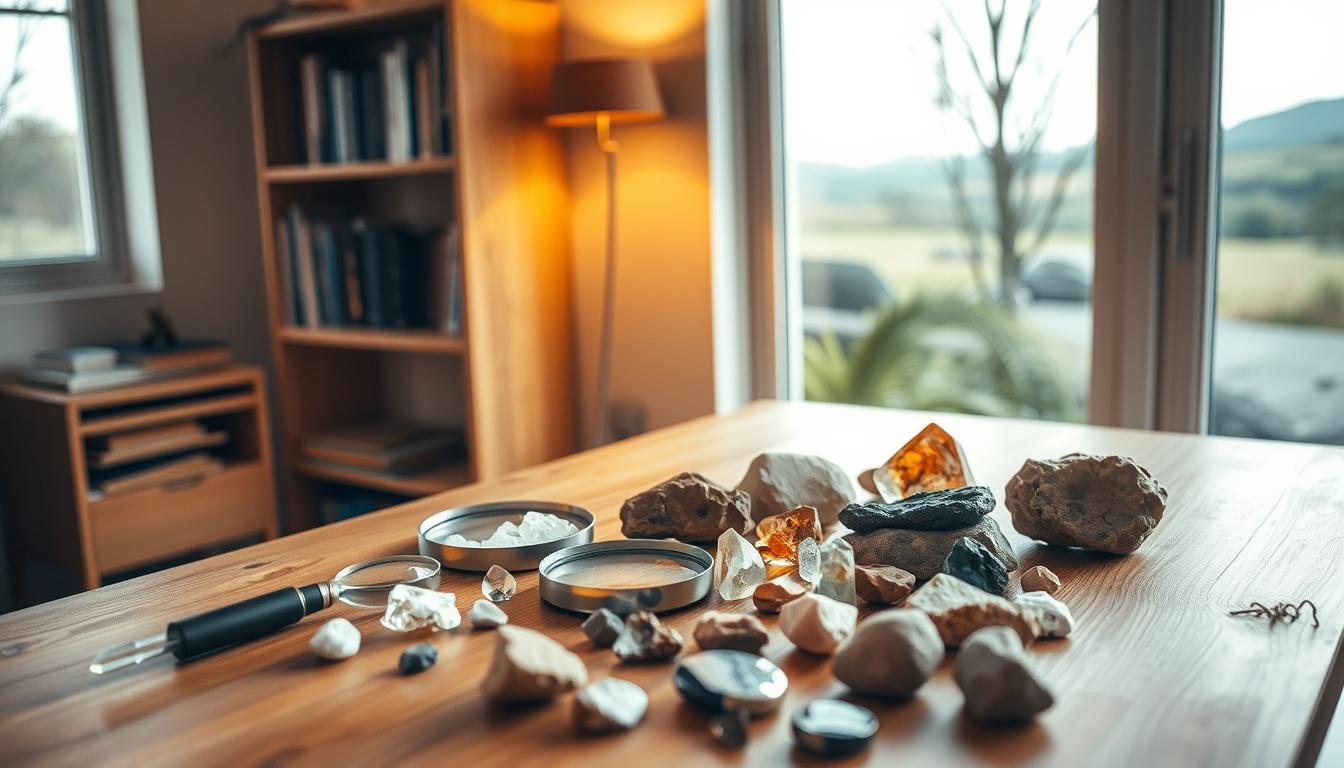
Before buying anything new, gather tools from around your house. A regular hammer works perfectly for breaking apart rock samples, while a magnifying glass helps you examine crystal structures and identifying features.
- Hammer or mallet – breaks rocks and chips off samples
- Magnifying glass – reveals crystal patterns and mineral details
- Bucket or bag – carries your finds back home
- Old towel – wraps fragile specimens safely
- Kitchen scale – measures specimen weight for records
Free Rock Hunting Locations Near You
The best rock hunting spots don’t charge admission fees. Public lands offer incredible opportunities for collectors willing to explore and follow local regulations.
Public Parks and Nature Areas
State and national parks contain diverse geological formations perfect for beginners. Stream beds within parks often hold polished stones, agates, and interesting sedimentary rocks.
Always check park rules before collecting – some areas restrict removal while others allow small personal collections. Rangers can point you toward the most productive areas. For a comprehensive guide to rock hunting opportunities across the country, explore our guide to the best states for rockhounding.
Urban Rock Hunting Opportunities
Cities offer surprising rock collecting opportunities if you know where to look. Construction sites expose fresh rock layers, while road cuts reveal geological cross-sections normally hidden underground.
- Construction sites – ask permission from site supervisors first
- Road cuts – park safely and watch for traffic
- Vacant lots – check property ownership before collecting
- Beach areas – waves naturally tumble and polish stones
Permission First
Always get permission before collecting on private property. Most landowners say yes when you explain your hobby respectfully.
Budget Storage and Display Solutions
Proper storage protects your specimens while helping you organize and enjoy your growing collection. Creative repurposing saves money while looking surprisingly professional.
Repurposed Household Items
Empty jars make excellent display containers for smaller specimens, while egg cartons create perfect individual compartments. Shoe boxes lined with foam padding protect fragile crystals during transport. For more comprehensive organization strategies, check out our complete guide to rock collection storage and display.
- Clean and prepare containers. Remove labels and wash thoroughly before use.
- Add padding material. Use cotton balls, tissue paper, or foam scraps.
- Create labels. Write specimen name, location found, and date collected.
- Organize by category. Group similar rocks together for easy comparison.
Learning About Your Finds
Identifying rocks doesn’t require expensive reference books or expert consultations. Free online resources and library materials provide all the information needed for accurate identification.
Free Online Resources
Websites and mobile apps offer photo guides, identification keys, and geological maps at no cost. Many geology departments at universities publish free educational materials online.
Social media groups dedicated to rock identification welcome beginners and provide helpful feedback on posted photos. Experienced collectors often share knowledge freely within these communities.
Simple Record Keeping
Track your collection using a basic notebook or smartphone app. Record the date found, location, rock type, and any interesting observations about each specimen.
- Location details – specific address or GPS coordinates
- Physical description – color, size, weight, and texture notes
- Identification status – confirmed or suspected rock type
- Personal notes – what attracted you to this specimen
Building Community Connections
Rock collecting communities offer trading opportunities, educational programs, and friendship with fellow enthusiasts. These connections often prove more valuable than expensive equipment purchases.
Local Rock and Mineral Clubs
Most cities have active rock and mineral clubs that welcome beginners with open arms. Monthly meetings feature educational presentations, specimen trading sessions, and group field trips to productive collecting areas.
Club membership typically costs $20-30 annually but provides access to private collecting sites, expert knowledge, and trading opportunities worth hundreds of dollars. Learn proven rock trading strategies to maximize value from these exchanges.
Online Trading Communities
Internet forums and Facebook groups connect collectors worldwide for specimen trades and educational discussions. Many experienced collectors enjoy sharing duplicate specimens with enthusiastic beginners.
Articles You May Like
Frequently Asked Questions
How much money do I need to start rock collecting?
You can start rock collecting with zero dollars by using household tools and hunting in free public areas. Most beginners spend under $25 in their first year.
What types of rocks should beginners collect first?
Start with common local rocks like quartz, granite, or limestone since they’re abundant and easy to identify. Focus on learning these basics before seeking rare specimens.
Where can I hunt for rocks without paying fees?
Public parks, beaches, stream beds, and construction sites with permission offer free collecting opportunities. Always check local regulations before removing specimens.
How do I identify rocks without expensive books?
Use free online identification guides, library books, and mobile apps to identify your specimens. Local geology clubs also provide free expert assistance to beginners.
What household items work for storing rock collections?
Empty jars, egg cartons, shoe boxes, and plastic containers make excellent storage solutions. Add padding like cotton balls or tissue paper to protect fragile specimens.
Final Thoughts
Starting a Rock Collection On A Budget proves that passion matters more than expensive equipment when building an impressive geological collection. Smart collecting strategies, free hunting locations, and community connections provide everything needed for this rewarding hobby.
Begin your collection this weekend by exploring a local park or stream bed with basic household tools. Your first specimens await discovery in the most unexpected places. To discover productive hunting grounds in your area, use our guide on where to find rocks near you.