Keeping your rock tumbler in good shape is key to getting great results and making your machine last longer. Regular cleaning and inspection help prevent problems before they start.
Just a few simple maintenance steps can keep your tumbler running smoothly for years. With proper care, you’ll get consistently polished stones and avoid costly repairs.
TL;DR
- Clean your rock tumbler barrel and components after every use to prevent grit buildup and damage.
- Inspect rubber seals and liners monthly – replace them when they show wear to prevent leaks.
- Lubricate moving parts every 3 months using manufacturer-recommended oil or grease.
- Deep clean your tumbler seasonally by disassembling and washing all removable parts thoroughly.
Rock Tumbler Maintenance Guide
Understanding your tumbler’s components helps you spot issues early and perform proper upkeep. Each part plays a specific role in creating smooth, polished stones.
The barrel holds your rocks and grit during the tumbling process, while the motor provides consistent rotation. Whether you’re using a rotary or vibratory tumbler, regular attention to these components prevents breakdowns and poor results.
Barrel and Lid Components
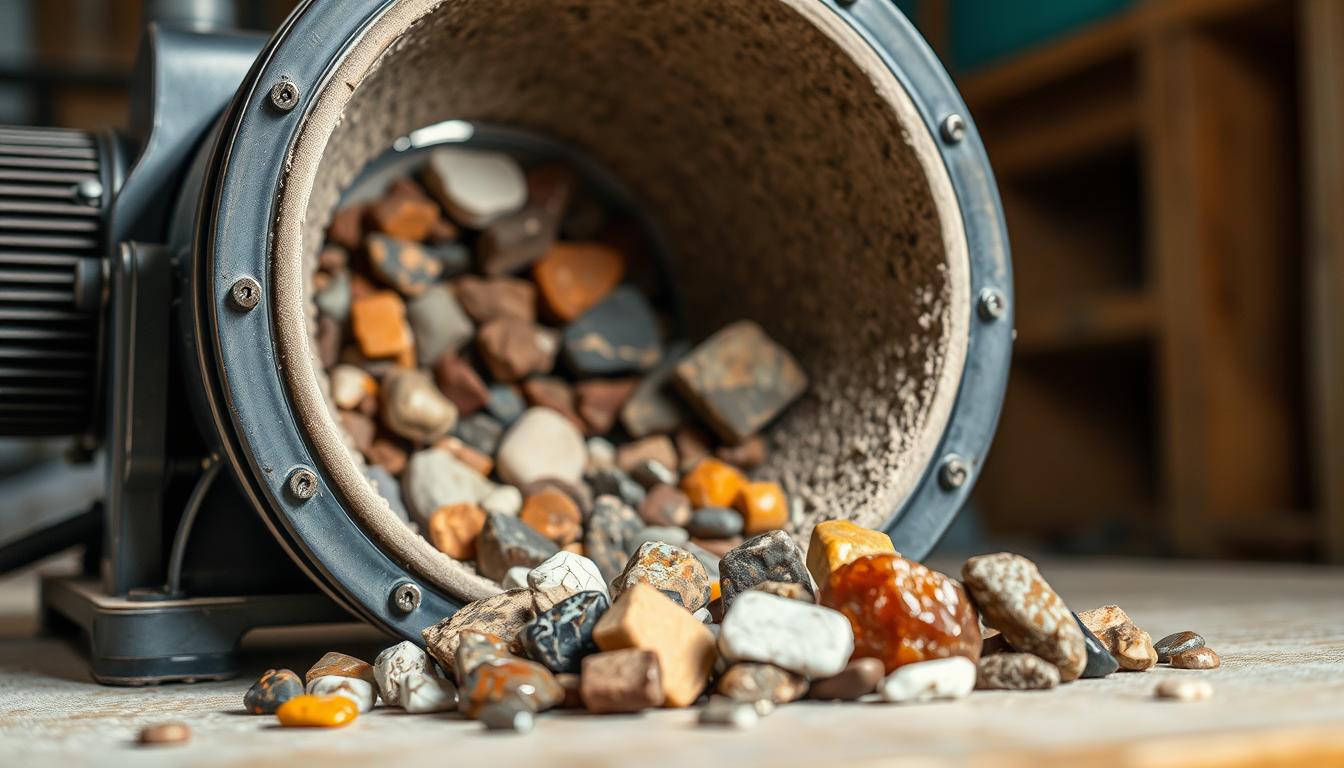
The barrel and lid work together to contain your rocks and tumbling media. The rubber liner protects the barrel from wear, while the lid creates a seal that prevents spills.
Check these parts regularly for cracks, warping, or loose fits that could cause problems:
- Barrel walls – Look for thin spots, cracks, or worn areas that need replacement.
- Rubber liner – Replace when it becomes thin, cracked, or pulls away from the barrel.
- Lid seal – Ensure it creates a tight fit without gaps or distortion.
- Lid clamps – Test that they secure firmly and release easily.
Motor and Drive System
Your tumbler’s motor and drive belt system need regular attention to maintain proper speed and prevent overheating. Clean motors run cooler and last much longer than neglected ones.
Follow these steps to keep your drive system healthy:
- Check belt tension. The belt should have slight give but not slip during operation.
- Clean motor vents. Use compressed air to remove dust buildup that blocks cooling.
- Inspect drive wheels. Look for wear grooves or damage that affects belt alignment.
- Test motor mounts. Tighten any loose bolts that cause vibration or noise.
Daily and Weekly Inspection Routine
Quick daily checks take just a few minutes but catch problems before they become expensive repairs. Weekly inspections go deeper to spot wear patterns and maintenance needs.
Start each tumbling session by checking the power cord and ensuring all components are properly assembled. This simple habit prevents many common issues.
Daily Checklist
- Power connection – Verify the cord is undamaged and plugged in securely.
- Barrel position – Confirm the barrel sits properly on the drive wheels.
- Lid security – Check that clamps or threads are tight before starting.
- Unusual sounds – Listen for grinding, squeaking, or rattling noises.
Weekly Deep Check
Once weekly, perform a more thorough inspection when the tumbler is cool and unplugged. This deeper look helps you spot developing issues early.
Remove the barrel and examine all accessible components for wear, damage, or loose connections that need attention.
Lubrication Schedule
Mark your calendar to lubricate drive bearings every 3 months. Use only the oil type specified in your manual – wrong lubricants can damage seals and gears.
Cleaning Your Rock Tumbler Properly
Proper cleaning removes abrasive grit that wears down components and affects tumbling quality. The cleaning process varies depending on which parts you’re working on.
Always unplug your tumbler and let it cool completely before starting any cleaning or maintenance work. Safety comes first in any workshop.
Barrel and Lid Cleaning
Clean the barrel after each use to prevent grit from hardening and becoming difficult to remove. This is especially important since tumbling grit has a limited lifespan, and proper cleaning helps you get the most out of your supplies. Warm soapy water works for routine cleaning, but tougher buildup needs special attention.
For stubborn residue, make a paste with baking soda and water – it’s abrasive enough to work but won’t damage plastic or rubber components:
- Empty completely – Remove all rocks, grit, and liquid before cleaning.
- Rinse first – Use warm water to remove loose particles and debris.
- Scrub gently – Use a soft brush to avoid scratching the barrel interior.
- Dry thoroughly – Prevent rust and mold by air-drying all components completely.
Motor and Drive Cleaning
Keep electrical components dry during cleaning – use only dry cloths and brushes on the motor housing and drive system. Moisture can cause shorts or corrosion that damage expensive parts.
Focus on removing dust and debris that block air circulation and cause overheating problems. If you’re looking for a quiet rock tumbler for your workshop, proper maintenance will help keep noise levels down by ensuring smooth operation.
Troubleshooting Common Issues
Even well-maintained tumblers develop problems over time. Recognizing symptoms early and knowing how to respond saves money and prevents damage to your rocks.
Most tumbler problems fall into a few categories that have straightforward solutions once you identify the root cause.
Noise and Vibration Problems
Unusual sounds usually indicate loose parts, worn bearings, or improper assembly. Start by checking that your tumbler sits level on a solid surface.
Systematic troubleshooting helps you pinpoint the exact source of noise or vibration issues:
- Check the surface. Ensure your tumbler sits on a level, stable platform.
- Inspect the belt. Look for cracks, stretching, or misalignment on drive wheels.
- Test bearings. Spin components by hand to feel for roughness or binding.
- Verify balance. Make sure rocks are distributed evenly in the barrel.
Leaking Barrels
Barrel leaks waste tumbling compound and can damage your workspace or motor. Most leaks come from worn seals, loose lids, or cracked barrel walls.
Replace worn rubber seals immediately – they’re inexpensive compared to the damage leaks can cause to other components. Proper storage of your rock tumbling grit is also important to prevent contamination from leaks.
Poor Tumbling Results
Uneven polishing often results from maintenance issues rather than technique problems. Worn barrel liners create flat spots, while dirty components affect the tumbling action.
Check that your barrel rotates smoothly without wobbling or sticking during the cycle.
Frequently Asked Questions
Frequently Asked Questions
How often should I clean my rock tumbler?
Clean your rock tumbler barrel and components after every use to prevent grit buildup that can damage parts and affect results.
What are signs my rock tumbler needs maintenance?
Watch for unusual noises, excessive vibration, leaking barrels, or uneven polishing results – these indicate parts that need attention.
How do I properly lubricate my rock tumbler?
Use only manufacturer-recommended lubricants on moving parts every 3 months, following the manual’s specifications for type and amount.
Can I use any cleaning solution on my rock tumbler?
Stick to mild soap and warm water for routine cleaning, with white vinegar solution for sanitizing – harsh chemicals can damage rubber and plastic parts.
How can I prevent my rock tumbler from leaking?
Inspect rubber seals monthly and replace them when they show wear, ensuring the lid fits tightly and clamps securely.
What should I do if my rock tumbler motor stops working?
Check the power connection first, then verify proper assembly and belt alignment – if these don’t solve it, consult a repair professional.
Final Thoughts
Rock Tumbler Maintenance becomes second nature when you establish regular routines and stick to them consistently. A well-maintained tumbler produces better results and serves you for many years.
Start with these basic maintenance steps this week and build good habits that protect your investment. Your future self will thank you when your tumbler keeps running smoothly year after year.