Rotary Vs Vibratory Tumblers represent two distinct approaches to rock polishing, each offering unique advantages for hobbyists and professionals alike. Understanding the differences between these tumbling methods can save you time, money, and frustration when selecting equipment for your rock polishing projects.
The choice between rotary and vibratory systems affects everything from processing time to final polish quality. Each type excels in specific situations, making the right selection crucial for achieving your desired results.
TL;DR
- Rotary tumblers take 4-6 weeks to complete all four stages but produce superior polish quality.
- Vibratory tumblers finish rocks in 1-2 weeks with faster processing but may leave flat spots on softer stones.
- Rotary systems cost $50-200 while vibratory models range from $100-500 for comparable capacity.
- Vibratory tumblers run 5-10 times quieter than rotary models, making them better for indoor use.
Rotary Vs Vibratory Tumblers: Key Differences
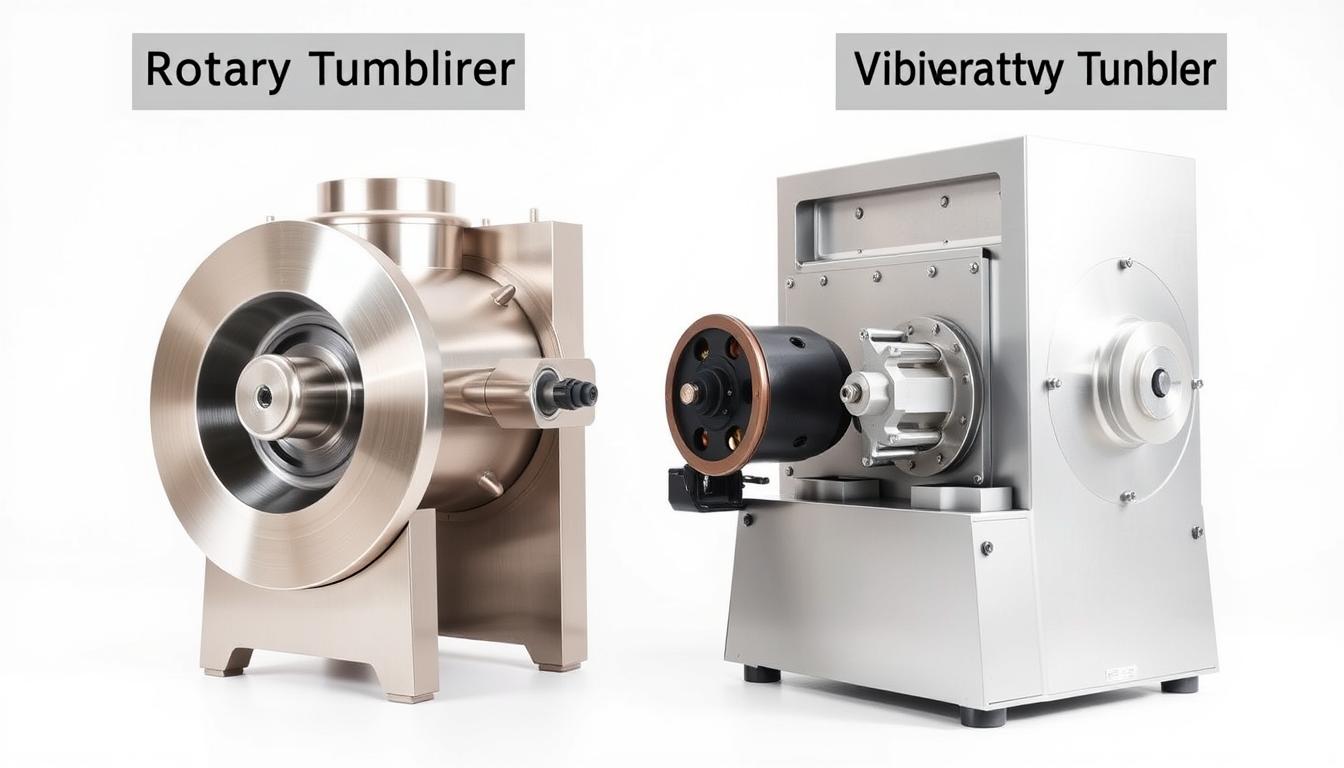
The fundamental difference lies in how each system moves rocks and abrasive media. Rotary tumblers use a rotating barrel that rolls rocks over each other, mimicking natural river action over thousands of years compressed into weeks.
Vibratory tumblers employ rapid vibration to create friction between rocks and abrasive compounds. This vibrating action produces consistent results faster but with different characteristics than the rolling motion of rotary systems. For a complete guide to vibratory rock tumbler setup and processes, our beginner’s guide covers everything you need to know.
How Rotary Tumblers Work
Rotary tumblers consist of a motor-driven roller system that turns a sealed barrel continuously. The barrel rotates at 20-60 RPM, causing rocks to tumble in a cascading motion that gradually wears away rough surfaces.
The process requires four distinct stages with different abrasive grits. Each stage typically runs 7-10 days, making the complete cycle last 4-6 weeks for most rock types.
Rotary Tumbler Stages
- Coarse Grinding (60/90 grit). Removes rough edges and shapes the stones over 7-10 days.
- Medium Grinding (220 grit). Smooths surfaces and eliminates scratches from the coarse stage.
- Fine Grinding (400 grit). Creates the pre-polish surface needed for the final stage.
- Polishing (powder or paste). Develops the final mirror-like finish over 7-14 days.
How Vibratory Tumblers Work
Vibratory tumblers use an oscillating platform or bowl that vibrates at high frequency. The vibration creates constant friction between rocks and abrasive media without the rolling action of rotary systems.
This method processes rocks much faster, often completing all stages in 1-2 weeks. The consistent vibrating motion ensures even contact between all surfaces and abrasive materials.
Vibratory Tumbler Advantages
- Speed – Completes projects 3-4 times faster than rotary tumblers.
- Noise Level – Operates much quieter, suitable for indoor workshops.
- Consistent Results – Even vibration produces uniform finishes across all stones.
- Easy Monitoring – Open bowl design allows progress checking without stopping the cycle.
Performance Comparison
Polish quality represents the most significant difference between these systems. Rotary tumblers excel at creating deep, mirror-like finishes that highlight natural stone patterns and colors.
Vibratory tumblers produce excellent results but may create slight flat spots on softer materials due to the constant downward pressure. This limitation affects stones like obsidian or soft agates more than harder materials like jasper or quartz. If noise is a major concern, consider our guide to quiet rock tumblers for peaceful stone polishing.
Choosing Your First Tumbler
Start with a rotary tumbler if you prioritize polish quality and don’t mind longer processing times. Choose vibratory for faster results and quieter operation.
Processing Time Breakdown
| Stage | Rotary Duration | Vibratory Duration |
|---|---|---|
| Coarse | 7-10 days | 2-3 days |
| Medium | 7-10 days | 2-3 days |
| Fine | 7-10 days | 2-3 days |
| Polish | 7-14 days | 3-5 days |
| Total | 28-44 days | 9-14 days |
Cost Analysis
Entry-level rotary tumblers start around $50-80 for basic single-barrel models, while professional units reach $200-300. The lower initial cost makes rotary systems attractive for beginners exploring the hobby.
Vibratory tumblers typically cost more upfront, ranging from $100-200 for starter models to $500+ for professional units. However, the faster processing times can offset higher initial costs through increased productivity.
Operating Cost Factors
- Electricity – Vibratory models use 25-50% less power due to shorter cycle times.
- Abrasives – Both systems use similar amounts per pound of rocks processed.
- Media Replacement – Rotary tumblers require ceramic media replacement more frequently.
- Maintenance – Vibratory systems have fewer moving parts and lower maintenance needs.
Best Applications for Each Type
Rotary tumblers work best for beginners who want to learn traditional rock polishing methods and achieve maximum polish quality. They handle mixed hardness batches well and excel with common collecting rocks like agates, jaspers, and beach stones. For those just starting out, our complete buying guide for beginners helps identify the ideal first tumbler.
Vibratory tumblers suit production environments, commercial operations, and hobbyists who process large quantities regularly. They’re ideal for consistent rock types and when speed matters more than ultimate polish depth. To help you decide if switching makes sense, check our guide on switching from rotary to vibratory tumblers.
Rock Type Recommendations
- Rotary Better – Soft stones, mixed hardness batches, maximum polish quality needed.
- Vibratory Better – Hard stones, consistent batches, production polishing, noise-sensitive locations.
- Either Works – Medium hardness stones like most quartzes, standard collecting rocks.
Frequently Asked Questions
Can you use the same rocks in both tumbler types?
Yes, most rocks work in either system, though results vary. Rotary tumblers produce deeper polish while vibratory systems work faster with consistent finishes.
Which tumbler type is better for beginners?
Rotary tumblers are often recommended for beginners due to lower cost and traditional polishing methods. However, vibratory systems offer faster results and easier monitoring.
Do vibratory tumblers really work faster?
Yes, vibratory tumblers complete full polishing cycles in 1-2 weeks compared to 4-6 weeks for rotary systems. The constant vibration action accelerates the grinding and polishing process significantly.
Which system produces better polish quality?
Rotary tumblers generally produce superior mirror-like finishes with greater depth and brilliance. Vibratory systems create excellent results but may lack the deep luster achieved through rotary tumbling action.
Are vibratory tumblers really quieter?
Yes, vibratory tumblers operate at significantly lower noise levels than rotary systems. Most vibratory units run quiet enough for indoor workshops while rotary tumblers often require garage or basement placement.
Final Thoughts
Rotary Vs Vibratory Tumblers each offer distinct advantages depending on your priorities and working conditions. Consider your available time, desired polish quality, noise tolerance, and budget when making your selection. For budget-conscious hobbyists, our guide to affordable rock tumblers under $150 highlights quality models that won’t break the bank.
Many serious rock hounds eventually own both types, using rotary tumblers for premium polish projects and vibratory systems for faster production work. Start with the system that best matches your immediate needs and expand your equipment as your skills and interests develop.