Proper storage of Rock Tumbling Grit Supplies keeps your materials fresh and effective for every polishing project. Without the right storage methods, grit can absorb moisture, collect dust, or lose its cutting power over time.
Smart storage practices protect your investment and ensure consistent results. When grit stays clean and dry, your rocks polish faster and come out with better shine.
TL;DR
- Store grit in airtight containers to prevent moisture absorption and contamination.
- Keep different grit sizes separate to avoid cross-contamination between 80, 220, 400, and 1000 grit.
- Maintain storage temperature between 60-80°F (15-27°C) for optimal grit performance.
- Label containers with grit type, size, and purchase date for easy identification.
Rock Tumbling Grit Supplies Storage Basics
Quality storage starts with understanding what damages grit most. Moisture turns silicon carbide grit into clumpy, less effective abrasive that won’t cut stones properly.
Temperature swings also affect grit performance. Extreme heat or cold can change how the abrasive particles work together during tumbling cycles.
Why Storage Quality Matters for Results
Contaminated grit creates scratches instead of smooth polish. When different grit sizes mix together, coarse particles damage the fine finishing work you’re trying to achieve.
Fresh, properly stored grit cuts faster and more evenly. This means shorter tumbling cycles and better stone surfaces every time. Understanding how long tumbling grit lasts helps you plan your storage and purchasing strategy.
Best Container Options for Grit Storage
Airtight plastic containers work best for most rock tumbling supplies. Food-grade buckets with tight-fitting lids handle large quantities while smaller containers work well for occasional use.
Glass jars excel for polish compounds and fine grits. The non-reactive surface won’t interact with your materials, and clear glass lets you see contents at a glance.
Plastic Container Benefits
- Durability – Won’t break if dropped in the workshop.
- Size variety – Available from small jars to 5-gallon buckets.
- Cost effective – Cheaper than glass for large quantities.
- Easy cleaning – Simple to wash between different grit types.
When to Choose Glass Jars
Use glass for aluminum oxide polish and cerium oxide compounds. These materials can react with some plastics over long storage periods.
Glass also works well for small amounts of specialty media like walnut shell or corn cob polish.
Organizing Your Grit Collection
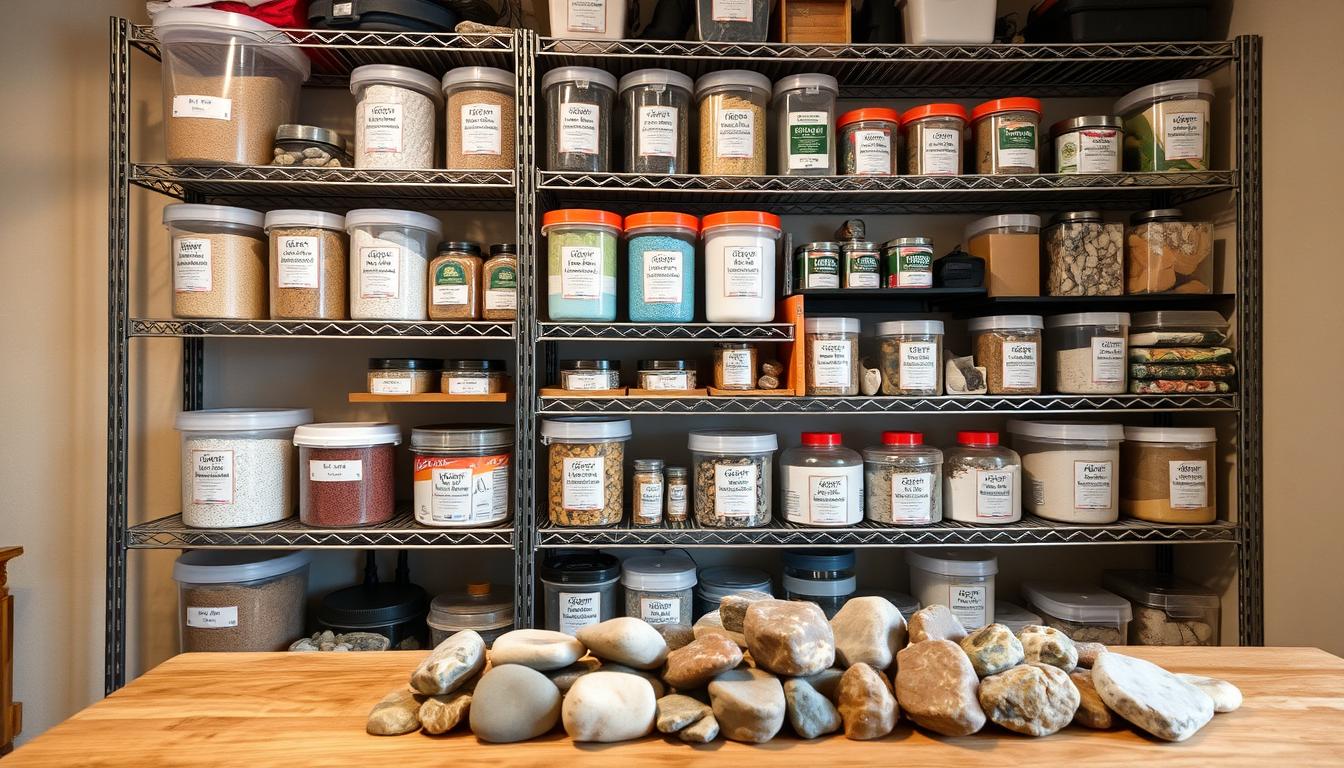
Create a labeling system that includes grit type, mesh size, and purchase date. Color-coded labels speed up identification – use red for coarse, yellow for medium, green for fine, and blue for polish.
Store containers on shelves arranged by grit progression. Keep your most-used sizes at eye level for easy access during tumbling sessions. Your storage organization should complement your tumbler maintenance routine for the most efficient workflow.
Storage Space Saver
Stack same-sized containers and use a permanent marker to write contents on the lid top. This way you can read labels even when containers are stacked high.
Shelf Organization Strategy
- Group by tumbling stage. Keep all Stage 1 grits together, then Stage 2, and so on.
- Separate wet and dry media. Store tumbling pellets away from abrasive grits to prevent mix-ups.
- Create a supplies station. Keep measuring tools and funnels near your grit storage area.
Environmental Storage Conditions
Store grit in areas with stable temperature and low humidity. Basements often work well if they stay dry, while attics typically get too hot in summer.
Avoid storage near heat sources like furnaces or water heaters. These create temperature swings that can cause container seals to fail. If you’re using a quiet tumbler, you might have more flexibility in where you set up your workspace and storage area.
Humidity Control Methods
- Desiccant packets – Add silica gel packs to containers in humid climates.
- Climate control – Use a dehumidifier in damp storage areas.
- Air circulation – Ensure good airflow around storage containers.
Protecting from Contamination
Keep storage areas clean and dust-free. Even small amounts of dirt can contaminate fine grits and create scratching during polish stages.
Store containers off the floor to prevent moisture wicking and make cleaning easier. Simple wire shelving works well for most home workshops.
Buying and Storing Bulk Grit
Bulk purchases save money but require proper planning. Calculate how much grit you use per year before buying large quantities. This is especially important when choosing budget-friendly equipment – buying in bulk can help offset the costs of starting your rockhounding hobby.
Most silicon carbide grit stays fresh for years when stored correctly. However, some polish compounds have shorter shelf lives, especially those containing organic materials.
Bulk Storage Considerations
- Container size – Split large quantities into smaller containers for daily use.
- First in, first out – Use older grit first to maintain freshness.
- Storage space – Make sure you have adequate dry storage before ordering.
- Sharing opportunities – Consider splitting bulk orders with other rock hounds.
Frequently Asked Questions
How long does rock tumbling grit stay fresh in storage?
Silicon carbide grit stays effective for years when stored in airtight containers. Polish compounds typically last 2-3 years before losing effectiveness.
Can I store different grit sizes in the same container?
Never mix different grit sizes in one container. Cross-contamination ruins the precision needed for smooth stone finishing.
What happens if my grit gets wet during storage?
Wet grit clumps together and loses cutting power. Spread it out to dry completely before using, or replace if heavily contaminated.
Should I store tumbling pellets with my grit?
Store plastic pellets separately from abrasive grit to prevent contamination. Pellets work best when completely clean.
Is the original packaging good enough for long-term storage?
Original paper or cardboard packaging works for short-term use but transfer to airtight containers for long-term storage.
Final Thoughts
Rock Tumbling Grit Supplies last longer and work better when stored properly in clean, dry conditions. Taking time to organize your storage system pays off with consistent tumbling results and less waste.
Start by getting airtight containers for your current grit collection and expand your storage system as you add new materials.