Rock Collecting Laws In Hawaii are some of the strictest in the United States, designed to protect the islands’ unique geological formations and cultural heritage. These regulations affect both residents and tourists who want to take home natural souvenirs from their Hawaiian vacation.
Understanding these laws before you visit can save you from hefty fines and legal trouble. The penalties for violating Hawaii’s rock collecting restrictions can include fines up to $10,000 and potential jail time.
TL;DR
- Taking rocks, sand, or coral from Hawaii beaches is illegal and carries fines up to $10,000.
- Hawaii Revised Statutes Section 205A-44 specifically prohibits removing natural materials from state lands.
- Pele’s Curse legend claims stolen volcanic rocks bring bad luck until returned to Hawaii.
- Hawaii Volcanoes National Park receives over 100 packages monthly from visitors returning rocks they took illegally.
Rock Collecting Laws In Hawaii
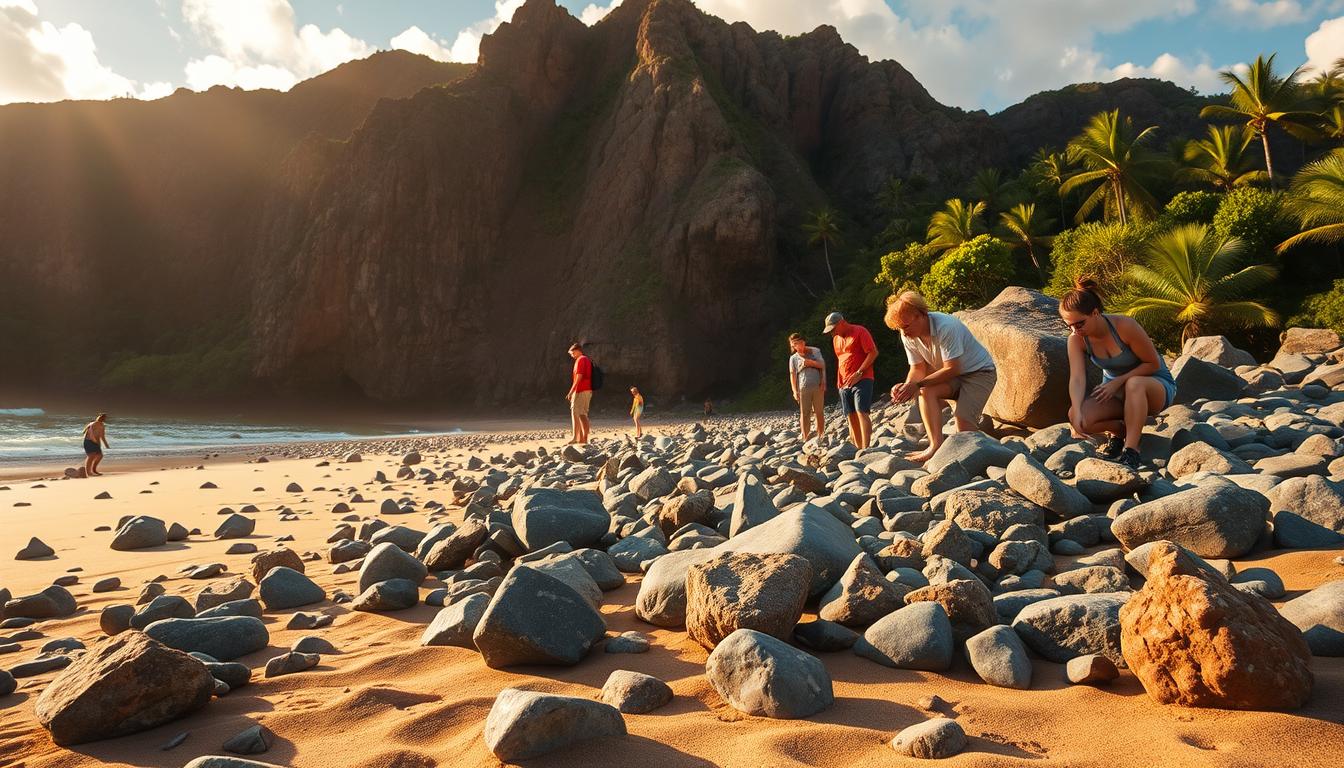
Hawaii’s rock collecting laws fall under multiple legal frameworks that protect both state and federal lands. The Hawaii Revised Statutes Section 205A-44 makes it illegal to take sand, dead coral, rocks, soil, or other marine life from any beach, shoreline area, or ocean waters.
Federal laws also apply to national parks and monuments throughout the islands. Taking anything from Hawaii Volcanoes National Park, Haleakala National Park, or other federal lands violates the Code of Federal Regulations and can result in federal charges.
What Materials Are Protected
Hawaii’s laws protect virtually all natural materials found on public lands and beaches. This comprehensive protection covers more items than many visitors realize.
- Volcanic rocks and lava – Including black sand beaches and lava formations
- Coral and shells – Both living and dead coral are protected
- Beach sand – All types including white, black, and green sand
- Sea glass – Even though it’s technically man-made debris
- Driftwood – Natural wood found on beaches
- Pumice stone – Lightweight volcanic rock
Cultural Significance
These laws respect Native Hawaiian beliefs about the sacredness of the land. Many rocks and natural formations hold deep spiritual meaning in Hawaiian culture, particularly volcanic materials associated with Pele, the volcano goddess.
Penalties and Enforcement
Law enforcement takes these violations seriously, especially at popular tourist destinations. Airport security regularly checks luggage for prohibited natural materials, and customs agents are trained to identify Hawaiian rocks and coral.
The penalties vary depending on the location and amount of material taken:
- State land violations. Fines range from $500 to $10,000 plus court costs and possible community service.
- Federal land violations. Can result in federal charges with fines up to $5,000 and up to six months in jail.
- Repeat offenses. Face increased penalties and potential felony charges for large-scale collecting.
Documentation Requirements
Visitors cannot obtain permits for personal rock collecting on public lands in Hawaii. Commercial collecting requires special licenses that are rarely granted and only for scientific or educational purposes.
Legal Alternatives
Visit gift shops that sell legally sourced Hawaiian rocks and minerals. These retailers follow proper regulations and offer authentic materials without legal risks.
Private Property Exceptions
The only legal way to collect rocks in Hawaii is with explicit written permission from private landowners. Even then, you must ensure the property isn’t subject to conservation easements or other restrictions.
Many private collectors and rock shops operate legally by working with private landowners. However, tourists rarely have access to these arrangements during short visits.
What Counts as Private Property
Private property must be clearly marked and genuinely owned by individuals or companies. Resort properties, even if privately owned, typically don’t allow rock collecting, and their beaches often fall under state jurisdiction anyway.
The Legend of Pele’s Curse
Beyond legal consequences, Hawaiian folklore warns of Pele’s Curse affecting those who take volcanic rocks from the islands. According to legend, removing rocks from Hawaii brings bad luck that continues until the rocks are returned.
Hawaii Volcanoes National Park receives hundreds of packages each year from former visitors returning rocks they took. The park service estimates they receive over 100 packages monthly containing rocks, along with letters describing misfortunes that occurred after the rocks were taken.
Scientific Perspective
While the curse isn’t scientifically proven, the volume of returned rocks suggests many people take these beliefs seriously. Park rangers report that returned rocks often come with detailed letters apologizing for the theft and describing various troubles the senders experienced.
Reporting Violations
Hawaii encourages residents and visitors to report rock collecting violations to help protect natural resources. Multiple agencies handle enforcement depending on the location, similar to the reporting systems found in rock collecting laws in California and other states with strict geological protections.
- State beaches – Contact the Department of Land and Natural Resources
- National parks – Report to park rangers or the National Park Service
- County beaches – Contact local police or beach patrol
- Airport violations – TSA and customs handle enforcement at departure points
Articles You May Like
Frequently Asked Questions
Can I take small pebbles from Hawaiian beaches?
No, taking any rocks, pebbles, or sand from Hawaiian beaches is illegal regardless of size. The law applies to all natural materials.
What happens if TSA finds rocks in my luggage?
TSA will confiscate the rocks and may issue citations or fines. You could also face federal charges depending on where the rocks were taken.
Are there any beaches where rock collecting is legal?
No public beaches in Hawaii allow rock collecting. All state and county beaches prohibit removing natural materials, unlike some rock collecting laws in Maine which allow limited collecting on certain beaches with restrictions.
Can I collect rocks from private property in Hawaii?
Only with explicit written permission from the landowner, and only if the property isn’t subject to conservation restrictions.
Final Thoughts
Rock Collecting Laws In Hawaii exist to preserve the islands’ natural beauty and respect Native Hawaiian culture for future generations. While the restrictions might disappoint souvenir hunters, they ensure these unique geological formations remain intact.
Consider purchasing legally sourced Hawaiian rocks from authorized retailers instead of risking legal trouble and cultural disrespect. For rockhounds planning mainland adventures, states like Arizona and Colorado offer more permissive collecting opportunities on designated public lands. The memories and photos from your Hawaiian vacation will last just as long without the legal complications.