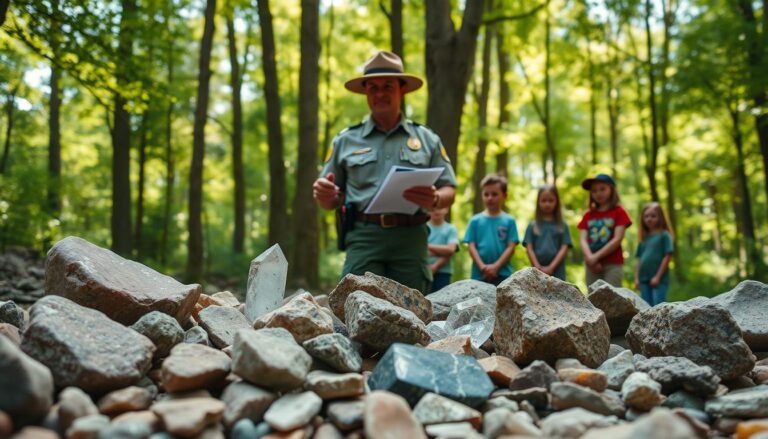
Rock Collecting Laws In Idaho can seem confusing at first, but understanding the basics helps you enjoy this hobby without legal troubles. Idaho offers incredible opportunities for rockhounds, from finding agates along the Snake River to discovering garnets in the northern mountains.
The key is knowing where you can legally collect and what permits you might need. Different land ownership types have different rules, and some areas require special permissions or have seasonal restrictions. If you’re planning to collect in neighboring states, you’ll want to familiarize yourself with rock collecting laws in Montana or rock collecting laws in Utah as well.
TL;DR
- You can collect rocks freely on most public lands with a limit of 25 pounds per person per day for personal use.
- National parks and wilderness areas prohibit all rock collecting, while national forests and BLM lands generally allow it.
- Private land requires written permission from the landowner before collecting any rocks or minerals.
- Commercial collecting requires permits and fees, with regulations varying by land management agency.
Rock Collecting Laws In Idaho: Public Land Rules
Most rock collecting in Idaho happens on public lands managed by different federal agencies. Each agency has its own set of rules, but the general principle allows casual collecting for personal use.
The Bureau of Land Management (BLM) oversees millions of acres in Idaho and permits rock collecting under their casual use guidelines. You can collect up to 25 pounds of rocks per person per day without a permit, as long as you’re not using power tools or explosives.
National Forest Guidelines
The U.S. Forest Service manages extensive areas throughout Idaho where rock collecting is typically allowed. The same 25-pound daily limit applies, and you cannot sell what you collect without proper permits.
Some popular Forest Service areas for rockhounds include the Sawtooth National Forest for garnets and the Boise National Forest for various agates and jaspers. Always check with the local ranger district for any area-specific restrictions before heading out.
Prohibited Areas and Special Restrictions
Certain public lands in Idaho completely prohibit rock collecting to preserve natural and cultural resources. National parks like Yellowstone (which extends into Idaho) forbid all collection activities.
Wilderness areas designated under the Wilderness Act also prohibit rock collecting to maintain their primitive character. Additionally, archaeological sites and areas with cultural significance to Native American tribes may have collecting restrictions, similar to regulations found in Arizona’s rock collecting laws which also protect Native American cultural sites.
- National Parks – Complete prohibition on rock collecting
- Wilderness Areas – No collecting allowed to preserve natural conditions
- Archaeological Sites – Protected areas where collecting may damage historical resources
- Research Natural Areas – Special designations that may restrict collecting
- Critical Habitat Areas – Wildlife protection zones with seasonal or permanent restrictions
Private Land and Permission Requirements
Collecting rocks on private property requires explicit written permission from the landowner. This includes ranches, farmland, and privately owned mining claims throughout Idaho.
Many landowners are willing to grant permission if you ask politely and explain your intentions. Some may charge a small fee or require you to sign a liability waiver.
Always Carry Documentation
Keep written permission letters and any permits with you while collecting. This prevents misunderstandings with law enforcement or land managers who may question your activities.
Mining Claims and Staked Areas
Idaho has numerous active and inactive mining claims on both public and private lands. These claims give the holder exclusive rights to minerals in that area, making unauthorized collecting illegal.
Look for claim markers, signs, or posted boundaries before collecting. When in doubt, contact the local BLM or Forest Service office to verify claim status for specific areas.
Commercial Collecting and Permit Requirements
If you plan to sell rocks or minerals you collect in Idaho, you need commercial permits from the appropriate land management agency. These permits involve application processes, fees, and additional regulations similar to those required in Colorado’s commercial collecting laws.
Commercial permits typically require environmental assessments, bonding, and restoration plans. The fees vary based on the type of material and the volume you plan to extract.
- Contact the managing agency. Determine which agency manages your target area and request permit information.
- Submit applications early. Processing can take several months, especially for larger operations.
- Pay required fees. Commercial permits involve upfront costs and ongoing royalty payments.
- Follow all conditions. Permits come with specific terms about extraction methods, restoration, and reporting.
Best Practices for Legal Rock Collecting
Following proper etiquette and legal guidelines protects both the environment and your right to continue collecting. Always practice Leave No Trace principles and respect other land users.
Fill any holes you dig and avoid damaging vegetation or disturbing wildlife habitats. Pack out all trash and consider joining local rockhound clubs to stay informed about changing regulations, which can vary significantly from state to state as seen in Washington’s rock collecting regulations.
- Research before you go – Check current regulations and restrictions for your target area
- Bring proper identification – Carry ID and any permits or permission letters
- Respect quantity limits – Stick to the 25-pound daily limit for casual collecting
- Use hand tools only – Power equipment typically requires special permits
- Stay on designated roads – Avoid creating new vehicle tracks or damaging habitat
Articles You May Like
Frequently Asked Questions
Can I collect rocks in Idaho state parks?
Idaho state parks generally prohibit rock collecting to preserve natural resources for all visitors. Contact individual parks for specific policies as some may allow limited collecting in designated areas.
Do I need a permit to collect rocks on BLM land in Idaho?
No permit is required for casual collecting up to 25 pounds per person per day on BLM lands. Commercial collecting or larger quantities require permits and fees.
What happens if I collect rocks illegally in Idaho?
Illegal rock collecting can result in fines, confiscation of materials, and potential criminal charges depending on the location and quantity involved. Penalties are typically higher in protected areas like national parks.
Are there seasonal restrictions on rock collecting in Idaho?
Some areas may have seasonal closures to protect wildlife during nesting or migration periods. Check with local land management agencies for current seasonal restrictions in your collecting area.
Can I use metal detectors while rock collecting in Idaho?
Metal detector use follows the same rules as rock collecting – generally allowed on BLM and Forest Service lands but prohibited in national parks and wilderness areas. Some areas may require additional permits for metal detecting.
Final Thoughts
Rock Collecting Laws In Idaho are straightforward once you understand the different land management systems and their rules. Most public lands welcome casual collectors who follow the guidelines and respect the environment.
Start by researching your target areas through the appropriate land management agencies and always err on the side of caution when permission requirements are unclear.