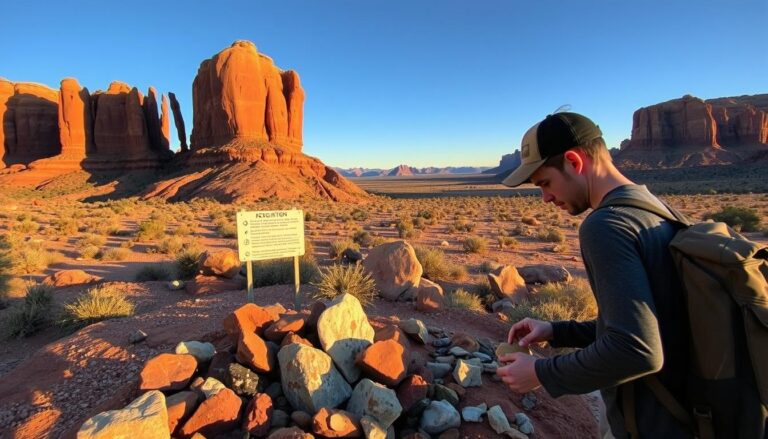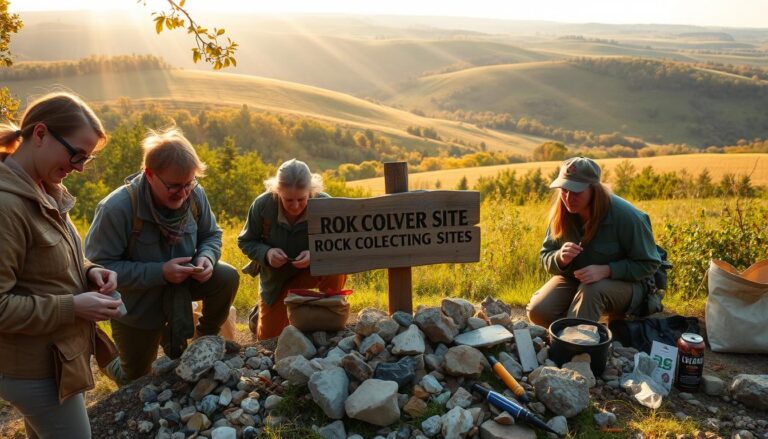
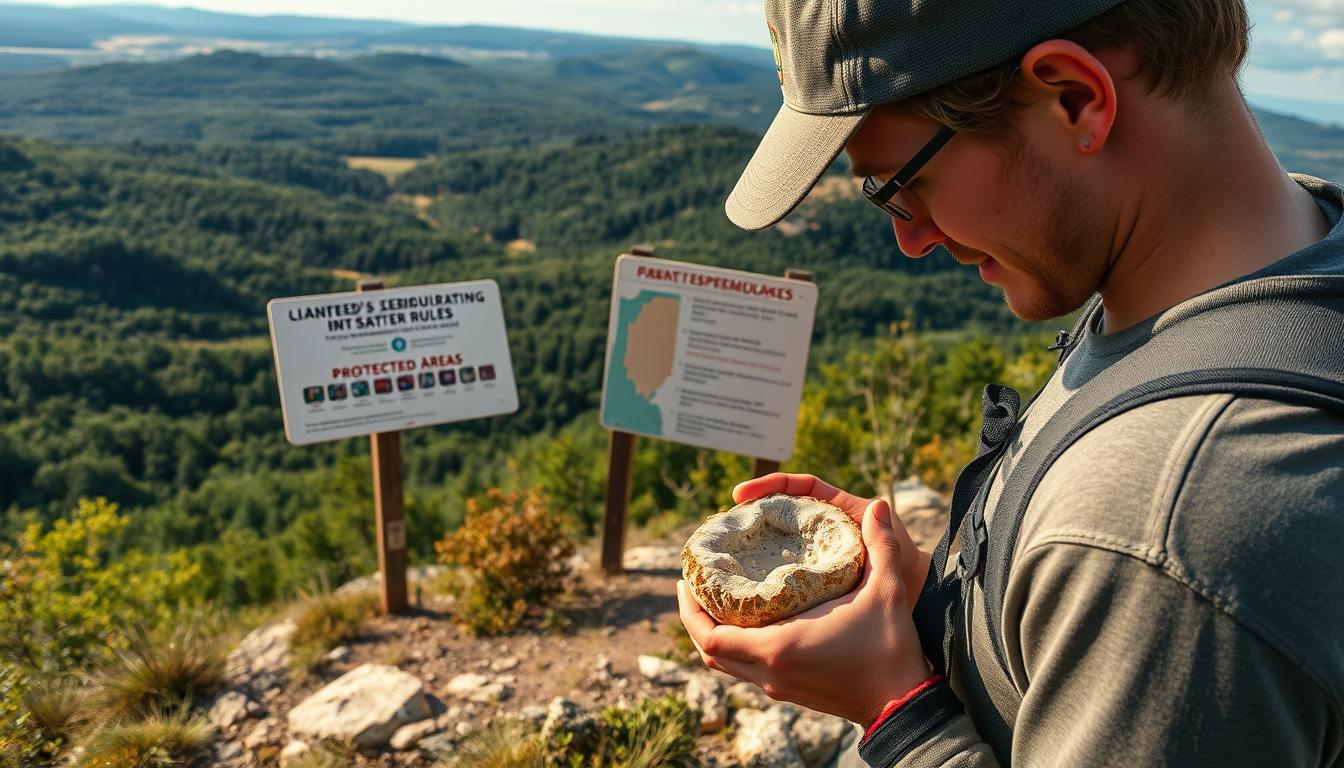
Rock collecting enthusiasts must understand the specific regulations that govern their hobby in Indiana. The state offers diverse geological formations and mineral deposits that attract collectors from across the region.
Indiana’s rock collecting laws balance recreational access with conservation needs. These regulations help protect the state’s natural resources while allowing hobbyists to pursue their passion legally and responsibly.
TL;DR
- Rock collecting is allowed on most public lands in Indiana, but commercial collection requires permits ranging from $100-$500.
- State parks allow recreational collecting for personal use, while the Hoosier National Forest follows U.S. Forest Service guidelines.
- Private property collection requires written landowner permission and may involve liability waivers.
- Violations can result in fines up to several thousand dollars, enforced by the Indiana Department of Natural Resources.
Rock Collecting Laws in Indiana
Indiana’s geological landscape spans multiple jurisdictions, each with distinct rules for rock collecting activities. The Indiana Department of Natural Resources (DNR) oversees state-managed lands, while federal agencies like the Bureau of Land Management and U.S. Forest Service control federal territories.
State regulations focus on preserving Indiana’s unique geological features while allowing reasonable access for collectors. Understanding these laws prevents legal issues and supports conservation efforts statewide, similar to the comprehensive regulations found in neighboring states like rock collecting laws in Ohio.
State vs Federal Jurisdiction
Different agencies manage various types of public land in Indiana. State parks operate under DNR guidelines, while national forests follow federal protocols.
- State jurisdiction – Indiana DNR manages state parks, forests, and recreation areas with specific permit requirements.
- Federal jurisdiction – U.S. Forest Service and BLM oversee national forests and federal lands with separate regulations.
- Local jurisdiction – County and municipal areas may have additional restrictions beyond state and federal rules.
Public Land Collection Guidelines
Public lands in Indiana offer numerous opportunities for rock collecting, but each location type has specific rules. Most areas allow recreational collecting for personal use without permits.
State Parks and Forests
Indiana state parks welcome recreational rock collectors with reasonable restrictions. Personal collection typically requires no permits, but commercial activities need special authorization.
Collectors should check with park rangers before visiting since some areas restrict collection to protect sensitive geological features. Many parks provide maps showing approved collection zones.
Hoosier National Forest Policies
The Hoosier National Forest allows rock and mineral collection for personal use under federal guidelines. Commercial collection requires permits and may face additional restrictions.
Some areas within the forest remain off-limits to protect wildlife habitats or rare geological formations. Always consult forest service personnel before collecting in new areas.
Waterways and Shoreline Rules
Indiana’s waterways offer unique collecting opportunities, particularly along Lake Michigan’s shoreline. These areas have special protections due to their ecological importance.
- Lake Michigan shoreline – Personal collection allowed, but certain fossils and rare specimens are protected.
- Rivers and creeks – Collection permitted in most areas, but watch for private property boundaries and protected watersheds.
- Quarries and ponds – Often privately owned, requiring explicit permission from landowners.
Permit Requirements and Fees
Indiana uses a tiered permit system based on collection purpose and scale. Recreational collectors rarely need permits, while commercial operations face stricter requirements similar to those outlined in Michigan rock collecting laws.
Recreational Collection Permits
Most recreational collecting on public lands requires no permits when done for personal enjoyment. However, some special areas may require basic registration or notification.
Educational groups and organized collecting clubs sometimes need group permits for organized outings. These permits typically cost $20-50 and help manage visitor numbers.
Commercial Collection Requirements
Commercial rock collecting requires proper permits and business licensing. These permits cost between $100-500 depending on the scope and location of activities.
Commercial collectors must provide detailed plans showing collection methods, quantities, and restoration procedures. Regular reporting may be required to maintain permit status.
Smart Collection Strategy
Start with well-known public collecting sites to learn local regulations and build relationships with other collectors. Experienced local collectors often share valuable information about rules and prime locations.
Protected Specimens and Limits
Indiana protects certain geological specimens to preserve scientific and educational value. These restrictions apply to both public and private land collection.
Protected Geological Materials
Rare fossils, particularly vertebrate specimens, often require special permits or are completely protected from collection. Some unique mineral formations also receive protection status.
- Vertebrate fossils – Usually require research permits and must be reported to state authorities.
- Cave formations – Stalactites, stalagmites, and flowstone are typically protected in all locations.
- Rare minerals – Some uncommon mineral specimens may be restricted to preserve type localities.
Collection Quantity Limits
Most areas impose reasonable quantity limits to prevent commercial exploitation under recreational collecting rules. Common limits include 25-50 pounds per person per day.
These limits help ensure resources remain available for other collectors while preventing large-scale commercial harvesting without proper permits.
Private Property Considerations
Private property offers some of Indiana’s best collecting opportunities, but requires careful attention to legal requirements. Always obtain written permission before entering private land, as emphasized in Illinois rock collecting regulations.
Landowner Permission Process
Approach landowners respectfully and explain your collecting interests clearly. Many are willing to grant permission when approached properly and offered fair compensation.
Written permission protects both collectors and landowners by clearly establishing terms and expectations. Consider offering to share interesting finds or provide small payments for access.
Liability and Insurance Issues
Landowners may require liability waivers to protect against potential accidents or property damage. Some collectors carry personal liability insurance for additional protection.
- Accident liability – Collectors assume responsibility for injuries sustained during collection activities.
- Property damage – Any damage to fences, crops, or structures becomes the collector’s responsibility.
- Environmental impact – Proper restoration of collection sites may be required as part of access agreements.
Legal Consequences and Enforcement
Violating Indiana’s rock collecting laws can result in significant penalties. The Indiana Department of Natural Resources actively enforces these regulations through regular patrols and investigations.
Fines and Penalties
Unauthorized collection on public lands typically results in fines ranging from $200-2000 depending on the violation severity. Repeat offenses face increased penalties and potential criminal charges.
Commercial collection without proper permits can result in fines up to $10,000 plus confiscation of collected materials and equipment.
Enforcement Agencies
The Indiana DNR conservation officers have primary responsibility for enforcing rock collecting laws on state lands. Federal violations involve U.S. Forest Service law enforcement personnel.
These officers regularly patrol popular collecting areas and respond to reported violations. They work to educate collectors while ensuring compliance with applicable regulations.
Articles You May Like
Frequently Asked Questions
Do I need permits for recreational rock collecting in Indiana state parks?
Most recreational collecting for personal use requires no permits in Indiana state parks. However, always check with park staff as some areas may have special restrictions or require basic registration.
Can I collect rocks on private property without permission?
No, you must always obtain written permission from landowners before collecting on private property. Trespassing for rock collecting purposes can result in criminal charges and civil liability.
What are the quantity limits for rock collecting in Indiana?
Most public areas limit personal collection to 25-50 pounds per person per day. Commercial collection requires permits and faces stricter quantity restrictions based on the specific permit terms.
Are fossils protected under Indiana law?
Some fossils, particularly vertebrate specimens, are protected and may require special research permits. Common invertebrate fossils are usually allowed for personal collection within quantity limits.
How much do commercial collecting permits cost in Indiana?
Commercial rock collecting permits range from $100-500 depending on the scope and location of collection activities. Additional fees may apply for environmental impact assessments or restoration bonds.
Final Thoughts
Rock Collecting Laws in Indiana provide a balanced framework that protects geological resources while allowing enthusiasts to pursue their hobby. Understanding these regulations helps collectors avoid legal issues and supports long-term conservation efforts.
Start with well-established public collecting areas and build relationships with local collectors and landowners. This approach ensures legal compliance while maximizing your collecting opportunities across Indiana’s diverse geological landscape, much like collectors do when following Kentucky’s rock collecting guidelines.