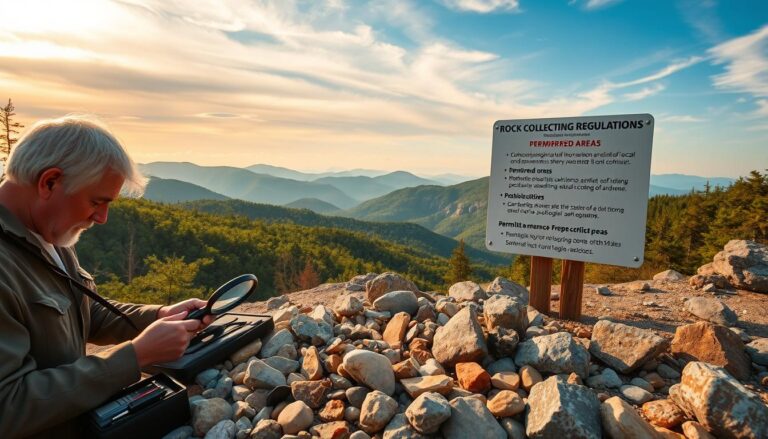
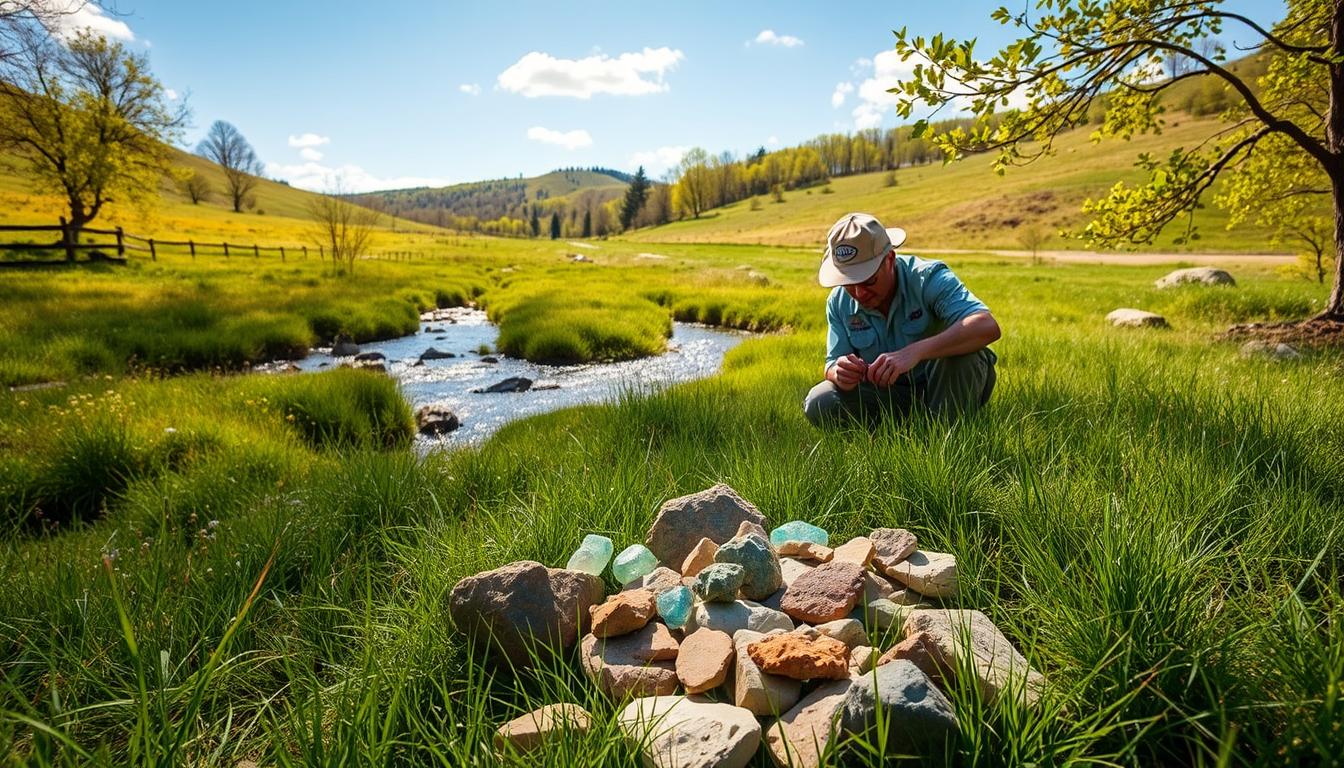
Rock Collecting Laws In Tennessee can be confusing for hobbyists who want to explore the state’s rich geological treasures. Tennessee offers incredible opportunities for rock hounds, from finding agates along riverbanks to discovering fossils in limestone formations.
Understanding where you can legally collect rocks helps you avoid fines and protects Tennessee’s natural heritage. The rules vary significantly between public lands, private property, and protected areas, similar to regulations found in neighboring states like rock collecting laws in Kentucky.
TL;DR
- Tennessee state parks prohibit all rock collecting with fines up to $500 for violations.
- National forests allow collecting up to 25 pounds per person per day for personal use only.
- Private land collecting requires written permission from the landowner before starting.
- Commercial collecting requires special permits and dealer licenses from the state.
Rock Collecting Laws In Tennessee
Tennessee’s rock collecting regulations depend entirely on land ownership and management. State agencies, federal departments, and private landowners each set their own rules for mineral collection.
The most important distinction lies between collecting for personal enjoyment versus commercial purposes. Personal collectors face fewer restrictions but still must follow specific guidelines on public lands.
Tennessee State Parks Rules
All Tennessee state parks strictly prohibit rock, mineral, and fossil collecting. This includes popular destinations like Fall Creek Falls State Park and Burgess Falls State Park where interesting geological formations attract visitors.
Violations carry fines ranging from $50 to $500 depending on the amount collected. Park rangers actively enforce these rules and can confiscate any specimens found in visitors’ possession.
National Forest Guidelines
The Cherokee National Forest allows limited rock collecting for personal use under specific conditions. Collectors can gather up to 25 pounds of common rocks and minerals per person per day without permits.
However, certain restrictions apply to this federal land:
- No commercial collecting – selling specimens requires special permits
- Surface collecting only – digging or excavating is prohibited
- Protected species restrictions – rare minerals and fossils cannot be collected
- Wilderness area bans – designated wilderness zones prohibit all collecting
Private Property Collection
Private land offers the best opportunities for serious rock collectors in Tennessee. Landowners can grant permission for collecting activities that would be illegal on public property, making private property the preferred option for dedicated rockhounds throughout the southeastern states including North Carolina and Georgia.
Always obtain written permission before collecting on private land. Verbal agreements can lead to misunderstandings and potential trespassing charges if disputes arise.
Finding Landowner Permission
Successful private land collecting starts with respectful communication. Contact property owners directly and explain your hobby, proposed collecting methods, and willingness to share interesting finds.
Many farmers and rural landowners appreciate rock collectors who help clear fields of stones. Offer to remove unwanted rocks from agricultural areas in exchange for keeping specimens you find.
Build Landowner Relationships
Bring small gifts like locally-made honey or baked goods when asking for collecting permission. This personal touch often leads to long-term collecting agreements.
Commercial Collecting Regulations
Tennessee requires special permits and licenses for anyone collecting rocks, minerals, or fossils for commercial purposes. The Tennessee Department of Environment and Conservation oversees these regulations.
Commercial collectors must obtain a dealer’s license and pay associated fees. Large-scale operations may need additional environmental permits depending on the collection methods used.
Permit Requirements
Commercial collecting permits involve several steps and fees:
- Application submission. Complete detailed forms describing your intended collecting activities and locations.
- Fee payment. Pay required licensing fees which vary based on operation size and scope.
- Bond posting. Large operations must post surety bonds to cover potential environmental damage.
- Inspection scheduling. State officials may inspect sites before approving permits.
Specific Collecting Locations
Tennessee offers several areas where rock collecting is explicitly permitted or commonly practiced with proper permissions. These locations provide good opportunities for finding the state’s diverse mineral specimens.
Legal Collecting Areas
Some Tennessee locations welcome rock collectors under specific conditions:
- Elmwood Mine area – historic zinc mine tailings on private land with permission
- Cumberland River gravels – agates and fossils in river deposits
- Limestone quarries – fossils in active quarries with operator permission
- Construction sites – temporary access during development projects
Areas to Avoid
Certain Tennessee locations strictly prohibit all collecting activities. Violating these restrictions can result in serious legal consequences including criminal charges.
Never collect in these protected areas:
- Great Smoky Mountains National Park – federal penalties apply
- State natural areas – designated for scientific research only
- Archaeological sites – protected under state and federal law
- Endangered species habitat – disturbing these areas violates wildlife protection laws
Penalties and Enforcement
Tennessee law enforcement takes illegal rock collecting seriously, especially in protected areas. Penalties range from simple fines to criminal charges depending on the location and amount collected, with enforcement patterns similar to those found in Virginia’s rock collecting regulations.
State park violations typically result in fines between $50-500 plus court costs. Federal land violations can trigger much higher penalties and possible federal criminal charges.
Common Violations
Rock collectors frequently violate Tennessee laws in these ways:
- Collecting in state parks – assuming small amounts are acceptable
- Exceeding federal limits – taking more than 25 pounds from national forests
- Trespassing on private land – collecting without landowner permission
- Commercial collecting without permits – selling specimens collected recreationally
Articles You May Like
Frequently Asked Questions
Can I collect rocks from Tennessee rivers and streams?
River collecting depends on land ownership – state parks prohibit it while some national forest areas allow limited collecting. Always verify the land status before collecting from waterways.
Do I need permits for personal rock collecting in Tennessee?
Personal collecting on national forest land requires no permits for amounts under 25 pounds daily. However, state parks and private lands have different rules requiring permission or prohibiting collecting entirely.
What happens if I get caught collecting illegally in Tennessee?
Penalties range from $50-500 fines in state parks to potentially serious federal charges in national parks. Officers can also confiscate all collected specimens and collecting equipment.
Can I collect fossils from limestone quarries in Tennessee?
Active quarries require permission from operators and safety training due to dangerous equipment. Abandoned quarries may be on private land requiring landowner permission before collecting.
Final Thoughts
Rock Collecting Laws In Tennessee require careful research before heading out to collect specimens. Understanding the different rules for state parks, national forests, and private land keeps you legal while enjoying this rewarding hobby.
Start by contacting land managers directly when you’re unsure about collecting permissions. Building relationships with landowners and following all regulations ensures Tennessee’s geological treasures remain available for future collectors, just as responsible rockhounds do throughout states with similar regulations like Alabama.