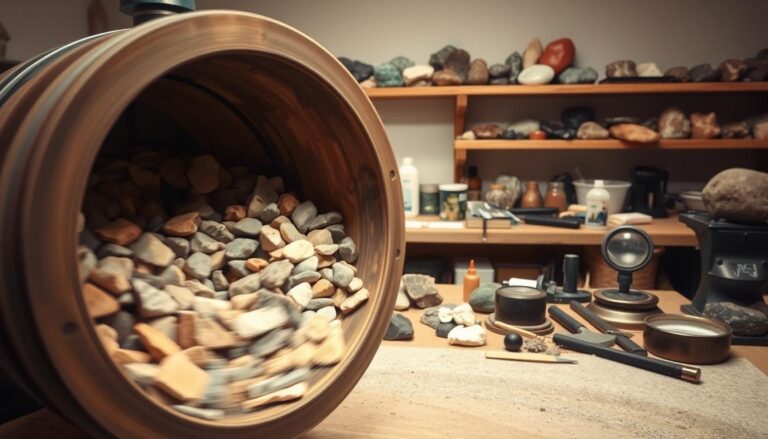
Keeping your rock tumbler barrel clean is the foundation of successful stone polishing. Regular maintenance prevents contamination between different grit stages and ensures your finished stones have that mirror-like shine you’re after.
Without proper cleaning, leftover grit can scratch your stones during the next tumbling cycle. Old residue also creates an uneven surface that prevents proper polishing action inside the barrel.
TL;DR
- Clean your barrel after every single tumbling cycle to prevent cross-contamination between grit stages.
- Rubber barrels need warm water and mild soap, while metal barrels require thorough drying to prevent rust.
- A soft-bristled brush removes 90% of stuck particles without scratching the barrel surface.
- Baking soda paste removes stubborn stains and costs under $2 compared to $15+ specialized cleaners.
Rock Tumbler Barrel Cleaning Basics
Different barrel materials need different cleaning approaches. Rubber barrels are flexible but can hold onto odors and stains if you don’t clean them properly.
Plastic barrels are lightweight and easy to maintain. Metal barrels are durable but need extra care to prevent rust formation.
Essential Cleaning Supplies
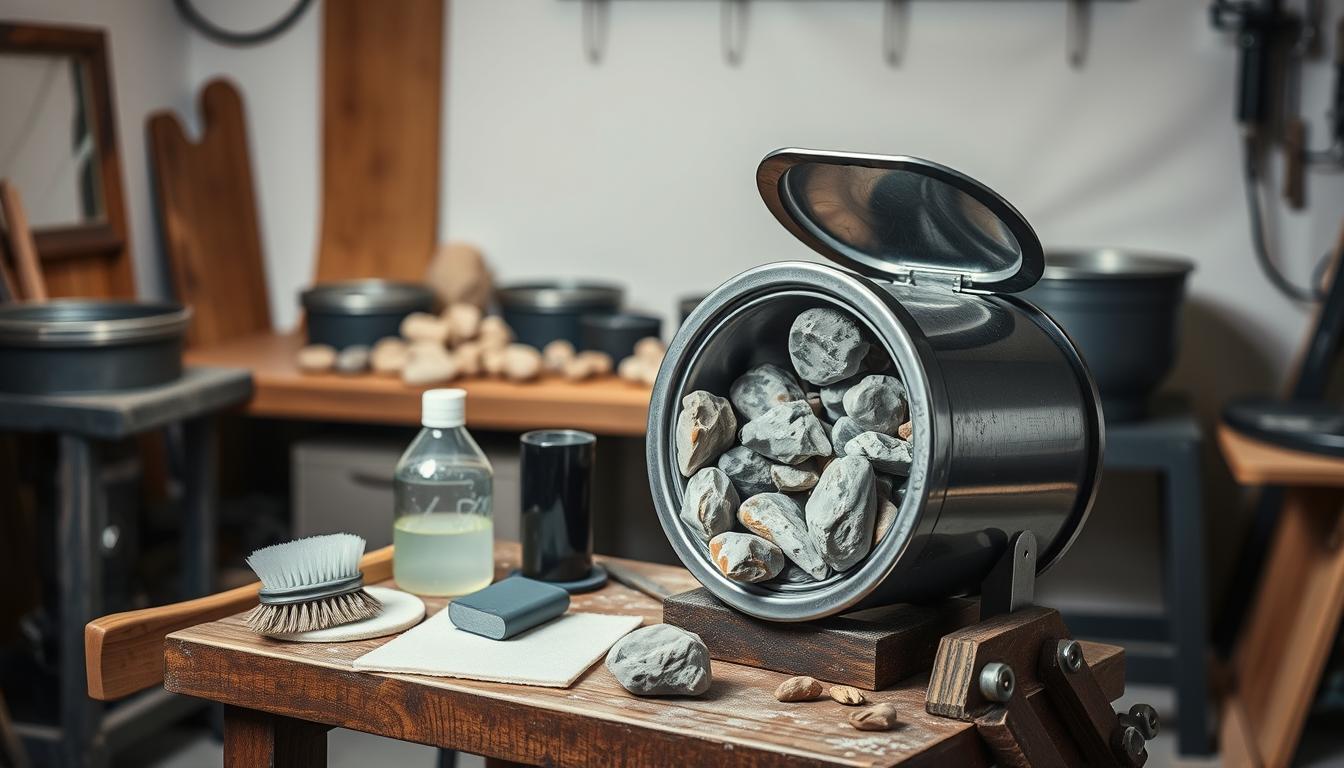
You don’t need expensive specialty products to keep your barrel spotless. Here are the basic supplies that work for any barrel type:
- Soft-bristled brush – removes debris without scratching the surface.
- Mild dish soap – cuts through grit slurry and rock dust.
- Warm water – helps dissolve stuck particles more easily.
- Clean cloth – for drying without leaving water spots.
Step-by-Step Cleaning Process
Follow this proven method every time you finish a tumbling cycle. Start as soon as you remove the stones – wet residue comes off much easier than dried buildup.
Initial Rinse
- Empty completely. Remove all stones, water, and loose grit from the barrel.
- Rinse with warm water. Fill the barrel halfway and swirl to loosen particles.
- Scrub with brush. Use circular motions to remove stuck grit from all surfaces.
Deep Cleaning Method
For weekly deep cleans or when switching between different stone types, use this thorough approach. Fill the barrel with warm soapy water and let it soak for 30 minutes.
After soaking, scrub all interior surfaces with your soft brush. Pay extra attention to the lid seal where grit often gets trapped.
Remove Stubborn Stains Fast
Mix 2 tablespoons of baking soda with just enough water to make a paste. Apply it to stained areas and let sit for 15 minutes before scrubbing.
Cleaning Different Barrel Materials
Rubber Barrel Care
Rubber barrels are forgiving but can develop permanent odors if not cleaned properly. Use warm water and regular dish soap for routine cleaning.
Never use bleach or harsh chemicals on rubber – they can make the material brittle over time. A paste made from baking soda and water removes most stains safely.
Plastic Barrel Maintenance
Plastic barrels are the easiest to clean and maintain. They don’t rust like metal or absorb odors like rubber can.
For plastic barrels, you can use slightly stronger cleaning solutions if needed. A 50/50 mix of white vinegar and water works well for mineral deposits.
Metal Barrel Specifics
Metal barrels need immediate drying after every cleaning to prevent rust spots. Use a clean towel to dry all surfaces, then let air dry completely before storage.
If you notice any rust starting, remove it immediately with fine steel wool and apply a thin coat of mineral oil to prevent future oxidation.
Maintenance Schedule That Works
Clean your barrel after every tumbling cycle – no exceptions. This prevents buildup that becomes much harder to remove later and helps you avoid common rock tumbling mistakes.
Do a deep clean once a month or whenever you switch between different types of stones. This prevents cross-contamination that can affect your results.
Quick Between-Batch Cleaning
When switching grit stages, a quick rinse often isn’t enough. Spend 5 minutes doing a proper clean to prevent carrying coarse grit into fine polishing stages.
Check the lid seal and barrel threads for trapped grit. These areas often get overlooked but can cause major problems if not cleaned.
Storage Best Practices
Store your clean barrel in a dry location with the lid slightly open for air circulation. Never store a damp barrel – this leads to mold growth and unpleasant odors.
Keep rubber barrels away from direct sunlight and extreme temperatures. UV rays can break down rubber compounds over time.
Frequently Asked Questions
How often should I clean my rock tumbler barrel?
Clean your barrel after every single tumbling cycle to prevent cross-contamination and equipment damage.
Can I put my rock tumbler barrel in the dishwasher?
No, dishwasher heat and harsh detergents can damage barrel materials and seals.
What’s the best way to remove stubborn stains from my barrel?
Make a paste with baking soda and water, let it sit for 15 minutes, then scrub with a soft brush.
Do I need special cleaners for my rock tumbler barrel?
Regular dish soap and warm water work fine for routine cleaning, though specialized cleaners can help with tough buildup.
How do I prevent rust on my metal tumbler barrel?
Dry the barrel completely after each cleaning and store it in a dry location with good air circulation.
Final Thoughts
Rock Tumbler Barrel Cleaning becomes second nature once you establish a routine. The 10 minutes you spend cleaning after each cycle saves hours of scrubbing later and protects your investment while ensuring you can achieve better polishing results.
Start with the basic supplies and methods outlined here, then adjust based on your specific barrel type and usage patterns.