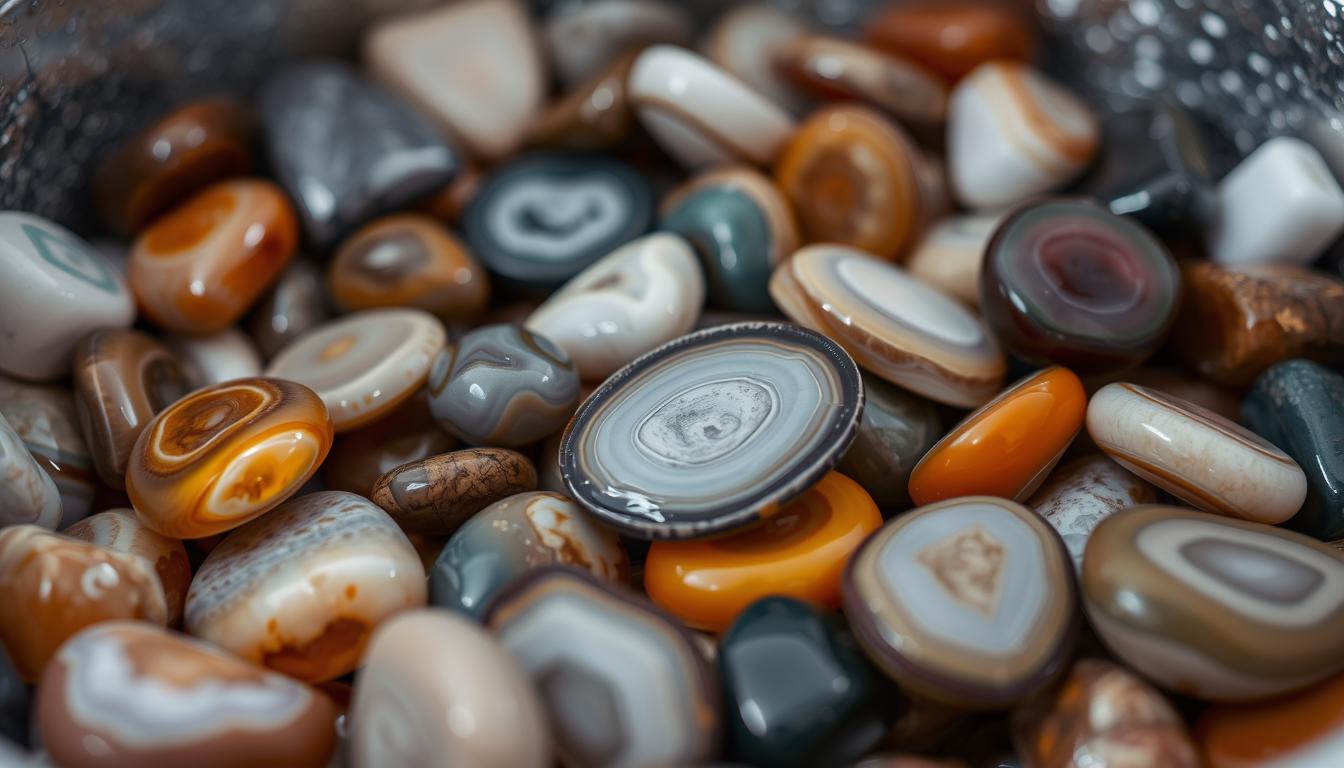
Tumbling agate transforms rough stones into polished gems that showcase their natural banded patterns and colors. This rewarding hobby requires patience and the right approach, but the results are worth the effort.
The process involves multiple stages using different grit grades to gradually smooth and polish your stones. With proper equipment and technique, you can create beautiful agate specimens for display or jewelry making.
TL;DR
- Complete tumbling process takes 4-6 weeks using 4 stages: coarse (80-120 grit), medium (220 grit), fine (400-600 grit), and polish.
- Load tumbler 60-70% full with stones of similar hardness (agate rates 6.5-7 on Mohs scale) for even results.
- Clean stones thoroughly between each stage to prevent contamination and scratching.
- Rotary tumblers work best for beginners, running 24/7 for 7-10 days per stage depending on stone size.
Tumbling Agate Basics
Agate belongs to the chalcedony family and features distinctive banded patterns formed by silica deposits over millions of years. Its hardness of 6.5-7 on the Mohs scale makes it perfect for tumbling.
The tumbling process mimics natural weathering but speeds it up dramatically. Instead of centuries, you can achieve a high polish in just a few weeks using progressively finer abrasives.
Types of Agate for Tumbling
Different agate varieties offer unique results when tumbled:
- Banded Agate – Shows clear parallel bands in various colors, perfect for beginners.
- Moss Agate – Features plant-like inclusions that create scenic patterns.
- Fortification Agate – Displays angular patterns resembling ancient fortress walls.
- Fire Agate – Contains iridescent layers that create rainbow flashes when polished.
Essential Equipment for Agate Tumbling
Success in tumbling agate depends heavily on having the right equipment and supplies. Quality tools make the difference between mediocre and stunning results.
Choosing Your Rock Tumbler
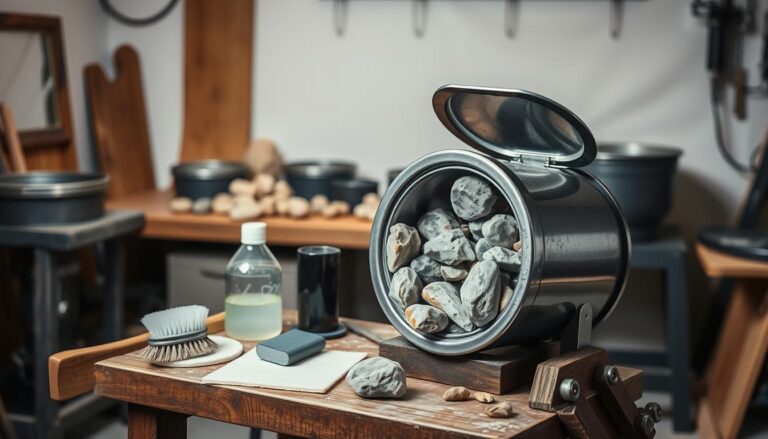
Rotary tumblers work best for most hobbyists because they handle various stone sizes and produce consistent results. Vibratory tumblers work faster but require more skill to use effectively.
Consider these factors when selecting a tumbler:
- Barrel Capacity – 3-pound capacity handles most hobby needs without taking up too much space.
- Motor Quality – Heavy-duty motors run continuously for weeks without overheating.
- Noise Level – Look for models with sound-dampening features if running indoors.
- Spare Parts – Choose brands that offer replacement belts, barrels, and seals.
Grit Grades and Their Uses
Each stage requires specific grit sizes to achieve proper results:
- Coarse Stage (80-120 grit). Shapes stones and removes rough material over 7-10 days.
- Medium Stage (220 grit). Smooths surfaces and removes coarse scratches in 5-7 days.
- Fine Stage (400-600 grit). Prepares stones for polishing over 5-7 days.
- Polish Stage (cerium oxide or aluminum oxide). Creates final high-gloss finish in 3-5 days.
Pro Tumbling Tip
Add ceramic media pellets to fill empty space in your tumbler barrel. This prevents stones from banging together and creates more even polishing action.
Preparing Agate Stones
Proper preparation sets the foundation for successful tumbling results. Spend time on this crucial first step to avoid problems later.
Stone Selection and Sorting
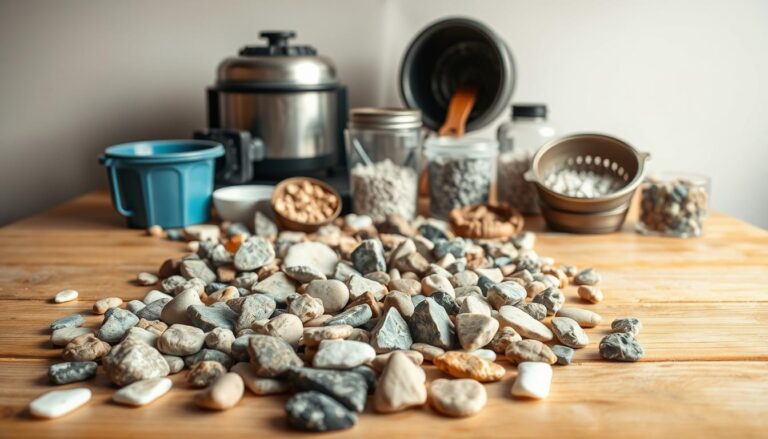
Choose agate pieces without obvious cracks or fractures, as these will break apart during tumbling. Sort stones by size, keeping pieces within similar ranges for each batch.
Group stones that measure within these ranges together:
- Small – 1/4 inch to 1/2 inch diameter
- Medium – 1/2 inch to 1 inch diameter
- Large – 1 inch to 2 inches diameter
Cleaning and Inspection
Wash stones with warm water and dish soap to remove dirt and oils. Scrub with an old toothbrush to clean crevices and natural pits.
Inspect each stone carefully under good lighting. Remove any pieces with deep cracks, as these will contaminate your batch with fragments.
The Four-Stage Tumbling Process
Each stage serves a specific purpose in transforming rough agate into polished gems. Rushing through stages or skipping steps leads to poor results.
Stage 1: Coarse Grind (80-120 Grit)
Load your tumbler barrel 60-70% full with agate stones. Add one tablespoon of coarse grit per pound of stones, then add water until it reaches just below the stone level.
Run for 7-10 days, checking daily for proper operation. Stones should move freely and create a grinding sound, not banging or silence.
Stage 2: Medium Grind (220 Grit)
Clean all stones thoroughly to remove coarse grit particles. Any contamination will scratch your stones in later stages.
Reload the clean barrel with stones, medium grit (same ratio as before), and fresh water. Run for 5-7 days until stones feel smooth to the touch.
Stage 3: Fine Grind (400-600 Grit)
Repeat the cleaning process completely, including washing the barrel. Load with fine grit and run for 5-7 days.
Stones should now have a satin finish with no visible scratches when viewed under bright light.
Stage 4: Polish
The final stage uses polishing compound instead of grit. Cerium oxide works best for agate, creating a brilliant mirror finish.
Use the same loading procedure but run for only 3-5 days. Over-polishing can actually dull the finish.
Troubleshooting Common Problems
Even experienced tumblers encounter issues. Knowing how to identify and fix problems saves time and materials.
Uneven Wear Patterns
If some stones polish better than others, check your stone sorting. Mixed hardness levels cause uneven results because softer stones wear faster.
Solutions include using only similar hardness materials in each batch and ensuring proper tumbler loading levels.
Persistent Scratches
Scratches that survive into the polishing stage usually come from contamination between stages. Always clean stones and equipment thoroughly before advancing.
Deep scratches may require returning to an earlier grit stage to remove them completely.
Frequently Asked Questions
How long does the complete agate tumbling process take?
The full process takes 4-6 weeks running 24/7, with 7-10 days for coarse grinding, 5-7 days each for medium and fine stages, and 3-5 days for polishing.
Can I tumble different types of stones with agate?
Only mix stones with similar hardness levels (6-7 on Mohs scale) like jasper or quartz. Softer stones will wear unevenly and harder stones may damage your agate.
What causes white residue on tumbled agates?
White residue usually comes from insufficient cleaning between stages or using too much polishing compound. Clean stones thoroughly and use less polish next time.
Why are my agates dull instead of shiny after polishing?
Dull finishes result from skipping stages, contamination, or over-polishing. Check that each grit stage was completed properly and clean equipment between stages.
How much should I fill my tumbler barrel?
Fill barrels 60-70% full with stones for proper tumbling action. Too full prevents movement, while too empty allows stones to bang together and chip.
Final Thoughts
Tumbling Agate requires patience and attention to detail, but the results make the effort worthwhile. With proper equipment and technique, you can create beautiful polished stones that showcase agate’s natural beauty.
Start with small batches to learn the process, then expand your operation as you gain experience and confidence.