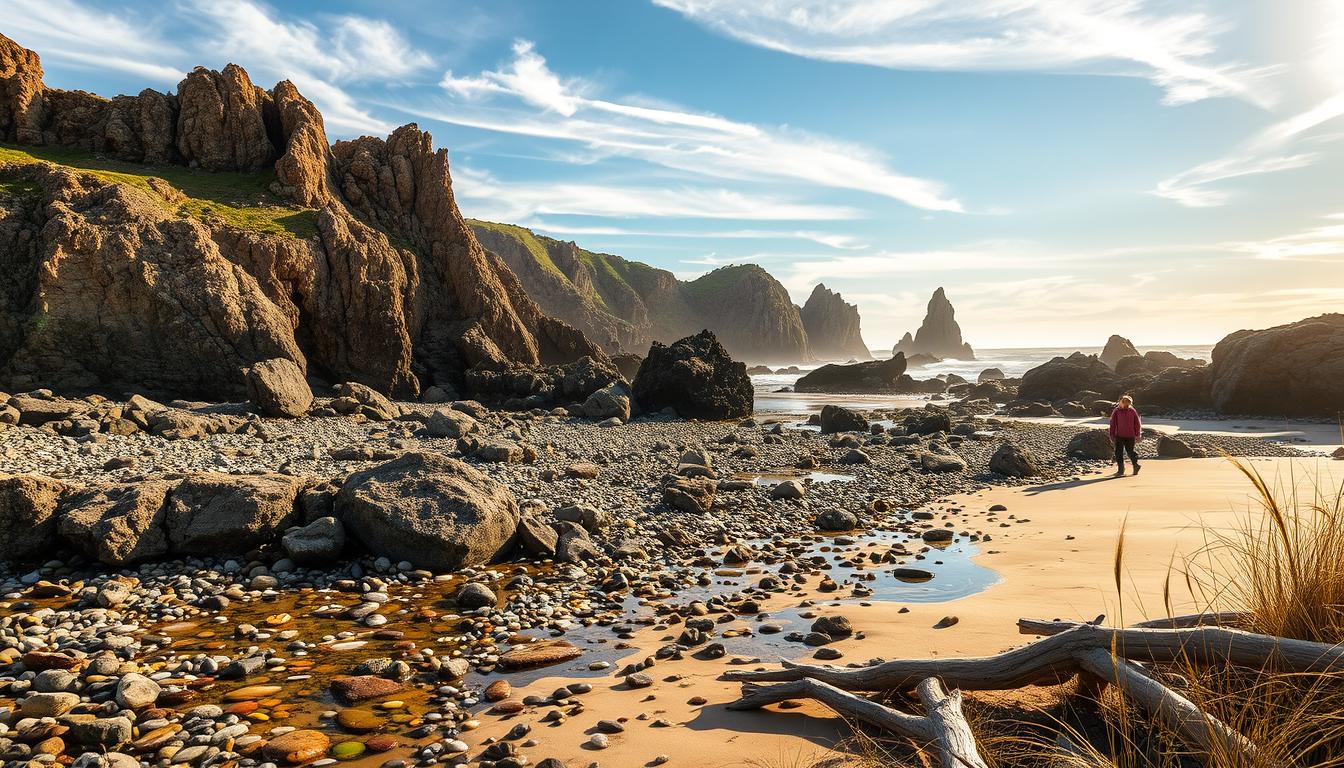
Best Rockhounding Beaches offer amazing chances to find beautiful stones and minerals right along America’s coastlines. These special spots let you combine a relaxing beach day with the thrill of discovering natural treasures that waves have polished for countless years.
From California’s famous sea glass beaches to Maine’s jasper shores, rockhounding beaches give you access to stones you won’t find anywhere else. The constant action of waves creates perfect conditions for finding smooth, colorful specimens that make great additions to any collection.
TL;DR
- Glass Beach in California produces over 50 different colors of sea glass from decades of wave tumbling.
- Lake Superior beaches yield agates that can sell for $20-200 depending on size and patterns.
- Shark teeth hunting at Folly Beach works best during low tide 2 hours after storms.
- Petoskey stones from Michigan beaches are 350 million years old and only found in the Great Lakes region.
Best Rockhounding Beaches for Natural Treasures
Beach rockhounding works so well because waves act like giant rock tumblers, constantly smoothing and polishing stones. This natural process reveals the true beauty of minerals while sorting them by weight and size along the shore.
The best rockhounding happens after storms when waves churn up new material from deeper water. Spring tides also expose areas that stay covered during normal conditions, giving you access to fresh collecting spots.
Top Western Coast Rockhounding Destinations
The Pacific coastline offers some of America’s most famous rockhounding beaches. These spots combine beautiful scenery with excellent mineral diversity.
Glass Beach, Fort Bragg, California
Glass Beach transforms decades of discarded glass into smooth, frosted gems through wave action. You’ll find pieces in green, brown, white, and rare colors like blue and red.
The best hunting happens during winter storms when waves bring up fresh glass from deeper deposits. Visit during low tide for the widest selection, and remember that collecting is limited to small amounts for personal use.
Moonstone Beach, Cambria, California
Moonstone Beach lives up to its name with milky white stones that show blue flashes when held to the light. The beach also produces jade, serpentine, and colorful jasper.
Early morning hunting works best before other collectors arrive. Focus your search near the tide line where heavier stones collect after waves recede.
Ruby Beach, Olympic Peninsula, Washington
Ruby Beach offers dramatic sea stacks and excellent agate hunting. The beach produces banded agates, jasper, and petrified wood in a wild coastal setting.
Time your visit for minus tides to access normally covered areas. The rocky coastline requires sturdy shoes, but rewards careful searchers with high-quality specimens. For more Washington rockhounding opportunities beyond the coast, check out our guide to rockhounding Washington’s best locations for agates, thunder eggs, and fossils.
Eastern Seaboard Fossil and Mineral Beaches
East Coast beaches excel at producing fossils and unique minerals shaped by different geological processes. These locations offer treasures you won’t find on Pacific shores.
Folly Beach, South Carolina
Folly Beach ranks among America’s best shark tooth hunting spots. The beach produces teeth from modern sharks plus fossils from ancient species that lived millions of years ago.
Hunt during the two hours after low tide when waves deposit fresh material. Black teeth from ancient sharks are most valuable, while brown and gray teeth come from more recent species.
Calvert Cliffs, Maryland
The 100-foot cliffs along the Chesapeake Bay expose 15 million-year-old fossils. You’ll find shark teeth, whale bones, and shells from ancient sea creatures.
Collecting happens on the beach below the cliffs – never climb the unstable cliff face. Visit after winter storms when erosion exposes fresh fossil layers.
Storm Timing Strategy
Check weather reports and plan your rockhounding trips for 1-2 days after major storms. This timing gives waves enough time to deposit new material while keeping dangerous surf conditions at bay.
Hidden Great Lakes and Inland Treasures
Don’t overlook inland beaches around the Great Lakes and other large bodies of water. These spots often produce rare stones found nowhere else in North America.
Lake Superior Beaches, Michigan and Minnesota
Lake Superior’s shores produce the world’s finest Lake Superior agates. These stones show incredible banding patterns in reds, oranges, and yellows that make them highly sought after.
- Hunting locations – Two Harbors, Grand Marais, and the Keweenaw Peninsula offer the best access.
- Identification tips – Look for translucent stones with distinct color bands and waxy luster.
- Best conditions – Hunt after spring ice breakup when winter storms have shifted beach materials.
Petoskey Stone Beaches, Michigan
Northern Michigan beaches along Lake Michigan and Lake Huron produce Petoskey stones – fossilized coral with distinctive hexagonal patterns. These 350-million-year-old fossils are Michigan’s official state stone.
Wet stones show patterns better than dry ones, so hunt near the water’s edge. The best specimens come from Petoskey State Park and nearby beaches along the Little Traverse Bay.
Essential Beach Rockhounding Techniques
Successful beach rockhounding requires the right approach and timing. Understanding how beaches work helps you find the best specimens, and proper preparation with the right rockhounding tools and supplies makes your collecting more productive.
Reading Beach Conditions
Different parts of the beach concentrate different types of stones based on size and weight. Heavy materials like agates collect near the high tide line, while lighter stones scatter across wider areas.
Look for natural concentration points where currents slow down and drop their loads. Creek mouths, points of land, and areas behind large rocks often hold the best specimens.
Seasonal Timing
- Spring storms – Produce the biggest material movements and expose winter accumulations.
- Fall hunting – Offers comfortable weather and good visibility with lower tourist crowds.
- Winter collecting – Provides access to storm-tossed materials but requires proper cold weather gear.
Tools and Equipment
Basic rockhounding gear makes beach collecting more productive and enjoyable. Keep your kit simple but functional.
- Collection containers – Mesh bags let sand drain out while keeping specimens secure.
- Small tools – A pocket knife helps test hardness and clean specimens on the spot.
- Reference materials – Field guides specific to your region improve identification accuracy.
- Safety items – First aid kit, sunscreen, and tide charts prevent problems before they start.
Frequently Asked Questions
What makes beach rockhounding different from inland collecting?
Beach rockhounding benefits from natural wave tumbling that polishes stones and concentrates materials along predictable tide lines. Inland sites require more digging but often produce larger, unweathered specimens.
Can I legally collect rocks and fossils from any beach?
Collection rules vary by location – national parks generally prohibit collecting while state beaches often allow small amounts for personal use. Always check local regulations before collecting, and learn how to research rockhounding sites to understand permissions and restrictions.
What’s the best time of day for beach rockhounding?
Early morning during outgoing tides provides the best conditions with fresh overnight deposits and fewer people. The two hours after low tide offer maximum beach exposure.
How do I identify valuable finds while beach hunting?
Look for unusual colors, translucency, crystal formations, and geometric patterns that distinguish minerals from common rocks. A 10x hand lens helps spot details that confirm valuable specimens. Our guide on how to identify rocks in the field provides detailed identification techniques for beginners.
Should I clean beach finds immediately or wait?
Remove sand and salt water immediately to prevent damage, but save detailed cleaning for home where you have proper tools and lighting. Field cleaning can damage delicate specimens.
Final Thoughts
Best Rockhounding Beaches provide endless opportunities to discover natural treasures while enjoying beautiful coastal scenery. Each location offers unique specimens shaped by local geology and wave action over thousands of years.
Start with beaches near your area to learn basic techniques, then plan trips to famous locations like Glass Beach or Lake Superior shores. Remember to prioritize rockhounding safety when collecting near water and on potentially unstable shorelines. The combination of outdoor adventure and treasure hunting makes beach rockhounding a perfect hobby for people of all ages.