Rockhounding Arizona offers some of the best mineral and gemstone hunting opportunities in the United States. The state’s diverse geology creates perfect conditions for finding everything from turquoise and peridot to amethyst and fire agate.
Arizona’s desert landscape might look barren at first glance, but it hides incredible treasures beneath the surface. The combination of volcanic activity, mineral-rich soil, and accessible public lands makes this state a rockhound’s paradise.
TL;DR
- Arizona produces over 60% of the world’s turquoise, making it the top turquoise hunting destination.
- Peridot Mesa near Globe contains the largest peridot deposit in North America with stones up to 5 carats.
- Fire agate found in Arizona commands $50-200 per carat due to its unique rainbow iridescence.
- Over 2,000 active mining claims in Arizona allow public rockhounding with proper permits.
Rockhounding Arizona: Top Locations and What You’ll Find
Arizona’s mineral wealth comes from millions of years of volcanic activity and geological shifts. The state sits on ancient lava flows and mineral-rich deposits that created ideal conditions for gemstone formation.
The best rockhounding happens in areas where erosion has exposed these mineral veins and deposits. Desert washes, mountain slopes, and old mining areas offer the most productive hunting grounds.
Best Rockhounding Spots in Arizona
Each region of Arizona offers different types of stones and minerals. Knowing where to look saves time and increases your chances of finding quality specimens.
Quartzsite Area
Quartzsite transforms into rockhound central every winter when thousands of collectors gather for gem and mineral shows. The surrounding desert contains abundant quartz varieties, jasper, and agate.
- Fire agate – Found in volcanic areas with distinctive rainbow flashes
- Desert roses – Gypsum formations that look like blooming flowers
- Chalcedony – Translucent quartz in blues, whites, and grays
- Jasper – Colorful patterns in reds, yellows, and browns
Globe and Superior Region
This copper mining region produces some of Arizona’s most valuable gemstones. The mineral-rich mountains around Globe offer excellent collecting opportunities.
- Peridot – Bright green olivine crystals found on Peridot Mesa
- Chrysocolla – Blue-green copper mineral often mixed with turquoise
- Malachite – Bright green copper carbonate with distinctive banding
- Apache tears – Black obsidian nodules with smooth rounded shapes
Kingman and Bagdad Area
The Kingman region produces Arizona’s famous turquoise along with other copper-related minerals. This area has active mines and many collecting sites on public land.
- Turquoise – Sky blue to green copper mineral Arizona is famous for
- Azurite – Deep blue copper mineral often found with malachite
- Copper specimens – Native copper in wire and nugget forms
- Garnet – Red almandine crystals in metamorphic rocks
Essential Rockhounding Tools and Equipment
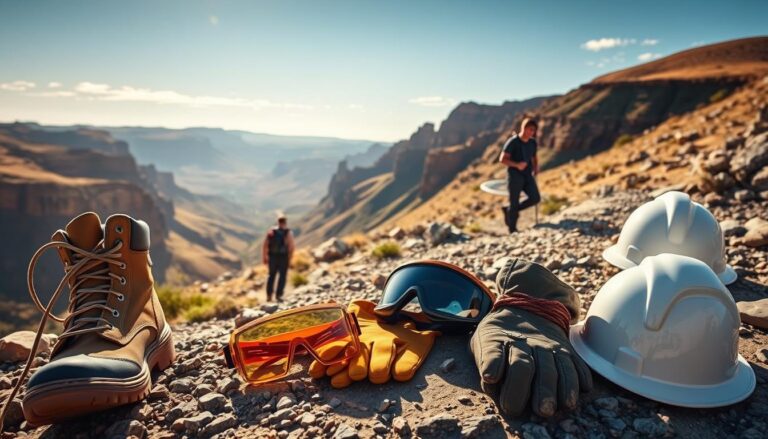
Success in Arizona’s desert terrain requires proper tools and preparation. The rocky ground and intense sun create unique challenges for collectors who need a complete rockhounding checklist to ensure they’re properly equipped.
- Rock hammer. Choose a 16-24 ounce hammer with a pick end for breaking rocks and a flat end for general work.
- Safety glasses. Flying rock chips can cause serious eye injuries when breaking specimens.
- Collection bags. Sturdy canvas or burlap bags prevent damage during transport.
- GPS device. Desert areas look similar and it’s easy to get lost without navigation.
- First aid kit. Remote locations require self-sufficiency for minor injuries.
- Plenty of water. Arizona heat can be dangerous – bring more water than you think you need.
Start Early and Finish Before Noon
Arizona’s desert heat becomes dangerous after midday, especially in summer. Plan rockhounding trips for early morning hours when temperatures are cooler and visibility is better.
Legal Considerations and Permits
Arizona has specific rules about where you can collect rocks and what you can take. Understanding these regulations prevents legal problems and protects collecting sites for future rockhounds.
Public Land Rules
Most Arizona rockhounding happens on Bureau of Land Management (BLM) or Forest Service land. These agencies allow casual collecting with reasonable limits.
- 25-pound limit – Maximum you can collect per day per person
- Hand tools only – No motorized equipment or explosives allowed
- No commercial collecting – Personal use only without selling specimens
- Stay on designated roads – Protect desert vegetation by using existing paths
Private Property and Mining Claims
Always verify land ownership before collecting. Arizona has thousands of active mining claims where collecting requires permission from claim holders.
Check the BLM’s online records to identify claimed areas. Trespassing on mining claims can result in serious legal consequences and safety hazards.
Identifying Arizona’s Most Valuable Finds
Knowing what to look for helps you recognize valuable specimens in the field. Arizona produces several gems and minerals worth significant money to collectors and jewelers, and learning how to identify rocks in the field is essential for success.
Turquoise Quality Indicators
Arizona turquoise varies widely in quality and value. High-grade material has specific characteristics that collectors should learn to recognize.
- Hardness – Good turquoise resists scratching with a steel knife
- Color saturation – Bright, even blue or green commands higher prices
- Matrix patterns – Attractive host rock veining adds value
- Size – Larger solid pieces are exponentially more valuable
Fire Agate Recognition
Fire agate looks like ordinary brown chalcedony until light hits the internal layers. Learning to spot potential fire agate saves time and increases finds.
Look for translucent to transparent chalcedony with a brownish color. Hold specimens up to sunlight to check for internal fire layers that create rainbow flashes.
Frequently Asked Questions
Do I need permits for rockhounding in Arizona?
Most casual collecting on public land requires no permits, but you must follow the 25-pound daily limit and hand-tool-only rules. Some areas require special permits or have seasonal restrictions.
What’s the best time of year for rockhounding in Arizona?
Fall through early spring offers the best weather conditions. Summer temperatures can exceed 115°F in desert areas, making rockhounding dangerous during midday hours.
Can I sell rocks I find while rockhounding in Arizona?
You cannot sell specimens collected from public land under casual use permits. Commercial collecting requires special permits and fees from land management agencies.
Where can I get my Arizona rocks identified?
Local gem and mineral clubs offer identification services and expertise. University geology departments and rock shops also provide identification help for unusual specimens.
Is rockhounding safe in Arizona’s desert areas?
Desert rockhounding is safe with proper preparation including plenty of water, sun protection, and navigation equipment. Always tell someone your planned route and expected return time. Following rockhounding safety tips is crucial for desert collecting.
Final Thoughts
Rockhounding Arizona offers incredible opportunities for both beginners and experienced collectors. The state’s diverse geology and abundant public land access make it one of America’s premier rockhounding destinations.
Start with well-known areas like Quartzsite or Globe to build your skills and knowledge. Join local clubs and attend winter gem shows to learn from experienced collectors and discover new hunting locations. Before heading out, consider how to research rockhounding sites to maximize your success and ensure you’re visiting productive areas.