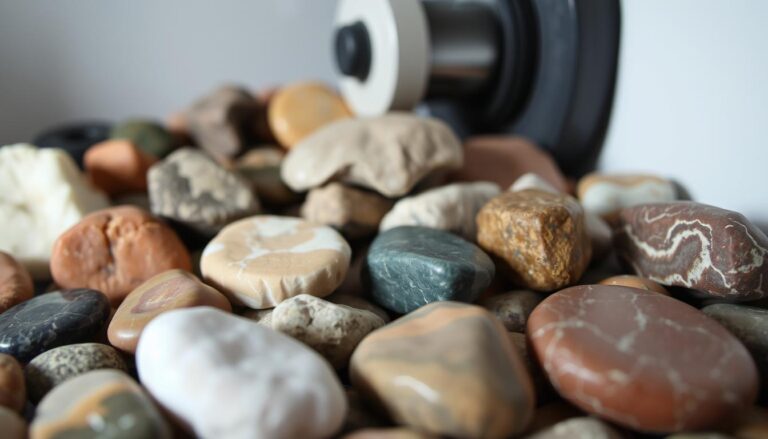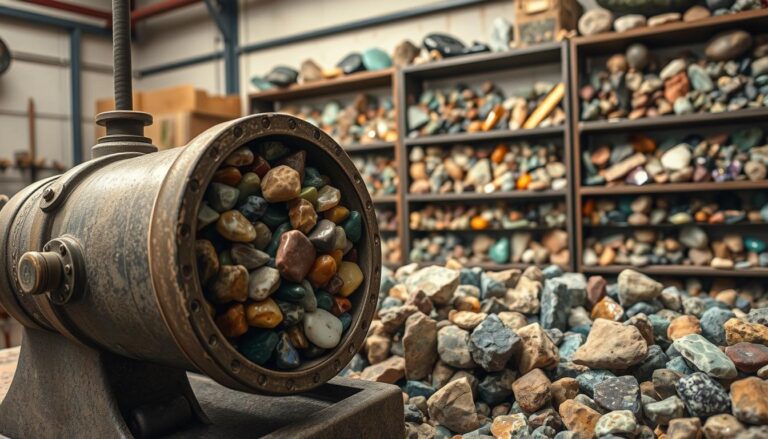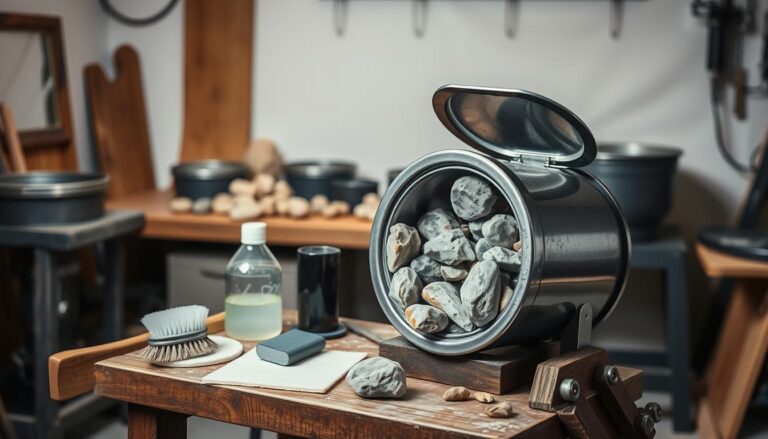
Rocks Not To Tumble can save you hours of frustration and wasted materials in your rock tumbling journey. While rock tumbling is an exciting hobby that transforms rough stones into polished gems, not every rock you find will produce stunning results.
Understanding which rocks to avoid will help you focus your time and energy on stones that will actually polish beautifully. Some rocks are simply too soft, too hard, or have properties that make them unsuitable for the tumbling process.
TL;DR
- Avoid rocks softer than 5 on the Mohs scale like limestone, sandstone, and shale as they’ll dissolve or crumble during tumbling.
- Skip extremely hard rocks above 8.5 on the Mohs scale such as sapphire and diamond since they require specialized equipment and won’t tumble with softer stones.
- Never tumble toxic minerals like galena, cinnabar, or asbestos-containing stones as they release dangerous particles when ground.
- Avoid rocks with different hardness levels in the same batch since softer stones will be destroyed before harder ones are polished.
Rocks Not To Tumble: Understanding Rock Hardness
The Mohs hardness scale is your best friend when selecting rocks for tumbling. This scale ranks minerals from 1 (softest) to 10 (hardest), and understanding where your rocks fall on this scale will determine their tumbling success.
Rocks with a hardness between 5 and 7 on the Mohs scale typically produce the best tumbling results. Anything below 5 is usually too soft and will break down during the abrasive tumbling process, while rocks above 8 require extremely long tumbling times and specialized equipment.
Soft Rocks to Avoid (Below 5 on Mohs Scale)
- Limestone and Marble – These calcium carbonate rocks dissolve in acidic conditions and crumble under tumbling pressure.
- Sandstone – The individual sand grains separate during tumbling, leaving you with sand rather than polished stones.
- Shale and Slate – These layered rocks split apart along their natural fracture lines during tumbling.
- Gypsum – At only 2 on the Mohs scale, gypsum dissolves completely in water.
- Fluorite – Despite being beautiful, fluorite’s softness (4 on Mohs scale) makes it unsuitable for standard tumbling.
Extremely Hard Rocks That Won’t Tumble Well
While you might think harder rocks would tumble better, extremely hard stones present their own challenges. These rocks require much longer tumbling times and often won’t polish properly when mixed with softer materials.
Hard Rocks to Skip (Above 8 on Mohs Scale)
- Sapphire and Ruby – At 9 on the Mohs scale, these precious stones need diamond powder and specialized equipment.
- Topaz – While beautiful, topaz (8 on Mohs scale) has perfect cleavage that causes it to split during tumbling.
- Emerald and Aquamarine – These beryl family stones are often included with fractures that make them fragile despite their hardness.
- Diamond – Obviously the hardest natural material at 10 on Mohs scale, requiring industrial equipment to shape.
Toxic and Dangerous Rocks to Never Tumble
Safety should always be your top priority when rock tumbling. Some minerals contain toxic elements that become extremely dangerous when ground into fine particles during the tumbling process.
These toxic particles can become airborne or contaminate your tumbling equipment, posing serious health risks to you and your family. Never tumble these dangerous minerals under any circumstances.
Toxic Minerals to Avoid Completely
- Galena – Contains lead sulfide and releases toxic lead particles when ground.
- Cinnabar – Mercury sulfide mineral that releases mercury vapor, especially dangerous when tumbled.
- Realgar and Orpiment – Arsenic-containing minerals that create toxic arsenic dust.
- Asbestos-containing minerals – Including chrysotile, actinolite, and tremolite which release cancer-causing fibers.
- Malachite and Azurite – Copper carbonates that can cause copper poisoning when inhaled as dust.
Test Unknown Rocks First
When in doubt about a rock’s composition, research it thoroughly before tumbling. Many rock identification apps and online databases can help you determine both hardness and safety.
Rocks with Structural Problems
Even rocks with appropriate hardness levels can fail during tumbling if they have structural weaknesses. These internal flaws cause rocks to break apart during the tumbling process, wasting your time and potentially damaging other stones in your batch.
Structural Issues That Cause Tumbling Failure
- Heavily fractured rocks – Visible cracks and fractures will expand during tumbling, causing the rock to split.
- Layered or banded stones – Natural layering creates weak points where rocks separate during tumbling.
- Porous rocks – High porosity prevents proper polishing and allows grit to embed in the surface.
- Weathered specimens – Surface weathering indicates internal weakness that tumbling will exploit.
Mixing Incompatible Rock Types
Even suitable rocks can produce poor results when tumbled together incorrectly. Mixing rocks of vastly different hardnesses in the same batch leads to disappointing outcomes for everyone involved.
The softer rocks get ground down to nothing while the harder rocks remain largely unpolished. This wastes both your time and materials while producing inferior results.
Hardness Compatibility Rules
- Group by hardness. Keep rocks within one point of each other on the Mohs scale for best results.
- Separate quartz varieties. Tumble different quartz types separately even though they’re similar hardness.
- Consider fracture patterns. Some rocks break differently even at similar hardness levels.
- Test small batches first. Try new rock combinations in small quantities before committing to large batches.
Frequently Asked Questions
Can I tumble geodes and thunder eggs?
Geodes and thunder eggs often contain different hardness levels between the outer shell and inner crystals, making them unsuitable for tumbling. The different materials will polish at different rates, creating poor results.
What about tumbling beach glass and pottery shards?
Beach glass and pottery can be tumbled successfully since they’re typically uniform in hardness around 5.5-6 on the Mohs scale. However, keep them separate from natural rocks for best results.
Is it safe to tumble rocks I can’t identify?
Never tumble unidentified rocks as they could contain toxic minerals. Use rock identification resources or consult with local geology clubs to identify specimens before tumbling.
Can I tumble rocks that have been painted or treated?
Avoid tumbling painted, dyed, or chemically treated rocks as the coatings will come off during tumbling and potentially contaminate your equipment. Stick to natural, untreated specimens.
Final Thoughts
Rocks Not To Tumble are just as important to understand as the ones that work well in your tumbler. By avoiding soft rocks, extremely hard specimens, toxic minerals, and structurally unsound stones, you’ll save time, money, and frustration while producing better results.
Focus your tumbling efforts on rocks between 5-7 on the Mohs hardness scale, and always prioritize safety when selecting specimens. Your rock tumbling hobby will be much more rewarding when you choose the right materials from the start, avoiding common rock tumbling mistakes that can ruin your results.